
Kirjojen hintavertailu – 12 859 829 kirjaa ja 27 kauppaa

Kirjailija

Shelley Butler

Kirjat ja teokset yhdessä paikassa: 3 kirjaa, julkaisuja vuosilta 2007–2024, suosituimpiin kuuluu Young Children Visit Museums. Vertaile teosten hintoja ja tarkista saatavuus suomalaisista kirjakaupoista.

3 kirjaa

Kirjojen julkaisuvuodet: 2007–2024.

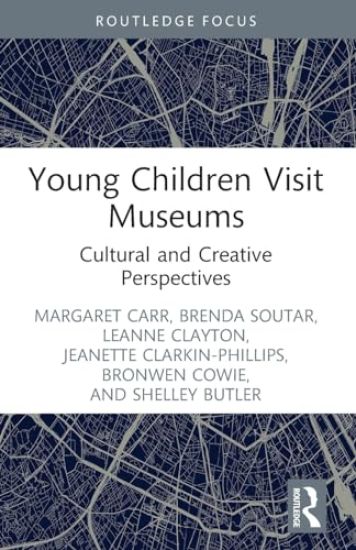
Young Children Visit Museums

Young Children Visit Museums

Margaret Carr; Brenda Soutar; Leanne Clayton; Bronwen Cowie; Jeanette Clarkin-Phillips; Shelley Butler

TAYLOR FRANCIS LTD
2024
nidottu
Bringing different cultural perspectives on creativity with them, teachers and children in two early childhood education sites in Aotearoa New Zealand were using museum visits as jumping off places to hone their creative capacity building. As a contribution to Tim Ingold’s discussion of anthropology and/as education, and also finding John Dewey’s writing valuable (specifically his framing of ‘enduring attitudes’), the authors employ a navigation metaphor throughout the discussion. They describe a coming together of four Cultural Anchors (thinking from materials) with four Coordinates (creative capacity builders) to describe ways in which the children were making creative sense of the museum exhibits, while at the same time gathering information about them. They take these travel metaphors from a star cluster in the southern hemisphere night sky, Matariki, which provided early sea-going Maori with guidance as they navigated wide stretches of ocean in their sea-going canoes to reach Aotearoa New Zealand. A Maori immersion early childhood centre and school, and a New Zealand kindergarten provided lively examples of children’s and teachers’ responses to the treasured artefacts (taonga) in their local museums. The book describes an ecosocial framing, from ‘little to big’, and illustrates the different cultural perspectives on creativity. The Mana Tamariki kaiako (teachers) gifted us a title—He taonga, he rerenga arorangi (Where there are treasured objects, the spirit is nurtured and creativity will be inspired).
Young Children Visit Museums

Young Children Visit Museums

Margaret Carr; Brenda Soutar; Leanne Clayton; Bronwen Cowie; Jeanette Clarkin-Phillips; Shelley Butler

TAYLOR FRANCIS LTD
2022
sidottu
Bringing different cultural perspectives on creativity with them, teachers and children in two early childhood education sites in Aotearoa New Zealand were using museum visits as jumping off places to hone their creative capacity building. As a contribution to Tim Ingold’s discussion of anthropology and/as education, and also finding John Dewey’s writing valuable (specifically his framing of ‘enduring attitudes’), the authors employ a navigation metaphor throughout the discussion. They describe a coming together of four Cultural Anchors (thinking from materials) with four Coordinates (creative capacity builders) to describe ways in which the children were making creative sense of the museum exhibits, while at the same time gathering information about them. They take these travel metaphors from a star cluster in the southern hemisphere night sky, Matariki, which provided early sea-going Maori with guidance as they navigated wide stretches of ocean in their sea-going canoes to reach Aotearoa New Zealand. A Maori immersion early childhood centre and school, and a New Zealand kindergarten provided lively examples of children’s and teachers’ responses to the treasured artefacts (taonga) in their local museums. The book describes an ecosocial framing, from ‘little to big’, and illustrates the different cultural perspectives on creativity. The Mana Tamariki kaiako (teachers) gifted us a title—He taonga, he rerenga arorangi (Where there are treasured objects, the spirit is nurtured and creativity will be inspired).
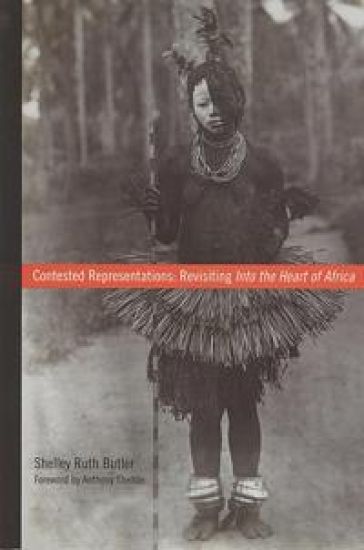
Contested Representations

Contested Representations

Shelley Butler

Broadview Press Ltd
2007
pokkari
Contested Representations examines the controversy surrounding the Into the Heart of Africa exhibition at the Royal Ontario Museum (ROM) in Toronto in 1989-90. The exhibition was meant to travel to the US and Canada, but four major museums cancelled their contracts due to its controversial nature. With this richly textured account of the ways in which the exhibit became the site of an expansive-and explosive-discussion of representation, racism, and power, Butler asks why the exhibit failed for so many people. In the process she discusses issues of curatorial authority, institutional politics, legacies of colonialism, traditions of representing Africa, the politics of irony, and reflexive museology. The combination of race, postmodernism, colonialism, community activism, and heated debate still leaves the Into the Heart of Africa exhibit in a class by itself. It continues to be cited, debated, and used as reference points by Africanists, art historians, museologists, cultural anthropologists, and historians. Originally published in 1994, this case study is now available in an affordable paperback edition with a new Foreword by Anthony Shelton (UBC Museum of Anthropology) and an Afterword by the author outlining recent ROM practices in relation to the Black community and in representing Africa.