

Kirjojen hintavertailu – 12 903 735 kirjaa ja 27 kauppaa

Kirjailija

Shelley J. Listwan

Kirjat ja teokset yhdessä paikassa: 2 kirjaa, julkaisuja vuosilta 2005–2013, suosituimpiin kuuluu What Works (and Doesn't) in Reducing Recidivism. Vertaile teosten hintoja ja tarkista saatavuus suomalaisista kirjakaupoista.

2 kirjaa

Kirjojen julkaisuvuodet: 2005–2013.

What Works (and Doesn't) in Reducing Recidivism

What Works (and Doesn't) in Reducing Recidivism

Edward J. Latessa; Shelley J. Listwan; Deborah Koetzle

Anderson Publishing
2013
nidottu
This book offers criminologists and students an evidence-based discussion of the latest trends in corrections. Over the last several decades, research has clearly shown that rehabilitation efforts can be effective at reducing recidivism among criminal offenders. However, researchers also recognize that treatment is not a "one size fits all" approach. Offenders vary by gender, age, crime type, and/or addictions, to name but a few, and these individual needs must be addressed by providers. Finally, issues such as leadership, quality of staff, and evaluation efforts affect the quality and delivery of treatment services. This book synthesizes the vast research for the student interested in correctional rehabilitation as well as for the practitioner working with offenders. While other texts have addressed issues regarding treatment in corrections, this text is unique in that it not only discusses the research on "what works" but also addresses implementation issues as practitioners move from theory to practice, as well as the importance of staff, leadership and evaluation efforts.
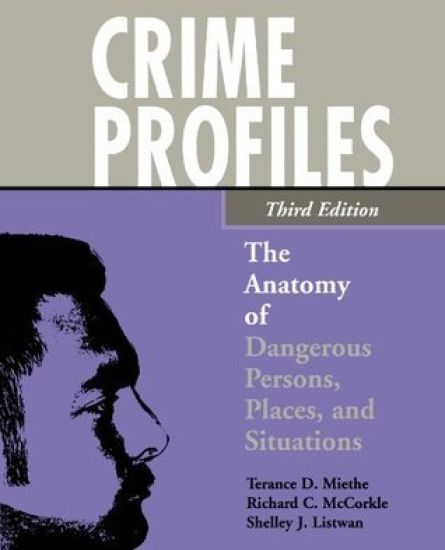
Crime Profiles: The Anatomy of Dangerous Persons, Places, and Situations

Crime Profiles: The Anatomy of Dangerous Persons, Places, and Situations

Terance D. Miethe; Richard C. McCorkle; Shelley J. Listwan

Oxford University Press
2005
nidottu
The third edition of this thought-provoking text addresses the following questions about crime: * Who are the offenders and victims?* What are the major motivators of crime?* Are most offenders specialists or generalists?* Are most offenders planners or opportunists?* What are their criminal histories?* How often are co-offenders involved?* What are the common features of dangerous places, times, and situational dynamics?* How effective are current crime prevention strategies? Crime Profiles provides a descriptive summary of seven major forms of crime: homicide and aggravated assault, sexual assault, robbery, burglary, motor vehicle theft, occupational and organizational crime, and public order crimes. The new edition provides an extensive update of the material in each chapter. Each chapter now includes national crime reports and national victimization surveys for 2003, the most recently available data. A new chapter has been added on theories of crime. New examples are also used to illustrate both change and stability in the type of situations in which particular crimes occur. Each chapter focuses on crime definitions, trends in their occurrence, the offender and victim profiles, situational elements and circumstances, particular subsets of crime syndromes, prevention, and intervention strategies.