
Kirjojen hintavertailu – 12 903 725 kirjaa ja 27 kauppaa

Kirjailija

Sheng-You Lu

Kirjat ja teokset yhdessä paikassa: 2 kirjaa, julkaisuja vuosilta 2013–2015, suosituimpiin kuuluu Phytosociology of the Beech (Fagus) Forests in East Asia. Vertaile teosten hintoja ja tarkista saatavuus suomalaisista kirjakaupoista.

2 kirjaa

Kirjojen julkaisuvuodet: 2013–2015.

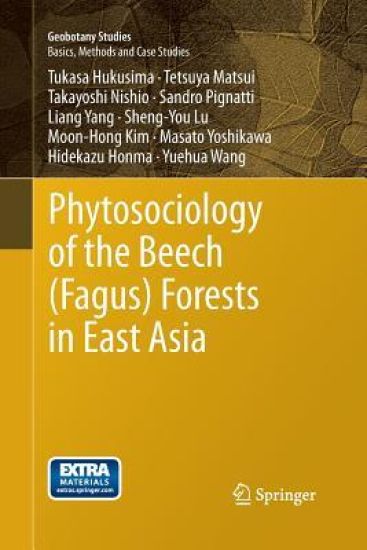
Phytosociology of the Beech (Fagus) Forests in East Asia

Phytosociology of the Beech (Fagus) Forests in East Asia

Tukasa Hukusima; Tetsuya Matsui; Takayoshi Nishio; Sandro Pignatti; Liang YANG; Sheng-You Lu; Moon-Hong Kim; Masato Yoshikawa; Hidekazu Honma; Yuehua Wang

Springer-Verlag Berlin and Heidelberg GmbH Co. K
2015
nidottu
This book describes the mountain forests of East Asia (Korea, Japan, China and Taiwan), the tree layers of which contain different species of the genus Fagus. The vegetation is primarily deciduous in the northern regions, whereas in South China evergreen trees can also be found: a total of 21 plant communities are described, with data on species composition, dominance, geographical distribution and ecology. A general comparison is provided by synoptic Table 1, which details the frequencies of ca. 1500 species growing in the Fagus forests; biodiversity and evolution are discussed. The book, which is the fruit of a major international collaboration, presents a synthesis of extended original investigations by the authors and hardly accessible specialist literature.
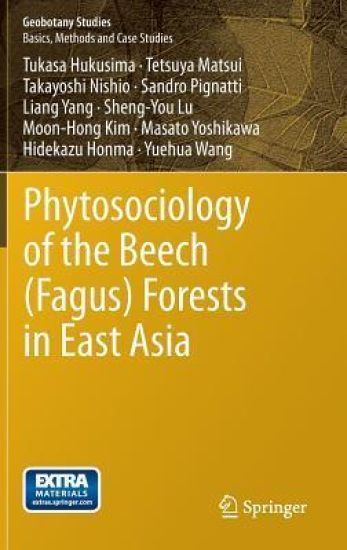
Phytosociology of the Beech (Fagus) Forests in East Asia

Phytosociology of the Beech (Fagus) Forests in East Asia

Tukasa Hukusima; Tetsuya Matsui; Takayoshi Nishio; Sandro Pignatti; Liang YANG; Sheng-You Lu; Moon-Hong Kim; Masato Yoshikawa; Hidekazu Honma; Yuehua Wang

Springer-Verlag Berlin and Heidelberg GmbH Co. K
2013
sidottu
This book describes the mountain forests of East Asia (Korea, Japan, China and Taiwan), the tree layers of which contain different species of the genus Fagus. The vegetation is primarily deciduous in the northern regions, whereas in South China evergreen trees can also be found: a total of 21 plant communities are described, with data on species composition, dominance, geographical distribution and ecology. A general comparison is provided by synoptic Table 1, which details the frequencies of ca. 1500 species growing in the Fagus forests; biodiversity and evolution are discussed. The book, which is the fruit of a major international collaboration, presents a synthesis of extended original investigations by the authors and hardly accessible specialist literature.