Kirjojen hintavertailu – 12 903 724 kirjaa ja 27 kauppaa

Kirjailija

SherAli Tareen

Kirjat ja teokset yhdessä paikassa: 5 kirjaa, julkaisuja vuosilta 2020–2026, suosituimpiin kuuluu Perilous Intimacies. Vertaile teosten hintoja ja tarkista saatavuus suomalaisista kirjakaupoista.

5 kirjaa

Kirjojen julkaisuvuodet: 2020–2026.

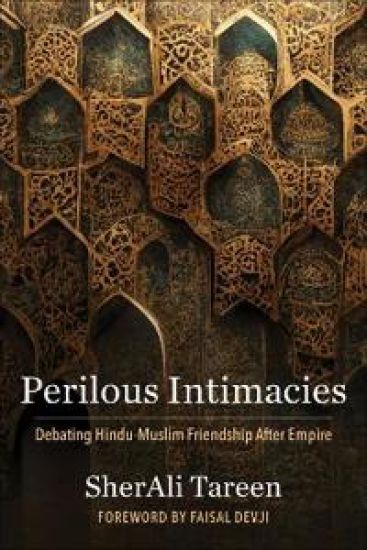
Perilous Intimacies

Perilous Intimacies

SherAli Tareen; Faisal Devji

Columbia University Press
2023
pokkari
Finalist, 2024 Award for Excellence in the Study of Religion: Textual Studies, American Academy of ReligionLonglist, 2024 Karwaan Book Award, Karwaan: The Heritage Exploration InitiativeFriendship—particularly interreligious friendship—offers both promise and peril. After the end of Muslim political sovereignty in South Asia, how did Muslim scholars grapple with the possibilities and dangers of Hindu-Muslim friendship? How did they negotiate the incongruities between foundational texts and attitudes toward non-Muslims that were informed by the premodern context of Muslim empire and the realities of British colonialism, which rendered South Asian Muslims a political minority? In this groundbreaking book, SherAli Tareen explores how leading South Asian Muslim thinkers imagined and contested the boundaries of Hindu-Muslim friendship from the late eighteenth to the mid-twentieth centuries. He argues that often what was at stake in Muslim scholarly discourse and debates on Hindu-Muslim friendship were unresolved tensions and fissures over the place and meaning of Islam in the modern world. Perilous Intimacies considers a range of topics, including Muslim scholarly translations of Hinduism, Hindu-Muslim theological polemics, the question of interreligious friendship in the Qur’an, intra-Muslim debates on cow sacrifice, and debates on emulating Hindu customs and habits. Based on the close reading of an expansive and multifaceted archive of Arabic, Persian, and Urdu sources, this book illuminates the depth, complexity, and profound divisions of the Muslim intellectual traditions of South Asia. Perilous Intimacies also provides timely perspective on the historical roots of present-day Hindu-Muslim relations, considering how to overcome thorny legacies and open new horizons for interreligious friendship.
Perilous Intimacies

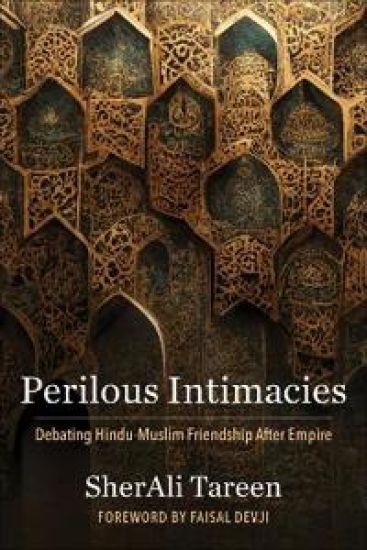
Perilous Intimacies

SherAli Tareen; Faisal Devji

Columbia University Press
2023
sidottu
Finalist, 2024 Award for Excellence in the Study of Religion: Textual Studies, American Academy of ReligionLonglist, 2024 Karwaan Book Award, Karwaan: The Heritage Exploration InitiativeFriendship—particularly interreligious friendship—offers both promise and peril. After the end of Muslim political sovereignty in South Asia, how did Muslim scholars grapple with the possibilities and dangers of Hindu-Muslim friendship? How did they negotiate the incongruities between foundational texts and attitudes toward non-Muslims that were informed by the premodern context of Muslim empire and the realities of British colonialism, which rendered South Asian Muslims a political minority? In this groundbreaking book, SherAli Tareen explores how leading South Asian Muslim thinkers imagined and contested the boundaries of Hindu-Muslim friendship from the late eighteenth to the mid-twentieth centuries. He argues that often what was at stake in Muslim scholarly discourse and debates on Hindu-Muslim friendship were unresolved tensions and fissures over the place and meaning of Islam in the modern world. Perilous Intimacies considers a range of topics, including Muslim scholarly translations of Hinduism, Hindu-Muslim theological polemics, the question of interreligious friendship in the Qur’an, intra-Muslim debates on cow sacrifice, and debates on emulating Hindu customs and habits. Based on the close reading of an expansive and multifaceted archive of Arabic, Persian, and Urdu sources, this book illuminates the depth, complexity, and profound divisions of the Muslim intellectual traditions of South Asia. Perilous Intimacies also provides timely perspective on the historical roots of present-day Hindu-Muslim relations, considering how to overcome thorny legacies and open new horizons for interreligious friendship.
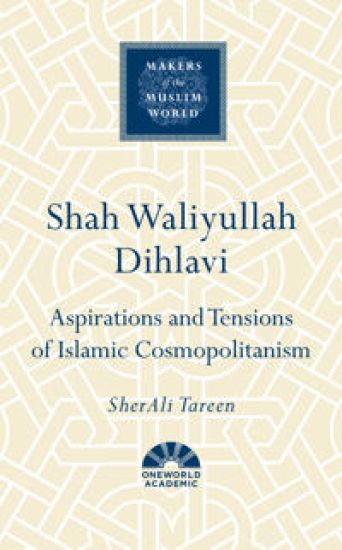
Shah Waliyullah Dihlavi

Shah Waliyullah Dihlavi

SherAli Tareen

Oneworld Publications
2026
sidottu
Shah Waliyullah Dihlavi (d. 1762) was a highly renowned and influential scholar of Islam who produced works on the Qur’an, Islamic law and jurisprudence, Sufism, philosophy and politics. He sought to reconcile seemingly competing strands of Muslim intellectual thought and practice, pursuing a cosmopolitan Islam marked not by dogmatism and finality but by debate and flexibility. In South Asia today, virtually every school of Islamic thought, even those bitterly opposed to him, claim to be his rightful heirs. Setting his life and intellectual career in the context of India on the eve of British colonisation, SherAli Tareen explores Shah Waliyullah’s work and its reception among later scholars and reform movements in South Asia and beyond.
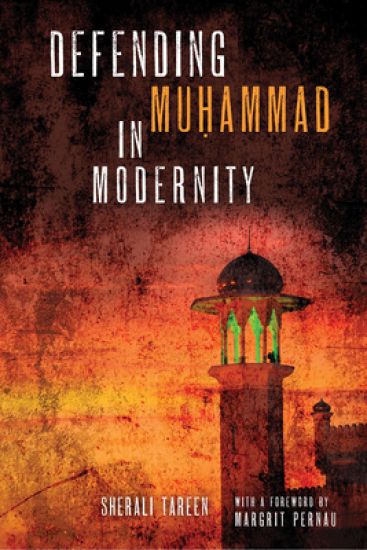
Defending Mu?ammad in Modernity

Defending Mu?ammad in Modernity

SherAli Tareen; Margrit Pernau

University of Notre Dame Press
2020
nidottu
In this groundbreaking study, SherAli Tareen presents the most comprehensive and theoretically engaged work to date on what is arguably the most long-running, complex, and contentious dispute in modern Islam: the Barelvi-Deobandi polemic. The Barelvi and Deobandi groups are two normative orientations/reform movements with beginnings in colonial South Asia. Almost two hundred years separate the beginnings of this polemic from the present. Its specter, however, continues to haunt the religious sensibilities of postcolonial South Asian Muslims in profound ways, both in the region and in diaspora communities around the world. Defending Mu?ammad in Modernity challenges the commonplace tendency to view such moments of intra-Muslim contest through the prism of problematic yet powerful liberal secular binaries like legal/mystical, moderate/extremist, and reformist/traditionalist. Tareen argues that the Barelvi-Deobandi polemic was instead animated by what he calls "competing political theologies" that articulated—during a moment in Indian Muslim history marked by the loss and crisis of political sovereignty—contrasting visions of the normative relationship between divine sovereignty, prophetic charisma, and the practice of everyday life. Based on the close reading of previously unexplored print and manuscript sources in Arabic, Persian, and Urdu spanning the late eighteenth and the entirety of the nineteenth century, this book intervenes in and integrates the often-disparate fields of religious studies, Islamic studies, South Asian studies, critical secularism studies, and political theology.
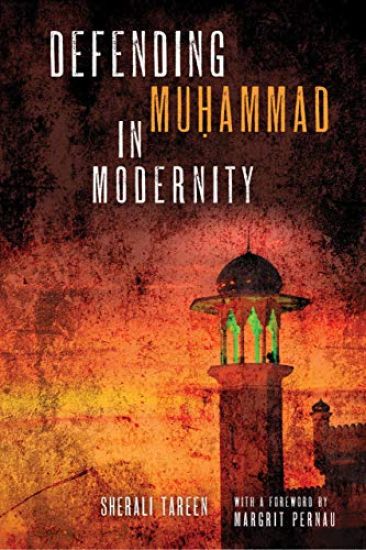
Defending Mu?ammad in Modernity

Defending Mu?ammad in Modernity

SherAli Tareen; Margrit Pernau

University of Notre Dame Press
2020
sidottu
In this groundbreaking study, SherAli Tareen presents the most comprehensive and theoretically engaged work to date on what is arguably the most long-running, complex, and contentious dispute in modern Islam: the Barelvi-Deobandi polemic. The Barelvi and Deobandi groups are two normative orientations/reform movements with beginnings in colonial South Asia. Almost two hundred years separate the beginnings of this polemic from the present. Its specter, however, continues to haunt the religious sensibilities of postcolonial South Asian Muslims in profound ways, both in the region and in diaspora communities around the world. Defending Mu?ammad in Modernity challenges the commonplace tendency to view such moments of intra-Muslim contest through the prism of problematic yet powerful liberal secular binaries like legal/mystical, moderate/extremist, and reformist/traditionalist. Tareen argues that the Barelvi-Deobandi polemic was instead animated by what he calls "competing political theologies" that articulated—during a moment in Indian Muslim history marked by the loss and crisis of political sovereignty—contrasting visions of the normative relationship between divine sovereignty, prophetic charisma, and the practice of everyday life. Based on the close reading of previously unexplored print and manuscript sources in Arabic, Persian, and Urdu spanning the late eighteenth and the entirety of the nineteenth century, this book intervenes in and integrates the often-disparate fields of religious studies, Islamic studies, South Asian studies, critical secularism studies, and political theology.