Kirjojen hintavertailu – 12 876 324 kirjaa ja 26 kauppaa
Kirjailija
Sheridan Fanu
Kirjat ja teokset yhdessä paikassa: 7 kirjaa, julkaisuja vuosilta 2018–2025, suosituimpiin kuuluu Lipstick Love. Vertaile teosten hintoja ja tarkista saatavuus suomalaisista kirjakaupoista.
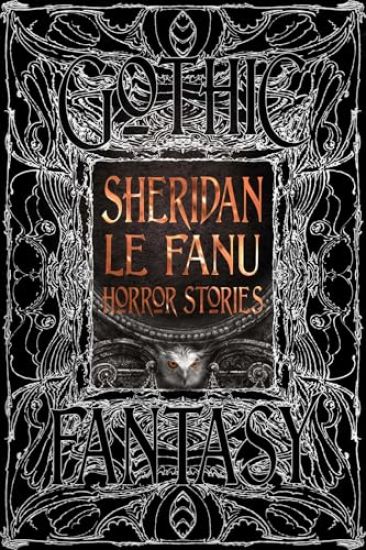
Joseph Sheridan Le Fanu (1814–1873) was a highly influential Irish author, born in Dublin, whose work spread across the English-speaking world, where his impression can be found in the stories of Wilkie Collins, M. R. James, Bram Stoker and many others. Although trained as a lawyer, he became a writer of sensational literature, exploring the dark and fantastic, becoming one of the foundational purveyors of classic horror ghost stories, including his famous early work of vampire fiction Carmilla. His father was Richard Sheridan, playwright of The Rivals and The School for Scandal. This new collection of Le Fanu's stories, with a new foreword, is a must-read selection of classic writing. Flame Tree Gothic Fantasy, Classic Stories and Epic Tales collections bring together the entire range of myth, folklore, epic literature and modern short fiction. Highlighting the roots of suspense, supernatural, science fiction and mystery stories, the books in Flame Tree Collections series are beautifully presented, perfect as a gift and offer a lifetime of reading pleasure.
The House by the Churchyard (1863) is a novel by Sheridan Le Fanu that combines elements of the mystery novel and the historical novel. Aside from its own merits, the novel is important as a key source for James Joyce's Finnegans Wake. Plot summary The novel begins with a prologue in the voice of an old man, Charles de Cresseron, that is set in Chapelizod, Ireland, roughly a century after the events of the novel proper. This prologue details how, during an interment at the churchyard of the title, a skull is accidentally unearthed, which bears the marks of two crushing blows to the head and - even more disconcertingly - a small hole from a trepanning. The novel itself is Cresseron's reconstruction of the history related to this grisly item (though by and large his narratorial voice drops out and the novel is told from a conventional omniscient narrator's point of view). The first chapter of the novel proper moves back to 1767, the period of the novel, and begins with another mysterious occurrence in the churchyard: the secretive burial of a coffin, with the occupant simply identified on the brass plaque as "R. D." But after this ominous opening the book turns (in its first half) to the careful and largely light-hearted elaboration of the social life and intrigues among the denizens of Chapelizod, from the powerful Lord Castlemallard to the soldiers in the local barracks under General Chattesworth, to the good Doctor Walsingham and his daughter Lily, to the gluttonous local Catholic priest Father Roach. The opening section of the novel is largely taken up by a farcical duel between two soldiers, Puddock and O'Flaherty, which arises from drunken misunderstanding and eventually is defused without any harm done. Le Fanu introduces hints of unease, though, with the advent of the mysterious Mr Mervyn, who takes up residence in the Tiled House, a building widely rumoured to be haunted. (At this point, Le Fanu interpolates a ghost story, "An Authentic Narrative of the Ghost of a Hand", which has often been separately anthologized.) Mervyn courts the daughter of the General, Gertrude Chattesworth, but has a rival in the scheming Mr Dangerfield, the trusted manager of the English estates of Lord Castlemallard who is visiting Chapelizod and who also has his eye on Gertrude. Dangerfield destroys the romance between Mervyn and Gertrude by setting into circulation vicious rumours about him and his family. Mervyn is in fact the son and heir of the late Lord Dunoran, who was found guilty of murdering a man named Beauclerc to whom he had lost a considerable sum at cards; Dunoran then committed suicide in his prison cell. (It was his coffin that was buried at the beginning of the book - the secrecy required because of the dubiousness of burying a suicide on consecrated ground.)............ Joseph Thomas Sheridan Le Fanu ( 28 August 1814 - 7 February 1873) was an Irish writer of Gothic tales, mystery novels, and horror fiction. He was a leading ghost story writer of the nineteenth century and was central to the development of the genre in the Victorian era. M. R. James described Le Fanu as "absolutely in the first rank as a writer of ghost stories". Three of his best-known works are Uncle Silas, Carmilla, and The House by the Churchyard. Early life: Sheridan Le Fanu was born at 45 Lower Dominick Street, Dublin, into a literary family of Huguenot, Irish and English descent. He had an elder sister, Catherine Frances, and a younger brother, William Richard. His parents were Thomas Philip Le Fanu and Emma Lucretia Dobbin. Both his grandmother Alicia Sheridan Le Fanu and his great-uncle Richard Brinsley Sheridan were playwrights (his niece Rhoda Broughton would become a successful novelist), and his mother was also a writer, producing a biography of Charles Orpen....
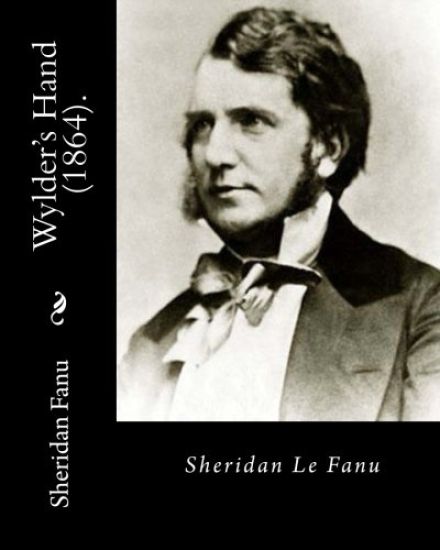
The Wylders and the Brandons share a history of intermarriage, bitter rivalry, villainy, and madness. The wedding of Mark Wylder to his rich and beautiful cousin, Dorcas Brandon, was to inaugurate a harmonious new era at Brandon Hall--but as the ceremony draws near, Mark disappears without trace, leaving Dorcas in shock, and the assembled family in a state of severe agitation. When Mark's letters arrive back at the Hall, postmarked from Europe, the sinister figure of Captain Stanley Lake emerges from the wings to claim Dorcas as his own. First published in 1864, Wylder's Hand was one of J. Sheridan Le Fanu's most popular novels, but has been largely neglected, until now. It is a nerve-jangling tale of jealousy and murder, for fans of the grisly and gripping. Joseph Thomas Sheridan Le Fanu ( 28 August 1814 - 7 February 1873) was an Irish writer of Gothic tales, mystery novels, and horror fiction. He was a leading ghost story writer of the nineteenth century and was central to the development of the genre in the Victorian era. M. R. James described Le Fanu as "absolutely in the first rank as a writer of ghost stories". Three of his best-known works are Uncle Silas, Carmilla, and The House by the Churchyard. Early life: Sheridan Le Fanu was born at 45 Lower Dominick Street, Dublin, into a literary family of Huguenot, Irish and English descent. He had an elder sister, Catherine Frances, and a younger brother, William Richard. His parents were Thomas Philip Le Fanu and Emma Lucretia Dobbin. Both his grandmother Alicia Sheridan Le Fanu and his great-uncle Richard Brinsley Sheridan were playwrights (his niece Rhoda Broughton would become a successful novelist), and his mother was also a writer, producing a biography of Charles Orpen. Within a year of his birth his family moved to the Royal Hibernian Military School in the Phoenix Park, where his father, a Church of Ireland clergyman, was appointed to the chaplaincy of the establishment. The Phoenix Park and the adjacent village and parish church of Chapelizod would appear in Le Fanu's later stories. In 1826 the family moved to Abington, County Limerick, where Le Fanu's father Thomas took up his second rectorship in Ireland. Although he had a tutor, who, according to his brother William, taught them nothing and was finally dismissed in disgrace, Le Fanu used his father's library to educate himself. By the age of fifteen, Joseph was writing poetry which he shared with his mother and siblings but never with his father. His father was a stern Protestant churchman and raised his family in an almost Calvinist tradition. In 1832 the disorders of the Tithe War (1831-36) affected the region. There were about six thousand Catholics in the parish of Abington, and only a few dozen members of the Church of Ireland. (In bad weather the Dean cancelled Sunday services because so few parishioners would attend.) However, the government compelled all farmers, including Catholics, to pay tithes for the upkeep of the Protestant church. The following year the family moved back temporarily to Dublin, to Williamstown Avenue in a southern suburb, where Thomas was to work on a Government commission.
Uncle Silas, subtitled "A Tale of Bartram-Haugh", is a Victorian Gothic mystery-thriller novel by the Irish writer J. Sheridan Le Fanu. Despite Le Fanu resisting its classification as such, the novel has also been hailed as a work of sensation fiction by contemporary reviewers and modern critics alike. It is an early example of the locked room mystery subgenre, rather than a novel of the supernatural (despite a few creepily ambiguous touches), but does show a strong interest in the occult and in the ideas of Emanuel Swedenborg, a Swedish scientist, philosopher and Christian mystic. Like many of Le Fanu's novels, Uncle Silas grew out of an earlier short story, in this case "A Passage in the Secret History of an Irish Countess" (1839), which he also published as "The Murdered Cousin" in the collection Ghost Stories and Tales of Mystery (1851). While this earlier story was set in Ireland, the novel's action takes place in Derbyshire; the author Elizabeth Bowen was the first to identify a distinctly Irish sub-text to the novel, however, in spite of its English setting. It was first serialized in the Dublin University Magazine in 1864, under the title Maud Ruthyn and Uncle Silas, and appeared in December of the same year as a three-volume novel from the London publisher Richard Bentley. Several changes were made from the serialization to the volume edition, such as resolving the inconsistencies of names. Plot summary The novel is a first-person narrative told from the point of view of the adolescent girl Maud Ruthyn, an heiress living with her sombre, reclusive father Austin Ruthyn in their mansion at Knowl. Through her father and her worldly, cheerful cousin, Lady Monica Knollys, she gradually learns more regarding her uncle, Silas Ruthyn, a black sheep of the family whom she has never met; once an infamous rake and gambler, he is now apparently a fervently reformed Christian. His reputation has been tainted by the suspicious suicide of a man to whom Silas owed an enormous gambling debt, which took place within a locked, apparently impenetrable room in Silas's mansion at Bartram-Haugh. In the first part of the novel, Maud's father hires a French governess, Madame de la Rougierre, as a companion for her. Madame de la Rougierre terrifies Maud and appears to have designs on her; during two of their walks together, Maud is brought into suspicious contact with strangers that seem to be known to Madame de la Rougierre. (In a cutaway scene that breaks the first-person narrative, we learn that she is in league with Uncle Silas's good-for-nothing son Dudley.) The governess is eventually dismissed when she is discovered by Maud in the act of burgling her father's desk. Maud is asked in obscure terms by her father if she is willing to undergo some kind of "ordeal" to clear the name of her uncle, and of the family more generally; shortly after she assents, he dies. At the reading of his will, it emerges that her father added a codicil to it: Maud is to stay with Uncle Silas until she comes of age; if she dies whilst still a minor, the estate will pass to Silas. Lady Knollys, together with Austin's executor and fellow Swedenborgian, Dr. Bryerly, attempt in vain to overturn the codicil, realizing its many dangerous implications for the young heiress; despite their efforts, Maud consents willingly to spending the next three and a half years at her uncle's mansion at Bartram-Haugh..... Joseph Thomas Sheridan Le Fanu ( 28 August 1814 - 7 February 1873) was an Irish writer of Gothic tales, mystery novels, and horror fiction. He was a leading ghost story writer of the nineteenth century and was central to the development of the genre in the Victorian era. M. R. James described Le Fanu as "absolutely in the first rank as a writer of ghost stories". Three of his best-known works are Uncle Silas, Carmilla, and The House by the Churchyard.