Kirjojen hintavertailu – 12 903 725 kirjaa ja 27 kauppaa

Kirjailija

Shinichi Ichimura

Kirjat ja teokset yhdessä paikassa: 4 kirjaa, julkaisuja vuosilta 1998–2015, suosituimpiin kuuluu Political Economy of Japanese and Asian Development. Vertaile teosten hintoja ja tarkista saatavuus suomalaisista kirjakaupoista.

4 kirjaa

Kirjojen julkaisuvuodet: 1998–2015.

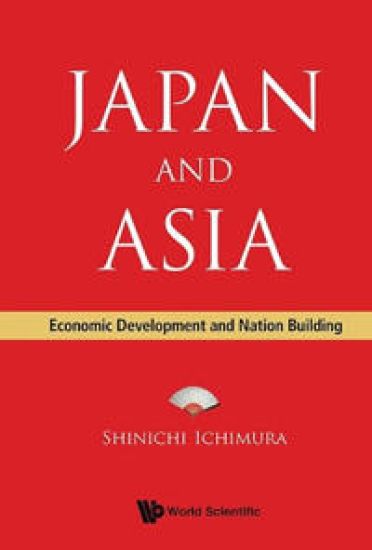
Japan And Asia: Economic Development And Nation Building

Japan And Asia: Economic Development And Nation Building

Shinichi Ichimura

World Scientific Publishing
2015
sidottu
The book is a precious reference book for development economics or the political economy of development in Asia or anywhere else. Unlike other books, first, it deals with all the East Asian countries, including Japan and other Asian countries. Second, it offers some empirical research findings based on surveys conducted by the author's group. Research on developing countries has been limited by individual scholars' observations, particularly about the value-related issues like politics or religions. Thirdly, the book digs into the nation-building problems which are often neglected by economists. It bridges the politics, sociology and economics in East Asian countries and is an important reference book for graduate students.
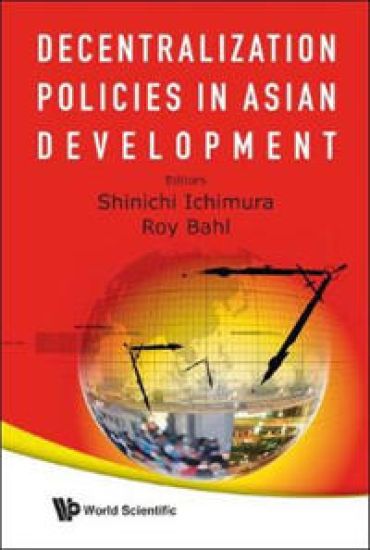
Decentralization Policies In Asian Development

Decentralization Policies In Asian Development

Shinichi Ichimura; Roy Bahl

World Scientific Publishing Co Pte Ltd
2009
sidottu
This book explores the important topic of fiscal decentralization in Asian countries, and focuses on how government finance and administration are being reformed to bring budgetary decisions closer to voters. The focus on Asia is especially important because all countries in this region have been undergoing serious fiscal reforms in the past decade. They include one of the biggest decentralization reforms in Indonesia, significant reforms in democratic Philippines and Vietnam which are in transition, and Japan, whose fiscal reconstruction program is covered extensively. India and China, which are also covered, are very special cases because of their size and because their policies must fit decentralization into a significant economic growth scenario.
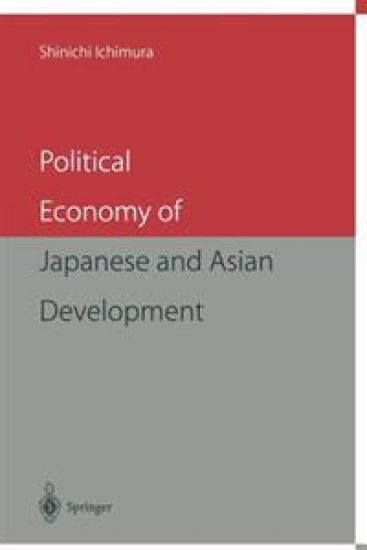
Political Economy of Japanese and Asian Development

Political Economy of Japanese and Asian Development

Shinichi Ichimura

Springer Verlag, Japan
1999
nidottu
This book deals with the major problems that Japan and East Asian countries have faced during the turbulent years of their reconstruction and development from 1945 to the present time. The Development Report of the World Bank 1993 on the same subject was given the subtitle East Asian Miracle. I have never thought, however, that the impressive achievement of East Asian development was a miracle in any sense. Indeed, as this book tries to show, Japanese and Asian development has been the fruit of the sweat, tears, and blood of all East Asian nations. The efforts and sacrifices involved in the process of their development after World War II are no less than those during the war itself. One should not overlook the fact that almost all the peoples of East Asia have achieved not just economic development but indeed new nation-building after hundreds of years of coloni­ al submission. It is my assertion in this book that even economists' analyses of Asian development should pay attention to not only the logos but also the pathos of develop­ ment in this last half of twentieth century. Ever since I became the director of the Center for Southeast Asian Studies at Kyoto University in 1969, I have written extensively in English as well as in Japanese on the various problems arising in the Japanese and other Asian economies.
East Asian Development

East Asian Development

F. Gerard Adams; Shinichi Ichimura

Praeger Publishers Inc
1998
sidottu
East Asia's rapid economic growth and the crisis of 1997 have caught the world's attention. As the Asian miracle has turned to meltdown, the critical question has become whether growth will resume. Based on research and conferences at ICSEAD in Kitakyushu, Japan, this book brings together the work of Asian economic development experts. It considers the forces behind the East Asian growth miracle, the process of growth, the effect of saving, and the effect of foreign direct investment and multinationals. Taking an optimistic view, the authors conclude that rapid growth may resume in East Asia once the crisis has been resolved. The authors argue that a growth process links East Asian countries to each other and to the industrial world, and that growth reflects a process that combines capital formation and technical and institutional change. The 1997 crisis grew out of excessively rapid boom and must be handled before growth will resume. But, the authors conclude, once the crisis has been resolved, the linked process of growth supported by appropriate policies, high levels of savings and investment, and foreign investment will allow growth to resume, although perhaps with a different geographic center of gravity.