Kirjojen hintavertailu – 12 903 725 kirjaa ja 27 kauppaa

Kirjailija

Shiping Hua

Kirjat ja teokset yhdessä paikassa: 6 kirjaa, julkaisuja vuosilta 2001–2026, suosituimpiin kuuluu The Chinese Dream and Law. Vertaile teosten hintoja ja tarkista saatavuus suomalaisista kirjakaupoista.

6 kirjaa

Kirjojen julkaisuvuodet: 2001–2026.

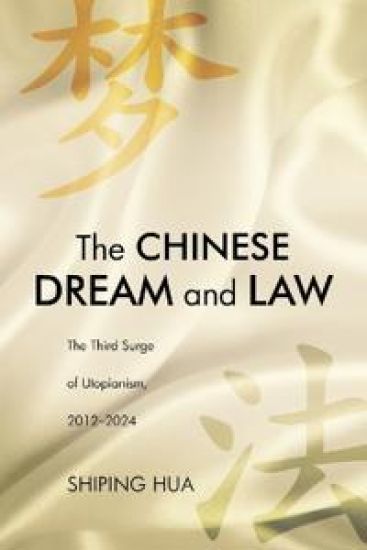
The Chinese Dream and Law

The Chinese Dream and Law

Shiping Hua

STATE UNIVERSITY OF NEW YORK PRESS
2026
pokkari
Analyzes the major laws promulgated during the Xi Jinping era against a background of the politics and ideology of the Xi regime in general. The Chinese Dream and Law study situates the Chinese Dream in the modern utopianism discourse since the Late Qing, following Kang Youwei and Mao Zedong. As a tool to promote the Chinese Dream, the legal reforms during the period depart from the "thin constitutionalism" of the first three decades of the post-Mao era and resemble aspects of Legalism. Although the current regime has made some progress in protecting people's socioeconomic rights through law, it has retreated on upholding judicial independence to protect people's civil and political rights, especially those vis-à-vis the state. The first three decades since post-Mao reform are an aberration that deviates from the normal trajectory of modern Chinese political development. The decade-long efforts by the current regime have slowed the growing official corruption and have slightly narrowed the growing income gap, although economic growth was cut in half. The Chinese style of utopianism could mean a "better place"—as in the country's ancient past. It could also become a "no place" in the modern diverse world because this human hope that has a universal claim is often built on authoritarian means.
Chinese Legal Culture and Constitutional Order
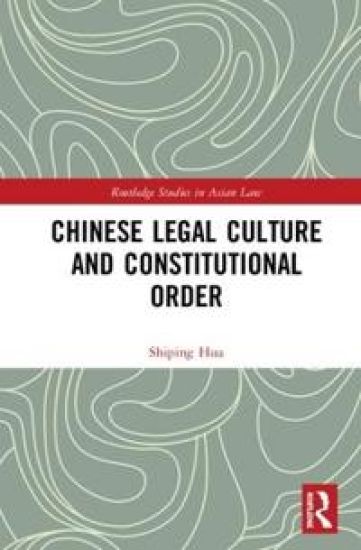
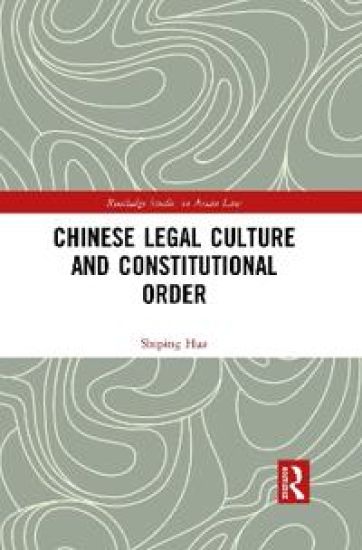
This book examines China’s striving for a constitutional order in the 20th century from comparative, historical, and theoretical perspectives. Through a comprehensive study of six major constitutional reforms experienced by China in the last century, Shiping Hua explores pragmatism, instrumentalism, statism, and favoritism as the key features of the Chinese legal culture. Demonstrating that these characteristics have roots in China’s ancient past and coincide with modern communist legal theory, it argues that Chinese legal culture has greatly impacted upon the country’s move to modernize its legal system. By analyzing key constitutional periods in China’s history, this book also evaluates patterns that can be used to better comprehend not only China’s present legal reform but its future legal developments too. As the first book to examine how the Chinese legal culture has affected constitutional reform in the 20th century, Chinese Legal Culture and Constitutional Order will be useful to students and scholars of Asian and constitutional law, as well as Chinese Studies more generally. Winner of the 2019 ACPSS (Association of Chinese Professors of Social Sciences in the United States) Best Scholarly Publication Award for Original Research.
Chinese Legal Culture and Constitutional Order
This book examines China’s striving for a constitutional order in the 20th century from comparative, historical, and theoretical perspectives. Through a comprehensive study of six major constitutional reforms experienced by China in the last century, Shiping Hua explores pragmatism, instrumentalism, statism, and favoritism as the key features of the Chinese legal culture. Demonstrating that these characteristics have roots in China’s ancient past and coincide with modern communist legal theory, it argues that Chinese legal culture has greatly impacted upon the country’s move to modernize its legal system. By analyzing key constitutional periods in China’s history, this book also evaluates patterns that can be used to better comprehend not only China’s present legal reform but its future legal developments too. As the first book to examine how the Chinese legal culture has affected constitutional reform in the 20th century, Chinese Legal Culture and Constitutional Order will be useful to students and scholars of Asian and constitutional law, as well as Chinese Studies more generally. Winner of the 2019 ACPSS (Association of Chinese Professors of Social Sciences in the United States) Best Scholarly Publication Award for Original Research.
Chinese Utopianism

Chinese Utopianism

Shiping Hua

Stanford University Press
2009
sidottu
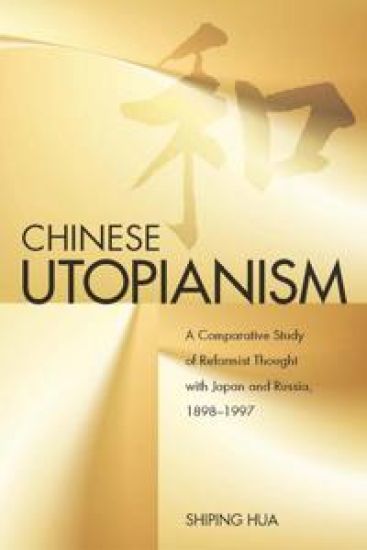
Chinese Utopianism offers a new explanation of extreme radicalism in Chinese reform movements from the late nineteenth century through the Cultural Revolution and into the post-Mao era. By studying comparable Japanese and Russian reforms that have, in contrast, pulled their societies back toward the center, Shiping Hua demonstrates how datong—an ancient concept that can be translated as "great harmony"—and other elements of Chinese thought have led China down a unique political path.
Chinese Political Culture

Chinese Political Culture

Shiping Hua; Andrew J. Nathan

Routledge
2001
nidottu
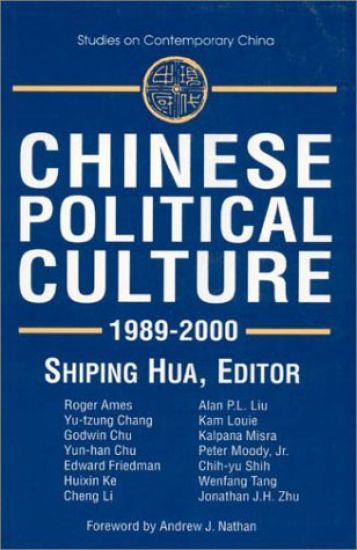
Until this book, there has been no comprehensive, methodologically aware study of all aspects of Chinese political culture. The book is organized into three major areas: Chinese identities and popular culture (regional identities, anti-politics attitudes, Hong Kong identity); public opinion surveys (the Beijing area, Chinese workers, the Shanghai area); and ideological debates (the "new" Confucianism, masculinity and Confucianism, why authoritarianism is popular in China, the decline of Chinese official ideology). Here is the first work that reveals just how much, how rapidly, and how dramatically China is changing and why our perceptions of China must keep pace.
Chinese Political Culture

Chinese Political Culture

Shiping Hua; Andrew J. Nathan

Routledge
2001
sidottu
Until this book, there has been no comprehensive, methodologically aware study of all aspects of Chinese political culture. The book is organized into three major areas: Chinese identities and popular culture (regional identities, anti-politics attitudes, Hong Kong identity); public opinion surveys (the Beijing area, Chinese workers, the Shanghai area); and ideological debates (the "new" Confucianism, masculinity and Confucianism, why authoritarianism is popular in China, the decline of Chinese official ideology). Here is the first work that reveals just how much, how rapidly, and how dramatically China is changing and why our perceptions of China must keep pace.