Kirjojen hintavertailu – 12 859 818 kirjaa ja 27 kauppaa

Kirjailija

Shireen Hassim

Kirjat ja teokset yhdessä paikassa: 5 kirjaa, julkaisuja vuosilta 2006–2015, suosituimpiin kuuluu Go Home or Die Here. Vertaile teosten hintoja ja tarkista saatavuus suomalaisista kirjakaupoista.

5 kirjaa

Kirjojen julkaisuvuodet: 2006–2015.

Go Home or Die Here

Go Home or Die Here

Shireen Hassim; Tawana Kupe; Eric Worby; Paul Verryn; Alex Eliseev; Rolf Maruping; Daryl Glaser; Noor Nieftagodien; Stephen Gelb; Devan Pillay; Loren Landau; David Coplan; Julia Hornberger; Melinda Silverman; Tanya Zack; Anton Harber; Cathi Albertyn; Andile Mngxitama; Pumla Dineo Gqola; Véronique Tadjo

Wits University Press
2008
pokkari
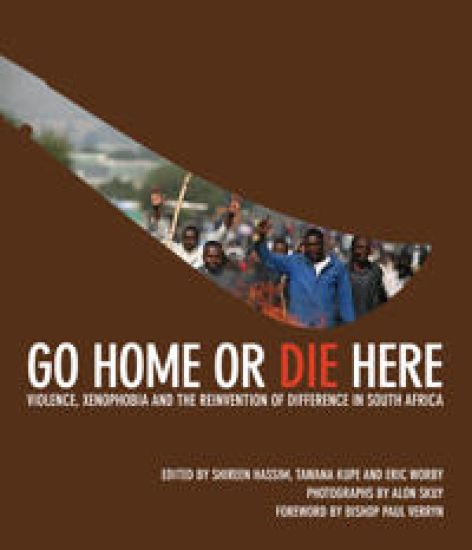
The xenophobic attacks that started in Alexandra, Johannesburg in May 2008 before quickly spreading around the country caused an outcry across the world and raised many fundamental questions: Of what profound social malaise is xenophobia – and the violence that it inspires – a symptom? Have our economic and political choices created new forms of exclusion that fuel anger and distrust? What consequences does the emergence of xenophobia hold for the idea of an equal, non-racial society as symbolised by a democratic South Africa? On 28 May 2008 the Faculty of Humanities in the University of the Witwatersrand, Johannesburg convened an urgent colloquium that focused on searching for short and long-term solutions. Nearly twenty individuals – mostly Wits academics from a variety of disciplines, but also two student leaders, a journalist and a bishop – addressed the unfolding violence in ways that were conversant with the moment, yet rooted in scholarship and ongoing research. Go Home or Die Here emanates directly from the colloquium. It hopes to make sense of the nuances and trajectories of building a democratic society out of a deeply divided and conflictual past, in the conditions of global recession, heightening inequalities and future uncertainty. The authors hoped to pose questions that would lead both to research and to more informed, reflective forms of public action. With extensive photographs by award-winning photographer Alon Skuy, who covered the violence for The Times newspaper, the volume is passionate and engaged, and aims to stimulate reflection, debate and activism among concerned members of a broad public.
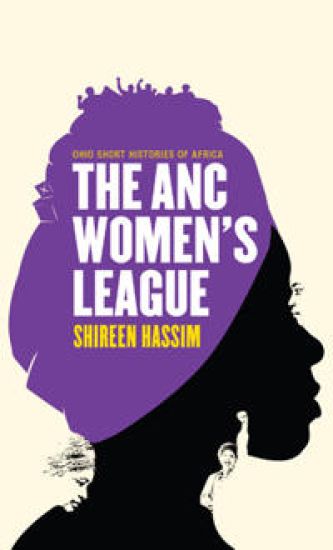
The ANC Women's League

The ANC Women's League

Shireen Hassim

Ohio University Press
2015
pokkari
First formed in the early twentieth century, the ANC Women's League has grown into a leading organization in the women's movement in South Africa. The league has been at the forefront of the nation's century-long transition from an authoritarian state to a democracy that espouses gender equality as a core constitutional value. It has, indeed, always regarded itself as the women's movement, frequently asserting its primacy as a vanguard organization and as the only legitimate voice of the women of South Africa. But, as this deeply insightful book shows, the history of the league is a more complicated affair—it was neither the only women's organization in the political field nor an easy ally for South African feminism.
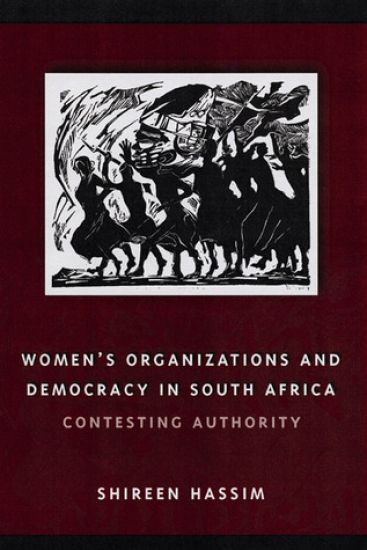
Women's Organizations and Democracy in South Africa

Women's Organizations and Democracy in South Africa

Shireen Hassim

University of Wisconsin Press
2006
nidottu
The transition to democracy in South Africa was one of the defining events in twentieth-century political history. The South African women's movement is one of the most celebrated on the African continent. Shireen Hassim examines interactions between the two as she explores the gendered nature of liberation and regime change. Her work reveals how women's political organizations both shaped, and were shaped by the broader democratic movement. Alternately asserting their political independence and giving precedence to the democratic movement as a whole, women activists proved flexible and remarkably successful in influencing policy. At the same time, their feminism was profoundly shaped by the context of democratic and nationalist ideologies. In reading the last twenty-five years of South African history through a feminist framework, Hassim offers fresh insights into the interactions between civil society, political parties, and the state. Hassim boldly confronts sensitive issues such as the tensions between autonomy and political dependency in feminists' engagement with the African National Congress (ANC) and other democratic movements, and black-white relations within women's organizations. She offers a historically informed discussion of the challenges facing feminist activists during a time of nationalist struggle and democratization.