Kirjojen hintavertailu – 12 859 818 kirjaa ja 27 kauppaa

Kirjailija

Shirley Anne Tate

Kirjat ja teokset yhdessä paikassa: 10 kirjaa, julkaisuja vuosilta 2005–2024, suosituimpiin kuuluu From Post-Intersectionality to Black Decolonial Feminism. Vertaile teosten hintoja ja tarkista saatavuus suomalaisista kirjakaupoista.

10 kirjaa

Kirjojen julkaisuvuodet: 2005–2024.

Decolonising Sambo

Decolonising Sambo

Shirley Anne Tate

Emerald Publishing Limited
2024
sidottu
sambo is racialised naming, deeply rooted in the colonial legacies of white European settler colonial societies globally, including Australia, the Caribbean, South Africa, the USA, Canada and Latin America. This second edition of Decolonising Sambo: Transculturation, Fungibility and Black and People of Colour Futurity develops further the Black decolonial feminist theoretical framing of sambo as a white settler colonial psyche artefact by incorporating 'whiteness as property' into the critical theories used to analyse its construction. Tate examines manifestations of sambo in different contexts, including Canada’s Prairies, while shedding light on the persistence of racist caricature across the Americas, Europe and beyond. The work offers an analysis of Indigenous Australians’ experiences within the framework of global Black liberation thought and continuing dispossession. It also discusses the ongoing Caribbean Reparations movement. Throughout, the text underscores the enduring significance of sambo as colonial psychic remainder amidst broader discussions on global anti-Blackness, particularly in the aftermath of the #BLM movement. Drawing from historical, cultural and socio-political perspectives, this new edition provides scholars and students with insights into anti-Black racial formations, colonial power structures and critical theories, enriching discussions on race, identity and decolonisation across academic disciplines.

Futures of Anti-Racism

Futures of Anti-Racism

Nikolay Zakharov; Shirley Anne Tate; Ian Law; Joaze Bernardino-Costa

Springer International Publishing AG
2024
nidottu
? This book assesses the nature and extent of the project of deracialisation required to counter the contemporary dynamics of racialisation across four varieties of modernity: Sweden, South Africa, Brazil and the UK, based on original research on each of the four country contexts. Since racism began to be recognised or identified as a problem, an assemblage of supra-national initiatives have been devised in the name of combatting, dismantling or reducing it. There has been a recent shift whereby such supra-national bodies move toward embedding strategies against racism within the framework of human rights and devolving such responsibility to other bodies at a national level. The authors bring together a team of international experts in this field, in order to compare the priorities and effectiveness of current strategic approaches in each national context, examining their relationalities and connecting these cases within a joint theoretical and methodological framework. Thus, this book contributes to theoretical knowledge on racialisation and deracialisation, produce a new data set on contemporary interventions and institutions and establish new principles and practice for national projects of deracialisation and anti-racism, building on cross-national learning.
Futures of Anti-Racism

Futures of Anti-Racism

Nikolay Zakharov; Shirley Anne Tate; Ian Law; Joaze Bernardino-Costa

Springer International Publishing AG
2023
sidottu
? This book assesses the nature and extent of the project of deracialisation required to counter the contemporary dynamics of racialisation across four varieties of modernity: Sweden, South Africa, Brazil and the UK, based on original research on each of the four country contexts. Since racism began to be recognised or identified as a problem, an assemblage of supra-national initiatives have been devised in the name of combatting, dismantling or reducing it. There has been a recent shift whereby such supra-national bodies move toward embedding strategies against racism within the framework of human rights and devolving such responsibility to other bodies at a national level. The authors bring together a team of international experts in this field, in order to compare the priorities and effectiveness of current strategic approaches in each national context, examining their relationalities and connecting these cases within a joint theoretical and methodological framework. Thus, this book contributes to theoretical knowledge on racialisation and deracialisation, produce a new data set on contemporary interventions and institutions and establish new principles and practice for national projects of deracialisation and anti-racism, building on cross-national learning.
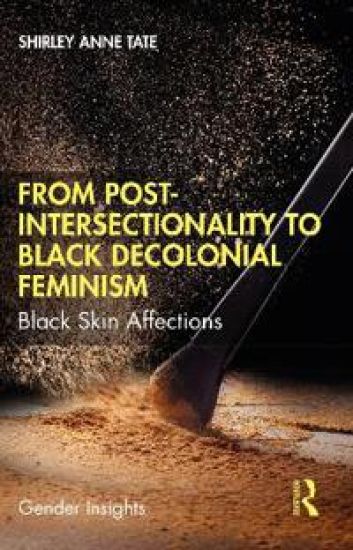
From Post-Intersectionality to Black Decolonial Feminism
In this accessible and yet challenging work, Shirley Anne Tate engages with race and gender intersectionality, connecting through to affect theory, to develop a Black decolonial feminist analysis of global anti-Blackness. Through the focus on skin, Tate provides a groundwork of historical context and theoretical framing to engage more contemporary examples of racist constructions of Blackness and Black bodies. Examining the history of intersectionality including its present ‘post-intersectionality’, the book continues intersectionality’s racialized gender critique by developing a Black decolonial feminist approach to cultural readings of Black skin’s consumption, racism within ‘body beauty institutions’ (e.g. modelling, advertising, beauty pageants) and cultural representations, as well as the affects which keep anti-Blackness in play. This book is suitable for undergraduate and postgraduate students in gender studies, sociology and media studies.
Black Skins, Black Masks

Black Skins, Black Masks

Shirley Anne Tate

Routledge
2020
nidottu
Black Skin, Black Masks: Hybridity, Dialogism, Performativity offers a timely exploration of Black identity and its negotiation. The book draws on empirical work recording everyday conversations between Black women: friends, peers and family members. These conversations are discussed in the light of the work of Homi Bhabha, Stuart Hall, Gerd Baumann, Claire Alexander and others on questions of hybridity, identity, otherness and the development of ’new ethnicities’. Tate aims to address what she sees as significant omissions in contemporary Black Cultural Studies. She argues that theorists have rarely looked at the process of identity construction in terms of lived-experience; and that they have tended to concentrate on the demise of the essential Black subject, paying little attention to gender. The book points to a continuation of a ’politics of the skin’ in Black identities. As such it argues against Bhabha's claim that essence is not central to hybrid identities. The conversations recorded in the book reveal the ways in which women negotiate the category of Blackness, in what Tate calls a 'hybridity-of- the-everyday'. The book introduces a new interpretative vocabulary to look at the ways in which hybridity is orchestrated and fashioned, showing it to be performative, dialogical and dependent on essentialism.
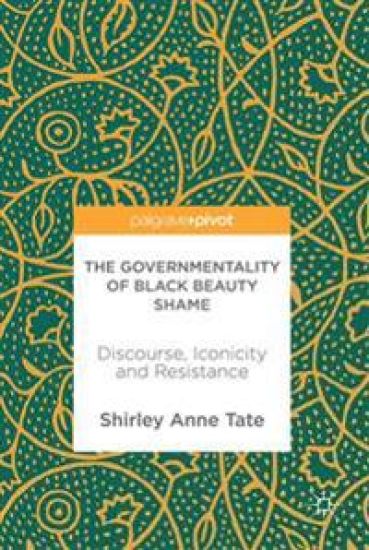
The Governmentality of Black Beauty Shame

The Governmentality of Black Beauty Shame

Shirley Anne Tate

Palgrave Pivot
2017
sidottu
This book uses the experiences and conversations of Black British women as a lens to examine the impact of discourses surrounding Black beauty shame. Black beauty shame exists within racialized societies which situate white beauty as iconic, and as a result produce Black ‘ugliness’ as a counterpoint. At the same time, Black Nationalist discourses present Black-white ‘mixed race’ women as bodies out of place within the Black community. In the examples analysed within the book, women disidentify from both the iconicities of white beauty and the discourses of Black Nationalist darker-skinned beauty, negating both ideals. This demonstration of Foucaldian counter-conduct can be read as a form of disalienation from the governmentality of Black beauty shame. This fascinating volume will be of interest to students and scholars of Black identity, Black beauty and discourse analysis.
Black Beauty: Aesthetics, Stylization, Politics
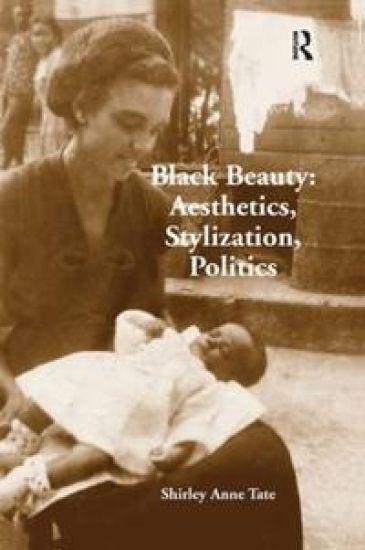
Previous work discussing Black beauty has tended to concentrate on Black women's search for white beauty as a consequence of racialization. Without denying either the continuation of such aesthetics or their enduring power, this book uncovers the cracks in this hegemonic Black beauty. Drawing on detailed ethnographic research amongst British women of Caribbean heritage, this volume pursues a broad discussion of beauty within the Black diaspora contexts of the Caribbean, the UK, the United States and Latin America through different historical periods to the present day. With a unique exploration of beauty, race and identity politics, the author reveals how Black women themselves speak about, negotiate, inhabit, work on and perform Black beauty. As such, it will appeal not only to sociologists, but anyone working in the fields of race, ethnicity and post-colonial thought, feminism and the sociology of the body.
Black Beauty: Aesthetics, Stylization, Politics

Black Beauty: Aesthetics, Stylization, Politics

Shirley Anne Tate

Ashgate Publishing Limited
2009
sidottu
Previous work discussing Black beauty has tended to concentrate on Black women's search for white beauty as a consequence of racialization. Without denying either the continuation of such aesthetics or their enduring power, this book uncovers the cracks in this hegemonic Black beauty. Drawing on detailed ethnographic research amongst British women of Caribbean heritage, this volume pursues a broad discussion of beauty within the Black diaspora contexts of the Caribbean, the UK, the United States and Latin America through different historical periods to the present day. With a unique exploration of beauty, race and identity politics, the author reveals how Black women themselves speak about, negotiate, inhabit, work on and perform Black beauty. As such, it will appeal not only to sociologists, but anyone working in the fields of race, ethnicity and post-colonial thought, feminism and the sociology of the body.
Black Skins, Black Masks

Black Skins, Black Masks

Shirley Anne Tate

Ashgate Publishing Limited
2005
sidottu
Black Skin, Black Masks: Hybridity, Dialogism, Performativity offers a timely exploration of Black identity and its negotiation. The book draws on empirical work recording everyday conversations between Black women: friends, peers and family members. These conversations are discussed in the light of the work of Homi Bhabha, Stuart Hall, Gerd Baumann, Claire Alexander and others on questions of hybridity, identity, otherness and the development of ’new ethnicities’. Tate aims to address what she sees as significant omissions in contemporary Black Cultural Studies. She argues that theorists have rarely looked at the process of identity construction in terms of lived-experience; and that they have tended to concentrate on the demise of the essential Black subject, paying little attention to gender. The book points to a continuation of a ’politics of the skin’ in Black identities. As such it argues against Bhabha's claim that essence is not central to hybrid identities. The conversations recorded in the book reveal the ways in which women negotiate the category of Blackness, in what Tate calls a 'hybridity-of- the-everyday'. The book introduces a new interpretative vocabulary to look at the ways in which hybridity is orchestrated and fashioned, showing it to be performative, dialogical and dependent on essentialism.