
Kirjojen hintavertailu – 12 903 725 kirjaa ja 27 kauppaa

Kirjailija

Shlomi Dinar

Kirjat ja teokset yhdessä paikassa: 6 kirjaa, julkaisuja vuosilta 2007–2016, suosituimpiin kuuluu Bridges Over Water: Understanding Transboundary Water Conflict, Negotiation And Cooperation. Vertaile teosten hintoja ja tarkista saatavuus suomalaisista kirjakaupoista.

6 kirjaa

Kirjojen julkaisuvuodet: 2007–2016.

International Water Scarcity and Variability

International Water Scarcity and Variability

Shlomi Dinar; Ariel Dinar

University of California Press
2016
sidottu
International Water Scarcity and Variability considers international water management challenges created by water scarcity and environmental change. Although media coverage and some scholars tend to cast natural resource shortages as leading inexorably toward armed conflict and war, Shlomi Dinar and Ariel Dinar demonstrate that there are many examples of and mechanisms for more peaceful dispute resolution regarding natural resources, even in the face of water paucity and climate change. The authors base these arguments on both global empirical analyses and case studies. Using numerous examples that focus on North America, Europe, Central Asia, and the Middle East, this book considers strategies and incentives that help lessen conflict and motivate cooperation under scarcity and increased variability of water resources.
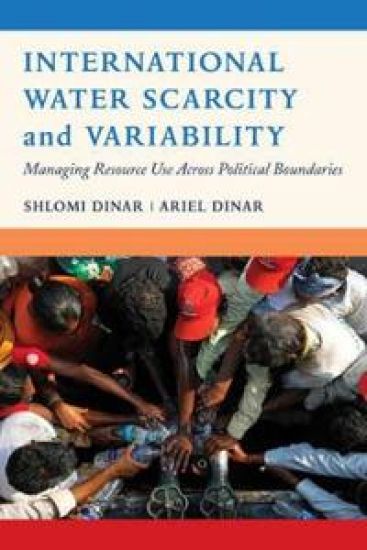
International Water Scarcity and Variability

International Water Scarcity and Variability

Shlomi Dinar; Ariel Dinar

University of California Press
2016
pokkari
International Water Scarcity and Variability considers international water management challenges created by water scarcity and environmental change. Although media coverage and some scholars tend to cast natural resource shortages as leading inexorably toward armed conflict and war, Shlomi Dinar and Ariel Dinar demonstrate that there are many examples of and mechanisms for more peaceful dispute resolution regarding natural resources, even in the face of water paucity and climate change. The authors base these arguments on both global empirical analyses and case studies. Using numerous examples that focus on North America, Europe, Central Asia, and the Middle East, this book considers strategies and incentives that help lessen conflict and motivate cooperation under scarcity and increased variability of water resources.

International Water Treaties

International Water Treaties

Shlomi Dinar

Routledge
2014
nidottu
As demand for fresh water rises, together with population, water scarcity already features on the national security agenda of many countries. In this book, Dinardevelops a theory to explain solutions to property rights conflicts over shared rivers. Through systematic analysis of available treaty texts, corresponding side-payment and cost-sharing patterns are gleaned. Geographic and economic variables are used to explain recurring property rights outcomes. Rather than focusing on a specific river or particular geographic region, the book analyzes numerous rivers, dictated by the large number of treaty observations, and is able to test several hypotheses, devising general conclusions about the manner in which states resolve their water disputes. Policy implications are thereby also gained. While the book simultaneously considers conflict and cooperation along international rivers, it is the focus on negotiated agreements, and their embodied side-payment and cost-sharing regimes, that justifies the use of particular independent variables.
Bridges Over Water: Understanding Transboundary Water Conflict, Negotiation And Cooperation

Bridges Over Water: Understanding Transboundary Water Conflict, Negotiation And Cooperation

Ariel Dinar; Shlomi Dinar; Daene C Mckinney; Stephen C Mccaffrey

World Scientific Publishing Co Pte Ltd
2013
sidottu
Bridges over Water places the study of transboundary water conflicts, negotiation, and cooperation in the context of various disciplines, such as international relations, international law, international negotiations, and economics. It demonstrates their application, using various quantitative approaches, such as river basin modeling, quantitative negotiation theory, and game theory. Case-studies of particular transboundary river basins, lakes, and aquifers are also considered. This second edition updates the literature on international water and in-depth analyses on political developments and cooperation between riparian states. With an appended chapter on principles and practices of negotiation, and a new case study on the La Plata Basin, this edition is a timely update to the field of transboundary water studies.
International Water Treaties

International Water Treaties

Shlomi Dinar

Routledge
2007
sidottu
As demand for fresh water rises, together with population, water scarcity already features on the national security agenda of many countries. In this book, Dinardevelops a theory to explain solutions to property rights conflicts over shared rivers. Through systematic analysis of available treaty texts, corresponding side-payment and cost-sharing patterns are gleaned. Geographic and economic variables are used to explain recurring property rights outcomes. Rather than focusing on a specific river or particular geographic region, the book analyzes numerous rivers, dictated by the large number of treaty observations, and is able to test several hypotheses, devising general conclusions about the manner in which states resolve their water disputes. Policy implications are thereby also gained. While the book simultaneously considers conflict and cooperation along international rivers, it is the focus on negotiated agreements, and their embodied side-payment and cost-sharing regimes, that justifies the use of particular independent variables.
Bridges Over Water: Understanding Transboundary Water Conflict, Negotiation And Cooperation

Bridges Over Water: Understanding Transboundary Water Conflict, Negotiation And Cooperation

Ariel Dinar; Shlomi Dinar; Daene C Mckinney; Stephen C Mccaffrey

World Scientific Publishing Co Pte Ltd
2007
sidottu
"Bridges over Water" places the study of transboundary water conflicts, negotiation, and cooperation in the context of various disciplines (such as international relations, international law, international negotiations, and economics), analyzing them using various quantitative approaches, such as river basin modeling and game theory. Case studies of particular transboundary river basins, lakes and aquifers are also considered. This is the first textbook for a relatively recent yet rapidly expanding field of study.