Kirjojen hintavertailu – 12 859 829 kirjaa ja 27 kauppaa

Kirjailija

Shouyang Wang

Kirjat ja teokset yhdessä paikassa: 32 kirjaa, julkaisuja vuosilta 2002–2023, suosituimpiin kuuluu Information Spillover Effect and Autoregressive Conditional Duration Models. Vertaile teosten hintoja ja tarkista saatavuus suomalaisista kirjakaupoista.

32 kirjaa

Kirjojen julkaisuvuodet: 2002–2023.

Risk Management of Supply and Cash Flows in Supply Chains

Risk Management of Supply and Cash Flows in Supply Chains

Jian Li; Jia Chen; Shouyang Wang

Springer-Verlag New York Inc.
2011
sidottu
Risk management has become an essential issue in supply chain management, from the modeling of the decision maker's risk preference, and the studies on uncertain elements such as demand, supply, price, lead time, etc., to the consideration of more practical background including cash flow constraints, inventory financing and delayed cash payment. In this new volume, the authors provide a framework to study the interaction of various factors related to risk and their influence on supply chain management. The scope of areas covered includes operations management, decision analysis, and business administration. This book focuses on several key issues of risk management in supply chains. Specifically, an analysis framework is presented for studying the supplier selection problem and identifying the optimal sourcing strategy in a one-retailer two-suppliers supply chain with random yields. The optimal sourcing strategy of a retailer and the pricing strategies of two suppliers under an environment of supply disruption are investigated. Besides, the authors study the dynamic inventory control problems with cash flow constraints, financing decisions as well as delayed cash payment. In addition, originating from the annual international iron ore price negotiation, the authors model the bargaining process to deal with the risk of wholesale price in the game analysis context. Within the three perspectives of risk management in supply chains, the modeling of decision maker's risk preference has been extensively studied and many results have been obtained to guide the practice. However, the analysis on the other two kinds of topics is still in its infancy, and needs more efforts from academia. It is thus the ambition and innovation for this book to contribute on risk management in supply chains in the following ways:(1) characterizing the explicit sourcing strategy (i.e., single sourcing or dual sourcing) to deal with supply disruption risk;(2)introducing the concepts of financial risk measurement by incorporating cash flow constraints, inventory financing and delayed cash payment into inventory management models; and(3) providing insights for the iron ore price negotiation to help steel manufacturers handle the risk of price increase.
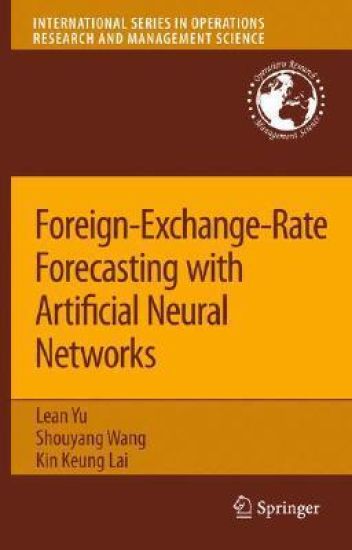
Foreign-Exchange-Rate Forecasting with Artificial Neural Networks

Foreign-Exchange-Rate Forecasting with Artificial Neural Networks

Lean Yu; Shouyang Wang; Kin Keung Lai

Springer-Verlag New York Inc.
2010
nidottu
The foreign exchange market is one of the most complex dynamic markets with the characteristics of high volatility, nonlinearity and irregularity. Since the Bretton Woods System collapsed in 1970s, the fluctuations in the foreign exchange market are more volatile than ever. Furthermore, some important factors, such as economic growth, trade development, interest rates and inflation rates, have significant impacts on the exchange rate fluctuation. Meantime, these characteristics also make it extremely difficult to predict foreign exchange rates. Therefore, exchange rates forecasting has become a very important and challenge research issue for both academic and ind- trial communities. In this monograph, the authors try to apply artificial neural networks (ANNs) to exchange rates forecasting. Selection of the ANN approach for - change rates forecasting is because of ANNs’ unique features and powerful pattern recognition capability. Unlike most of the traditional model-based forecasting techniques, ANNs are a class of data-driven, self-adaptive, and nonlinear methods that do not require specific assumptions on the und- lying data generating process. These features are particularly appealing for practical forecasting situations where data are abundant or easily available, even though the theoretical model or the underlying relationship is - known. Furthermore, ANNs have been successfully applied to a wide range of forecasting problems in almost all areas of business, industry and engineering. In addition, ANNs have been proved to be a universal fu- tional approximator that can capture any type of complex relationships.
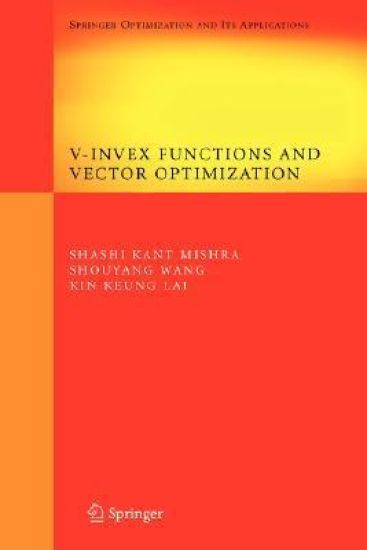
V-Invex Functions and Vector Optimization

V-Invex Functions and Vector Optimization

Shashi K. Mishra; Shouyang Wang; Kin Keung Lai

Springer-Verlag New York Inc.
2010
nidottu
This volume summarizes and synthesizes an aspect of research work that has been done in the area of Generalized Convexity over the past few decades. Specifically, the book focuses on V-invex functions in vector optimization that have grown out of the work of Jeyakumar and Mond in the 1990's. The authors integrate related research into the book and demonstrate the wide context from which the area has grown and continues to grow.
Generalized Convexity and Vector Optimization

Generalized Convexity and Vector Optimization

Shashi K. Mishra; Shouyang Wang; Kin Keung Lai

Springer-Verlag Berlin and Heidelberg GmbH Co. K
2010
nidottu
The present lecture note is dedicated to the study of the optimality conditions and the duality results for nonlinear vector optimization problems, in ?nite and in?nite dimensions. The problems include are nonlinear vector optimization problems, s- metric dual problems, continuous-time vector optimization problems, relationships between vector optimization and variational inequality problems. Nonlinear vector optimization problems arise in several contexts such as in the building and interpretation of economic models; the study of various technolo- cal processes; the development of optimal choices in ?nance; management science; production processes; transportation problems and statistical decisions, etc. In preparing this lecture note a special effort has been made to obtain a se- contained treatment of the subjects; so we hope that this may be a suitable source for a beginner in this fast growing area of research, a semester graduate course in nonlinear programing, and a good reference book. This book may be useful to theoretical economists, engineers, and applied researchers involved in this area of active research. The lecture note is divided into eight chapters: Chapter 1 brie?y deals with the notion of nonlinear programing problems with basic notations and preliminaries. Chapter 2 deals with various concepts of convex sets, convex functions, invex set, invex functions, quasiinvex functions, pseudoinvex functions, type I and generalized type I functions, V-invex functions, and univex functions.
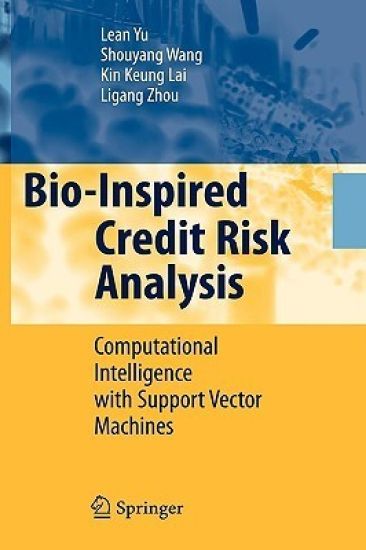
Bio-Inspired Credit Risk Analysis

Bio-Inspired Credit Risk Analysis

Lean Yu; Shouyang Wang; Kin Keung Lai; Ligang Zhou

Springer-Verlag Berlin and Heidelberg GmbH Co. K
2010
nidottu
Credit risk analysis is one of the most important topics in the field of financial risk management. Due to recent financial crises and regulatory concern of Basel II, credit risk analysis has been the major focus of financial and banking industry. Especially for some credit-granting institutions such as commercial banks and credit companies, the ability to discriminate good customers from bad ones is crucial. The need for reliable quantitative models that predict defaults accurately is imperative so that the interested parties can take either preventive or corrective action. Hence credit risk analysis becomes very important for sustainability and profit of enterprises. In such backgrounds, this book tries to integrate recent emerging support vector machines and other computational intelligence techniques that replicate the principles of bio-inspired information processing to create some innovative methodologies for credit risk analysis and to provide decision support information for interested parties.
Postponement Strategies in Supply Chain Management

Postponement Strategies in Supply Chain Management

T. C. Edwin Cheng; Jian Li; C. L. Johnny Wan; Shouyang Wang

Springer-Verlag New York Inc.
2010
sidottu
Postponement strategy is one of the major supply chain management (SCM) pr- tices that has a discernible impact on rms’ competitive advantage and organi- tional performance. Postponement is a mass customization strategy that captures the advantages of both mass production and mass customization. Recent research studies have identi ed four common postponement strategies, namely pull, logistics, form and price postponement. The former three postponement strategies are linked to production and manufacturing, while the last one is a pure pricing strategy. They aim at balancing the costs and bene ts of mass production and mass customization. Practical examples of postponement can be found in the high-tech industry, food industry and other industries that require high differentiation. However, empirical studies have found that postponement may not be an evident SCM practice compared to the other practices. In addition, postponement has both positive and negative impacts on a supply chain. The advantages include following the JIT principles, reducing end-product inventory, making forecasting easier and pooling risk. The high cost of designing and manufacturing generic components is the main drawback of postponement. Thus, the evaluation of postponement strategy is an important research issue and there have been many qualitative and quantitative models for analyzing postponement under different scenarios.
Generalized Convexity and Vector Optimization

Generalized Convexity and Vector Optimization

Shashi K. Mishra; Shouyang Wang; Kin Keung Lai

Springer-Verlag Berlin and Heidelberg GmbH Co. K
2008
sidottu
The present lecture note is dedicated to the study of the optimality conditions and the duality results for nonlinear vector optimization problems, in ?nite and in?nite dimensions. The problems include are nonlinear vector optimization problems, s- metric dual problems, continuous-time vector optimization problems, relationships between vector optimization and variational inequality problems. Nonlinear vector optimization problems arise in several contexts such as in the building and interpretation of economic models; the study of various technolo- cal processes; the development of optimal choices in ?nance; management science; production processes; transportation problems and statistical decisions, etc. In preparing this lecture note a special effort has been made to obtain a se- contained treatment of the subjects; so we hope that this may be a suitable source for a beginner in this fast growing area of research, a semester graduate course in nonlinear programing, and a good reference book. This book may be useful to theoretical economists, engineers, and applied researchers involved in this area of active research. The lecture note is divided into eight chapters: Chapter 1 brie?y deals with the notion of nonlinear programing problems with basic notations and preliminaries. Chapter 2 deals with various concepts of convex sets, convex functions, invex set, invex functions, quasiinvex functions, pseudoinvex functions, type I and generalized type I functions, V-invex functions, and univex functions.
Bio-Inspired Credit Risk Analysis

Bio-Inspired Credit Risk Analysis

Lean Yu; Shouyang Wang; Kin Keung Lai; Ligang Zhou

Springer-Verlag Berlin and Heidelberg GmbH Co. K
2008
sidottu
Credit risk analysis is one of the most important topics in the field of financial risk management. Due to recent financial crises and regulatory concern of Basel II, credit risk analysis has been the major focus of financial and banking industry. Especially for some credit-granting institutions such as commercial banks and credit companies, the ability to discriminate good customers from bad ones is crucial. The need for reliable quantitative models that predict defaults accurately is imperative so that the interested parties can take either preventive or corrective action. Hence credit risk analysis becomes very important for sustainability and profit of enterprises. In such backgrounds, this book tries to integrate recent emerging support vector machines and other computational intelligence techniques that replicate the principles of bio-inspired information processing to create some innovative methodologies for credit risk analysis and to provide decision support information for interested parties.
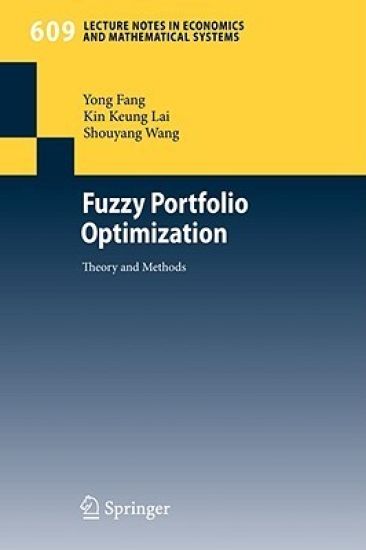
Fuzzy Portfolio Optimization

Fuzzy Portfolio Optimization

Yong Fang; Kin Keung Lai; Shouyang Wang

Springer-Verlag Berlin and Heidelberg GmbH Co. K
2008
nidottu
Most of the existing portfolio selection models are based on the probability theory. Though they often deal with the uncertainty via probabilistic - proaches, we have to mention that the probabilistic approaches only partly capture the reality. Some other techniques have also been applied to handle the uncertainty of the ?nancial markets, for instance, the fuzzy set theory [Zadeh (1965)]. In reality, many events with fuzziness are characterized by probabilistic approaches, although they are not random events. The fuzzy set theory has been widely used to solve many practical problems, including ?nancial risk management. By using fuzzy mathematical approaches, quan- tative analysis, qualitative analysis, the experts’ knowledge and the investors’ subjective opinions can be better integrated into a portfolio selection model. The contents of this book mainly comprise of the authors’ research results for fuzzy portfolio selection problems in recent years. In addition, in the book, the authors will also introduce some other important progress in the ?eld of fuzzy portfolio optimization. Some fundamental issues and problems of po- folioselectionhavebeenstudiedsystematicallyandextensivelybytheauthors to apply fuzzy systems theory and optimization methods. A new framework for investment analysis is presented in this book. A series of portfolio sel- tion models are given and some of them might be more e?cient for practical applications. Some application examples are given to illustrate these models by using real data from the Chinese securities markets.
V-Invex Functions and Vector Optimization

V-Invex Functions and Vector Optimization

Shashi K. Mishra; Shouyang Wang; Kin Keung Lai

Springer-Verlag New York Inc.
2007
sidottu
This volume summarizes and synthesizes an aspect of research work that has been done in the area of Generalized Convexity over the past few decades. Specifically, the book focuses on V-invex functions in vector optimization that have grown out of the work of Jeyakumar and Mond in the 1990's. The authors integrate related research into the book and demonstrate the wide context from which the area has grown and continues to grow.
Foreign-Exchange-Rate Forecasting with Artificial Neural Networks

Foreign-Exchange-Rate Forecasting with Artificial Neural Networks

Lean Yu; Shouyang Wang; Kin Keung Lai

Springer-Verlag New York Inc.
2007
sidottu
The foreign exchange market is one of the most complex dynamic markets with the characteristics of high volatility, nonlinearity and irregularity. Since the Bretton Woods System collapsed in 1970s, the fluctuations in the foreign exchange market are more volatile than ever. Furthermore, some important factors, such as economic growth, trade development, interest rates and inflation rates, have significant impacts on the exchange rate fluctuation. Meantime, these characteristics also make it extremely difficult to predict foreign exchange rates. Therefore, exchange rates forecasting has become a very important and challenge research issue for both academic and ind- trial communities. In this monograph, the authors try to apply artificial neural networks (ANNs) to exchange rates forecasting. Selection of the ANN approach for - change rates forecasting is because of ANNs’ unique features and powerful pattern recognition capability. Unlike most of the traditional model-based forecasting techniques, ANNs are a class of data-driven, self-adaptive, and nonlinear methods that do not require specific assumptions on the und- lying data generating process. These features are particularly appealing for practical forecasting situations where data are abundant or easily available, even though the theoretical model or the underlying relationship is - known. Furthermore, ANNs have been successfully applied to a wide range of forecasting problems in almost all areas of business, industry and engineering. In addition, ANNs have been proved to be a universal fu- tional approximator that can capture any type of complex relationships.
Portfolio Selection and Asset Pricing

Portfolio Selection and Asset Pricing

Shouyang Wang; Yusen Xia

Springer-Verlag Berlin and Heidelberg GmbH Co. K
2002
nidottu
In our daily life, almost every family owns a portfolio of assets. This portfolio could contain real assets such as a car, or a house, as well as financial assets such as stocks, bonds or futures. Portfolio theory deals with how to form a satisfied portfolio among an enormous number of assets. Originally proposed by H. Markowtiz in 1952, the mean-variance methodology for portfolio optimization has been central to the research activities in this area and has served as a basis for the development of modem financial theory during the past four decades. Follow-on work with this approach has born much fruit for this field of study. Among all those research fruits, the most important is the capital asset pricing model (CAPM) proposed by Sharpe in 1964. This model greatly simplifies the input for portfolio selection and makes the mean-variance methodology into a practical application. Consequently, lots of models were proposed to price the capital assets. In this book, some of the most important progresses in portfolio theory are surveyed and a few new models for portfolio selection are presented. Models for asset pricing are illustrated and the empirical tests of CAPM for China's stock markets are made. The first chapter surveys ideas and principles of modeling the investment decision process of economic agents. It starts with the Markowitz criteria of formulating return and risk as mean and variance and then looks into other related criteria which are based on probability assumptions on future prices of securities.