Kirjojen hintavertailu – 12 903 725 kirjaa ja 27 kauppaa

Kirjailija

Shruti Mittal

Kirjat ja teokset yhdessä paikassa: 43 kirjaa, julkaisuja vuosilta 2016–2025, suosituimpiin kuuluu Asymmetrie im Gesicht. Vertaile teosten hintoja ja tarkista saatavuus suomalaisista kirjakaupoista.

43 kirjaa

Kirjojen julkaisuvuodet: 2016–2025.

Clinical applicability of Mini Implant as Anchorage in Orthodontics

Clinical applicability of Mini Implant as Anchorage in Orthodontics

Shruti Mittal; Prerna Hoogan Teja; Kartik Rajan

Lap Lambert Academic Publishing
2023
pokkari
Mini implants, also known as temporary anchorage devices (TADs), are small screw-like devices that are temporarily anchored into the jawbone to provide additional support during orthodontic treatment. Mini implants are usually made of titanium, which is a biocompatible material that allows the implant to fuse with the bone. Mini implants have become increasingly popular in orthodontic treatment because they can provide additional anchorage without relying on the patient's teeth for support. This allows orthodontists to move teeth more effectively, with fewer side effects such as root resorption or anchorage loss. Mini implants are typically placed in the jawbone using a minimally invasive procedure that is done under local anesthesia. Once the mini implant is in place, the orthodontist can attach wires or other orthodontic appliances to it, which can be used to move teeth into the desired position. One of the advantages of mini implants is that they can be placed in a variety of locations in the mouth, including areas where traditional orthodontic appliances cannot be anchored.
A historical review of Orthodontics

A historical review of Orthodontics

Prerna Hoogan Teja; Shruti Mittal; Anil Maheshwal

Lap Lambert Academic Publishing
2023
pokkari
Orthodontics is a branch of dentistry that deals with the diagnosis, prevention, and treatment of dental and facial irregularities. The history of orthodontics dates back to ancient times when Hippocrates, the Greek physician, wrote about teeth irregularities and their treatment. However, the first modern orthodontic textbook,"The Surgeon Dentist" by Pierre Fauchard, was published in 1728. In the 19th century, dentists began to focus on the correction of teeth irregularities as a distinct specialty, and the first orthodontic society was established in 1900. The use of appliances to straighten teeth became widespread in the early 20th century, and Edward Angle, known as the "Father of Modern Orthodontics," introduced the concept of malocclusion and classification of dental irregularities. During the 20th century, orthodontics evolved significantly with the introduction of new materials and technologies, such as stainless steel wires and brackets, and the development of new techniques such as lingual braces and clear aligners. Today, orthodontics is an important field of dentistry that continues to advance, with an increasing focus on early intervention and interdisciplinary treatment.
An Insight into Orthodontic Treatment for Adults

An Insight into Orthodontic Treatment for Adults

Shruti Mittal; Prerna Hoogan Teja; Kanu Priya

Lap Lambert Academic Publishing
2023
pokkari
Adult orthodontics refers to the use of orthodontic treatments, such as braces or clear aligners, to correct misaligned teeth and jaws in adults. Orthodontic treatment in adulthood has become increasingly common in recent years as more adults seek to improve their smile, dental health, and overall well-being. Adult orthodontic treatment typically involves a comprehensive evaluation by an orthodontist, who will determine the best course of treatment based on the individual's specific needs and goals. Treatment options may include traditional braces, clear aligners, lingual braces (braces attached to the back of the teeth), or other specialized orthodontic appliances. One of the main benefits of adult orthodontic treatment is improved dental health, as straighter teeth are easier to clean and less prone to decay and gum disease. In addition, adult orthodontics can improve the appearance of the smile, boost self-confidence, and even alleviate jaw pain or other orthodontic-related discomfort. While adult orthodontic treatment may take longer than treatment in children or teens, advances in orthodontic technology and techniques have made treatment more comfortable, discreet, and effective.
Speedo-orthodontics

Speedo-orthodontics

Shruti Mittal; Prerna Hoogan Teja; Gunjan Aneja

Lap Lambert Academic Publishing
2023
pokkari
Speedodontics is a type of accelerated orthodontic treatment that aims to straighten teeth and correct other orthodontic issues in a shorter amount of time compared to traditional braces or aligners. This treatment method uses a combination of advanced orthodontic technology and innovative techniques to expedite the movement of teeth. The speedodontics process typically begins with a thorough evaluation of the patient's dental needs, including x-rays, impressions, and other diagnostic tools. Based on this evaluation, the orthodontist develops a treatment plan customized to the patient's individual needs. One of the primary components of speedodontics is the use of high-tech braces, which are designed to apply gentle but constant pressure to the teeth, encouraging them to move into the desired position more quickly. These braces are often made of advanced materials, such as ceramic or clear plastic, to make them less visible and more comfortable for the patient. Another key element of speedodontics is the use of specialized wires, which are designed to apply targeted pressure to specific teeth or areas of the mouth.
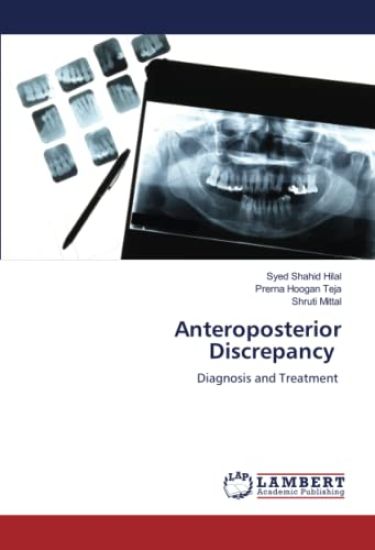
Anteroposterior Discrepancy

Anteroposterior Discrepancy

Syed Shahid Hilal; Prerna Hoogan Teja; Shruti Mittal

Lap Lambert Academic Publishing
2023
pokkari
Anteroposterior discrepancy in orthodontics refers to the difference in the position of the upper and lower teeth along the front-back axis of the mouth. This discrepancy can be classified as either a skeletal or dental issue. A skeletal anteroposterior discrepancy occurs when there is a difference in the size and position of the upper and lower jaws, resulting in an overbite or underbite. This type of discrepancy can be corrected through orthodontic treatment using appliances such as headgear, facemasks, or functional appliances, which work to modify the growth and position of the jaws. A dental anteroposterior discrepancy occurs when the teeth are not positioned correctly in the jaws, resulting in crowding or spacing. This type of discrepancy can be corrected using braces or clear aligners, which work to move the teeth into the correct position within the jaws. The treatment for an anteroposterior discrepancy will depend on the specific nature and severity of the issue, as well as the age and development of the patient. Early intervention is often recommended for skeletal discrepancies, as younger patients have more potential for growth modification.