
Kirjojen hintavertailu – 12 903 724 kirjaa ja 27 kauppaa

Kirjailija

Shrutilipi Bhattacharjee

Kirjat ja teokset yhdessä paikassa: 2 kirjaa, julkaisuja vuosilta 2019–2020, suosituimpiin kuuluu Semantic Kriging for Spatio-temporal Prediction. Vertaile teosten hintoja ja tarkista saatavuus suomalaisista kirjakaupoista.

2 kirjaa

Kirjojen julkaisuvuodet: 2019–2020.

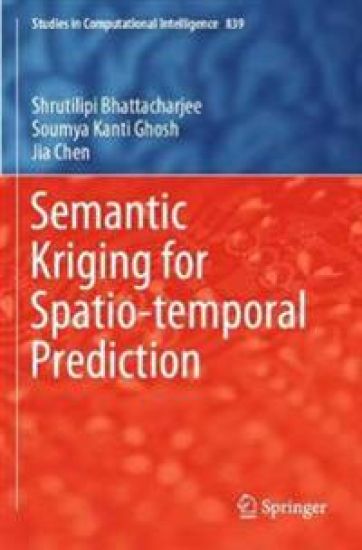
Semantic Kriging for Spatio-temporal Prediction

Semantic Kriging for Spatio-temporal Prediction

Shrutilipi Bhattacharjee; Soumya Kanti Ghosh; Jia Chen

Springer Verlag, Singapore
2020
nidottu
This book identifies the need for modeling auxiliary knowledge of the terrain to enhance the prediction accuracy of meteorological parameters. The spatial and spatio-temporal prediction of these parameters are important for the scientific community, and the semantic kriging (SemK) and its variants facilitate different types of prediction and forecasting, such as spatial and spatio-temporal, a-priori and a-posterior, univariate and multivariate. As such, the book also covers the process of deriving the meteorological parameters from raw satellite remote sensing imagery, and helps understanding different prediction method categories and the relation between spatial interpolation methods and other prediction methods. The book is a valuable resource for researchers working in the area of prediction of meteorological parameters, semantic analysis (ontology-based reasoning) of the terrain, and improving predictions using auxiliary knowledge of the terrain.
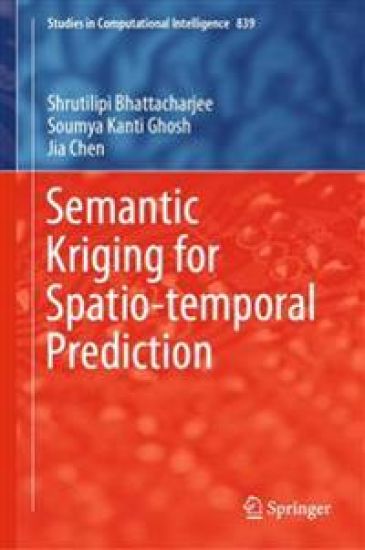
Semantic Kriging for Spatio-temporal Prediction

Semantic Kriging for Spatio-temporal Prediction

Shrutilipi Bhattacharjee; Soumya Kanti Ghosh; Jia Chen

Springer Verlag, Singapore
2019
sidottu
This book identifies the need for modeling auxiliary knowledge of the terrain to enhance the prediction accuracy of meteorological parameters. The spatial and spatio-temporal prediction of these parameters are important for the scientific community, and the semantic kriging (SemK) and its variants facilitate different types of prediction and forecasting, such as spatial and spatio-temporal, a-priori and a-posterior, univariate and multivariate. As such, the book also covers the process of deriving the meteorological parameters from raw satellite remote sensing imagery, and helps understanding different prediction method categories and the relation between spatial interpolation methods and other prediction methods. The book is a valuable resource for researchers working in the area of prediction of meteorological parameters, semantic analysis (ontology-based reasoning) of the terrain, and improving predictions using auxiliary knowledge of the terrain.