
Kirjojen hintavertailu – 12 903 725 kirjaa ja 27 kauppaa

Kirjailija

Shubhra Chakrabarti

Kirjat ja teokset yhdessä paikassa: 3 kirjaa, julkaisuja vuosilta 2013–2019, suosituimpiin kuuluu Agrarian and Other Histories – Essays for Binay Bhushan Chaudhuri. Vertaile teosten hintoja ja tarkista saatavuus suomalaisista kirjakaupoista.

3 kirjaa

Kirjojen julkaisuvuodet: 2013–2019.

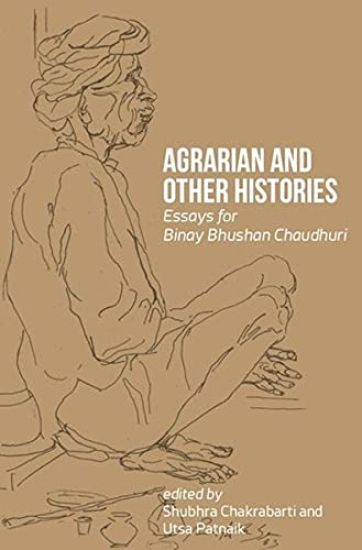
Agrarian and Other Histories – Essays for Binay Bhushan Chaudhuri

Agrarian and Other Histories – Essays for Binay Bhushan Chaudhuri

Shubhra Chakrabarti; Utsa Patnaik

Tulika Book
2019
nidottu
There is no area in the agrarian history of eastern India that Binay Bhushan Chaudhuri has not traversed. His journey began with his 1956 contribution in Bengal Past and Present, on "Some Problems of the Peasantry of Bengal after the Permanent Settlement." His extensive opus surveys the agrarian economy of eastern India and all its protagonists: peasant households, zamindars and the state, non-peasant rural agents such as moneylenders, affluent landholders, farmers, and agrarian intermediaries (jotedars), all of whom played their decisive role in the rural agrarian structure of eastern India. His later research explored the impact of colonial rule on tribes and forest dwellers, who were in the process of transition to quasi-peasant communities by the middle of the twentieth century. In his pioneering work, The Growth of Commercial Agriculture in Bengal: 1757–1957, which developed out of his doctoral thesis, Chaudhuri discussed the two important phenomena that shaped the contours of the agrarian economy of Bengal—first, the demographic factor, namely population growth, combined with a simultaneous growth of agricultural production; second, the role of external demand that determined peasant production for the market. He placed value, additionally, on factors such as climate change, natural disasters, and political instability arising out of war and invasions, which affected agricultural production in India. It is difficult to do justice to B. B. Chaudhuri's academic work given its depth and range. An inadequate attempt is made here under four broad heads: (i) his concept of the peasantry; (ii) the growth of commercial agriculture in eastern India; (iii) the process of 'depeasantization' by which small and marginal peasants gradually lost their land and turned into sharecroppers or hired labor; and finally, (iv) the more or less forcible induction of a large number of tribes and forest dwellers into settled agriculture, resulting in spates of rebellion. The essays in this volume are on diverse themes. A number are on different aspects of the agrarian world, the major subject of Binay Bhushan Chaudhuri's academic research. Many other papers discuss aspects of social and cultural history, which have always interested and inspired Prof. Chaudhuri. There are three essays on Rabindranath Tagore, the towering figure he venerates like most intellectuals of his generation from Bengal, and with whom he also happens to share his own birthday.
Agrarian and Other Histories – Essays for Binay Bhushan Chaudhuri

Agrarian and Other Histories – Essays for Binay Bhushan Chaudhuri

Shubhra Chakrabarti; Utsa Patnaik

Tulika Book
2018
sidottu
There is no area in the agrarian history of eastern India that Binay Bhushan Chaudhuri has not traversed. His journey began with his 1956 contribution in Bengal Past and Present, on "Some Problems of the Peasantry of Bengal after the Permanent Settlement." His extensive opus surveys the agrarian economy of eastern India and all its protagonists: peasant households, zamindars and the state, non-peasant rural agents such as moneylenders, affluent landholders, farmers, and agrarian intermediaries (jotedars), all of whom played their decisive role in the rural agrarian structure of eastern India. His later research explored the impact of colonial rule on tribes and forest dwellers, who were in the process of transition to quasi-peasant communities by the middle of the twentieth century. In his pioneering work, The Growth of Commercial Agriculture in Bengal: 1757-1957, which developed out of his doctoral thesis, Chaudhuri discussed the two important phenomena that shaped the contours of the agrarian economy of Bengal-first, the demographic factor, namely population growth, combined with a simultaneous growth of agricultural production; second, the role of external demand that determined peasant production for the market. He placed value, additionally, on factors such as climate change, natural disasters, and political instability arising out of war and invasions, which affected agricultural production in India. It is difficult to do justice to B. B. Chaudhuri's academic work given its depth and range. An inadequate attempt is made here under four broad heads: (i) his concept of the peasantry; (ii) the growth of commercial agriculture in eastern India; (iii) the process of 'depeasantization' by which small and marginal peasants gradually lost their land and turned into sharecroppers or hired labor; and finally, (iv) the more or less forcible induction of a large number of tribes and forest dwellers into settled agriculture, resulting in spates of rebellion. The essays in this volume are on diverse themes. A number are on different aspects of the agrarian world, the major subject of Binay Bhushan Chaudhuri's academic research. Many other papers discuss aspects of social and cultural history, which have always interested and inspired Prof. Chaudhuri. There are three essays on Rabindranath Tagore, the towering figure he venerates like most intellectuals of his generation from Bengal, and with whom he also happens to share his own birthday.
Historical Dictionary of the Bengalis

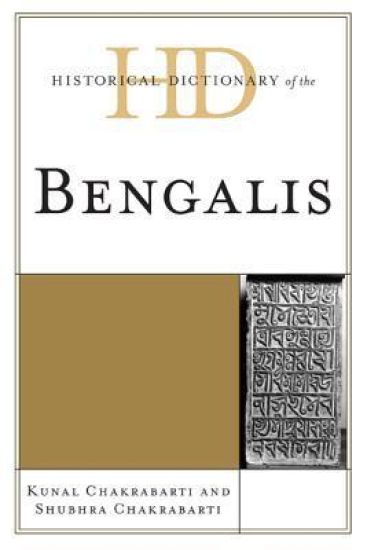
Historical Dictionary of the Bengalis

Kunal Chakrabarti; Shubhra Chakrabarti

Scarecrow Press
2013
sidottu
The Bengali (Bangla) speaking people are located in the northeastern part of South Asia, particularly in Bangladesh and two states of India – West Bengal and Tripura. There are almost 246 million Bengalis at present, which makes them the fifth largest speech community in the world. Despite political and social divisions, they share a common literary and musical culture and several habits of daily existence which impart to them a distinct identity. The Bengalis are known for their political consciousness and cultural accomplishments. The Historical Dictionary of the Bengalis provides an overview of the Bengalis across the world from the earliest Chalcolithic cultures to the present. This is done through a chronology, an introductory essay, and an extensive bibliography. The dictionary section has over 750 cross-referenced dictionary entries on politicians, educators and entrepreneurs, leaders of religious and secular institutions, writers, painters, actors and other cultural figures, and more generally, on the economy, education, political parties, religions, women and minorities, literature, art and architecture, music, cinema and other major sectors. This book is an excellent access point for students, researchers, and anyone wanting to know more about the Bengalis.