Kirjojen hintavertailu – 12 903 725 kirjaa ja 27 kauppaa
Kirjailija
Shuying Wang
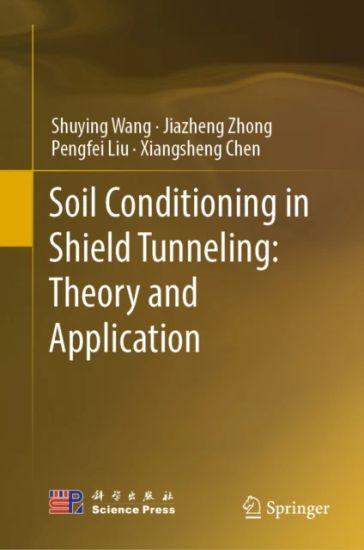
Kirjat ja teokset yhdessä paikassa: 4 kirjaa, julkaisuja vuosilta 2018–2026, suosituimpiin kuuluu Soil Conditioning in Shield Tunneling: Theory and Application. Vertaile teosten hintoja ja tarkista saatavuus suomalaisista kirjakaupoista.
Shield Tunnel Engineering: From Theory to Practice is a key technique that offers one of the most important ways to build tunnels in fast, relatively safe, and ecologically friendly ways. The book presents state-of-the-art solutions for engineers working within the field of shield tunnelling technology for railways. It includes expertise from major projects in shield tunnel construction for high-speed rail, subways and other major projects. In particular, it presents a series of advances in shield muck conditioning technology, slurry treatment, backfill grouting, and environmental impact and control. In this volume, foundational knowledge is combined with the latest advances in shield tunnel engineering. Twelve chapters cover key areas including geological investigation, the types, structures and workings of shield machines, selecting a machine, shield segment design, shield tunnelling parameter control, soil conditioning for earth pressure balance (EPB) shield tunnelling, shield slurry treatment, backfill grouting, environmental impact, and problems in shield tunnel structures and their amelioration. This book presents the essential knowledge needed for shield tunnel engineering, the latest advances in the field, and practical guidance for engineers.
This book gathers the main research findings on monotonic, cyclic and postcyclic shear behavior of low-plasticity. Drawing on the low-plasticity silt from the Mississippi River Valley, it determines that the silt’s critical state line can be changed due to liquefaction, and thus offers valuable insights and reference data for further investigations on soil mechanics and engineering applications to verify the above research findings. Low-plasticity silt with a plasticity index of less than 10, though commonly found around the world, nonetheless differs greatly from sand and clay in terms of its shear behavior. Failure to take into account the differences in shear characteristics between silt, clay and sand will lead to overconservative designs of offshore structures. In particular, dynamic loading from earthquakes, trains and ocean waves can set off the liquefaction of low-plasticity silt, and with it, major disasters and losses of properties. Additionally, some civil infrastructures have failed not only due to cyclic loading during an earthquake, but also due to reduction of shear strength or stiffness after that.
This book gathers the main research findings on monotonic, cyclic and postcyclic shear behavior of low-plasticity. Drawing on the low-plasticity silt from the Mississippi River Valley, it determines that the silt’s critical state line can be changed due to liquefaction, and thus offers valuable insights and reference data for further investigations on soil mechanics and engineering applications to verify the above research findings. Low-plasticity silt with a plasticity index of less than 10, though commonly found around the world, nonetheless differs greatly from sand and clay in terms of its shear behavior. Failure to take into account the differences in shear characteristics between silt, clay and sand will lead to overconservative designs of offshore structures. In particular, dynamic loading from earthquakes, trains and ocean waves can set off the liquefaction of low-plasticity silt, and with it, major disasters and losses of properties. Additionally, some civil infrastructures have failed not only due to cyclic loading during an earthquake, but also due to reduction of shear strength or stiffness after that.