Kirjojen hintavertailu – 12 903 725 kirjaa ja 27 kauppaa

Kirjailija

Siddharth Misra

Kirjat ja teokset yhdessä paikassa: 4 kirjaa, julkaisuja vuosilta 2019–2027, suosituimpiin kuuluu Multifrequency Electromagnetic Data Interpretation for Subsurface Characterization. Vertaile teosten hintoja ja tarkista saatavuus suomalaisista kirjakaupoista.

4 kirjaa

Kirjojen julkaisuvuodet: 2019–2027.

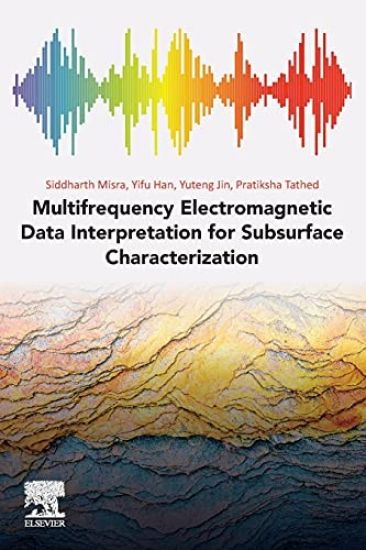
Multifrequency Electromagnetic Data Interpretation for Subsurface Characterization

Multifrequency Electromagnetic Data Interpretation for Subsurface Characterization

Siddharth Misra; Yifu Han; Yuteng Jin; Pratiksha Tathed

Elsevier Science Publishing Co Inc
2021
nidottu
Multifrequency Electromagnetic Data Interpretation for Subsurface Characterization focuses on the development and application of electromagnetic measurement methodologies and their interpretation techniques for subsurface characterization. The book guides readers on how to characterize and understand materials using electromagnetic measurements, including dielectric permittivity, resistivity and conductivity measurements. This reference will be useful for subsurface engineers, petrophysicists, subsurface data analysts, geophysicists, hydrogeologists, and geoscientists who want to know how to develop tools and techniques of electromagnetic measurements and interpretation for subsurface characterization.

Machine Learning Codebook

Machine Learning Codebook

Siddharth Misra

Taylor & Francis
2027
Sidottu
Modern engineering is no longer just about building physical infrastructure; it is the art of solving complex physical problems through a data-driven feedback loop. We build robust systems, deploy sensors to reliably capture the physical reality, and train data-driven models to advance human productivity, comfort and security. Yet, in this rush to deploy Artificial Intelligence and Machine Learning, the field has fallen into a trap: treating data as a mere commodity. Feeding raw, chaotic noise into sophisticated algorithms guarantees failure, producing results that are mathematically precise yet physically meaningless. Machine Learning Codebook: Engineer the Data is the definitive correction to this crisis. It serves as both a manifesto and a manual for engineers who refuse to trade physical truth for algorithmic convenience, providing the framework to transform unrefined reality into high-fidelity, machine-ready intelligence. This book is a masterclass in developing the engineering intuition that AI cannot replicate. Across fourteen rigorous chapters, it moves beyond automated script generation to master the full lifecycle of data-driven discovery. You will learn to diagnose data quality, implement robust imputation strategies, and apply high-performance dimensionality reduction—all while ensuring every transformation remains consistently grounded in physical, logical and statistical foundations. Through real-world case studies and modular Python workflows, you will gain the discipline to extract meaningful signals from background noise, structure data with clear intent, and build models that provide actionable, verifiable truth. Machine Learning Codebook: Engineer the Data is crafted for the next generation of engineers, scientists, decision makers, and data practitioners who demand technical depth. It is an indispensable resource for university students pushing the frontiers of science, professionals looking to transition into the data era without abandoning their domain expertise, and technical leaders responsible for the success of corporate AI initiatives. If you are an architect of the physical world—whether in energy, manufacturing, operations, industrial engineering, or high-performance computing—this book will sharpen your diagnostic skills and provide the professional-grade toolkit needed to synthesize fragmented information into wisdom.
Epsilon to Omega

Epsilon to Omega

Siddharth Misra

Elsevier - Health Sciences Division
2026
nidottu
Epsilon to Omega: The Frontiers of Clean Energy illuminates the transformative impact of artificial intelligence (AI) on the journey toward sustainable energy. In a world facing urgent environmental challenges, this book explores how AI, energy innovation, and decarbonization are converging to redefine the future of power generation and consumption. Through detailed case studies, the text provides technical insights and forward-looking perspectives, empowering engineers, entrepreneurs, policymakers, and researchers to drive meaningful change. Each of the seven chapters unveils a unique domain within the AI-driven energy revolution, guiding readers through a landscape of pioneering technologies and real-world applications. In addition, the book investigates the rise of smart machines, the next generation of AI engineers, and the latest advancements in AI-powered scientific discovery. Readers encounter visionary concepts, such as intelligent agents for zero-carbon strategies and breakthroughs in achieving carbon negativity, as well as practical guidance for leveraging AI in energy solutions. The work stands out for its wealth of actionable insights, making it an indispensable resource for those seeking to turn innovative ideas into impactful, sustainable energy initiatives. Ultimately, it inspires stakeholders to shape a cleaner, more resilient future.
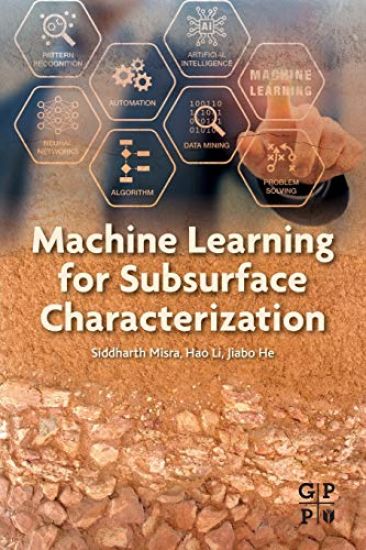
Machine Learning for Subsurface Characterization

Machine Learning for Subsurface Characterization

Siddharth Misra; Hao Li; Jiabo He

Gulf Professional Publishing
2019
nidottu
Machine Learning for Subsurface Characterization develops and applies neural networks, random forests, deep learning, unsupervised learning, Bayesian frameworks, and clustering methods for subsurface characterization. Machine learning (ML) focusses on developing computational methods/algorithms that learn to recognize patterns and quantify functional relationships by processing large data sets, also referred to as the "big data." Deep learning (DL) is a subset of machine learning that processes "big data" to construct numerous layers of abstraction to accomplish the learning task. DL methods do not require the manual step of extracting/engineering features; however, it requires us to provide large amounts of data along with high-performance computing to obtain reliable results in a timely manner. This reference helps the engineers, geophysicists, and geoscientists get familiar with data science and analytics terminology relevant to subsurface characterization and demonstrates the use of data-driven methods for outlier detection, geomechanical/electromagnetic characterization, image analysis, fluid saturation estimation, and pore-scale characterization in the subsurface.