

Kirjailija
Sidney M. Milkis
Kirjat ja teokset yhdessä paikassa: 9 kirjaa, julkaisuja vuosilta 1999–2026, suosituimpiin kuuluu The American Presidency. Vertaile teosten hintoja ja tarkista saatavuus suomalaisista kirjakaupoista.
Nimi esiintyy myös muodoissa: Sidney M Milkis
9 kirjaa
Kirjojen julkaisuvuodet: 1999–2026.
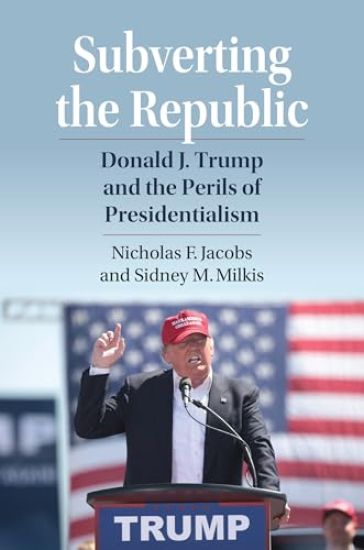
From two expert presidential scholars comes a new answer to why the Trump presidency happened: decades of partisanship and policies have centered the president as the sole focus of American government to create a treacherous system whose danger may far outlive the politics of Donald J. Trump. The election of Donald J. Trump on November 6, 2016, changed how we understand the American presidency—but this transformation was not of his own making. His unprecedented rise to power led to an administration where Trump brazenly defied established constitutional norms and institutions. Yet, as Nicholas F. Jacobs and Sidney M. Milkis reveal, Trump’s presidency was not merely a shocking departure from tradition, but a symptom of a constitutional disease that had has long afflicted the American polity. They call this condition presidentialism, a dangerous shift towards an executive-centered politics and government that places immense power in the hands of a single individual. While some scholars of American politics view the Trump presidency as a cult of personality, Jacobs and Milkis argue that his unsettling ascent to the White House was decades in the making, the result of numerous cultural, institutional, and constitutional changes. From aggressively redeploying the federal government’s administrative powers, to using the tools of the modern presidency to undertake a hostile takeover of the Republican Party, Trump’s presidency reveals the peril of a presidency-centered democracy that combines executive aggrandizement and polarizing struggles over the meaning of American identity. The disruptive features of the Trump presidency should not be viewed as an ephemeral phenomenon, nor does Donald Trump’s departure from the White House end the threat that presidentialism poses to American democracy. Subverting the Republic explains why the Trump presidency happened—and why it might happen again.
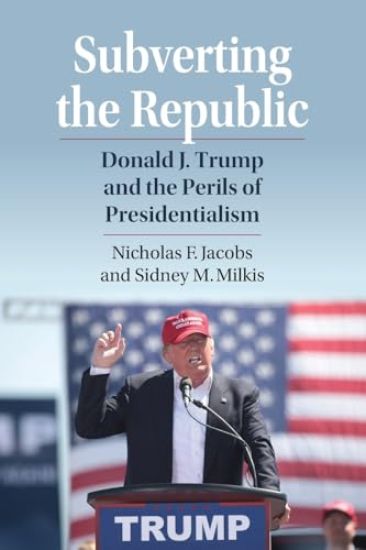
From two expert presidential scholars comes a new answer to why the Trump presidency happened: decades of partisanship and policies have centered the president as the sole focus of American government to create a treacherous system whose danger may far outlive the politics of Donald J. Trump. The election of Donald J. Trump on November 6, 2016, changed how we understand the American presidency—but this transformation was not of his own making. His unprecedented rise to power led to an administration where Trump brazenly defied established constitutional norms and institutions. Yet, as Nicholas F. Jacobs and Sidney M. Milkis reveal, Trump’s presidency was not merely a shocking departure from tradition, but a symptom of a constitutional disease that had has long afflicted the American polity. They call this condition presidentialism, a dangerous shift towards an executive-centered politics and government that places immense power in the hands of a single individual. While some scholars of American politics view the Trump presidency as a cult of personality, Jacobs and Milkis argue that his unsettling ascent to the White House was decades in the making, the result of numerous cultural, institutional, and constitutional changes. From aggressively redeploying the federal government’s administrative powers, to using the tools of the modern presidency to undertake a hostile takeover of the Republican Party, Trump’s presidency reveals the peril of a presidency-centered democracy that combines executive aggrandizement and polarizing struggles over the meaning of American identity. The disruptive features of the Trump presidency should not be viewed as an ephemeral phenomenon, nor does Donald Trump’s departure from the White House end the threat that presidentialism poses to American democracy. Subverting the Republic explains why the Trump presidency happened—and why it might happen again.
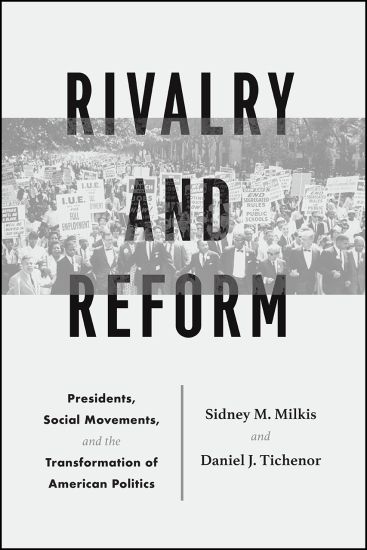
Few relationships have proved more pivotal in changing the course of American politics than those between presidents and social movements. For all their differences, both presidents and social movements are driven by a desire to recast the political system, often pursuing rival agendas that set them on a collision course. Even when their interests converge, these two actors often compete to control the timing and conditions of political change. During rare historical moments, however, presidents and social movements forged partnerships that profoundly recast American politics. Rivalry and Reform explores the relationship between presidents and social movements throughout history and into the present day, revealing the patterns that emerge from the epic battles and uneasy partnerships that have profoundly shaped reform. Through a series of case studies, including Abraham Lincoln and abolitionism, Lyndon Johnson and the civil rights movement, and Ronald Reagan and the religious right, Sidney M. Milkis and Daniel J. Tichenor argue persuasively that major political change usually reflects neither a top-down nor bottom-up strategy but a crucial interplay between the two. Savvy leaders, the authors show, use social movements to support their policy goals. At the same time, the most successful social movements target the president as either a source of powerful support or the center of opposition. The book concludes with a consideration of Barack Obama’s approach to contemporary social movements such as Black Lives Matter, United We Dream, and Marriage Equality.
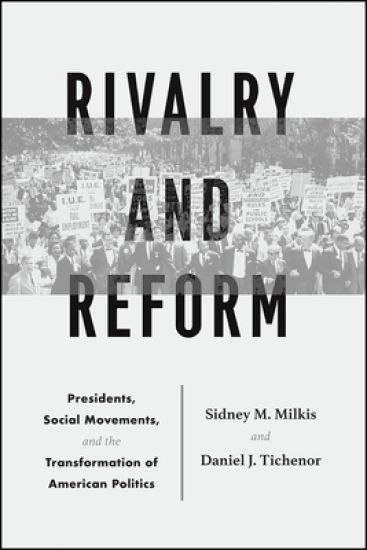
Few relationships have proved more pivotal in changing the course of American politics than those between presidents and social movements. For all their differences, both presidents and social movements are driven by a desire to recast the political system, often pursuing rival agendas that set them on a collision course. Even when their interests converge, these two actors often compete to control the timing and conditions of political change. During rare historical moments, however, presidents and social movements forged partnerships that profoundly recast American politics. Rivalry and Reform explores the relationship between presidents and social movements throughout history and into the present day, revealing the patterns that emerge from the epic battles and uneasy partnerships that have profoundly shaped reform. Through a series of case studies, including Abraham Lincoln and abolitionism, Lyndon Johnson and the civil rights movement, and Ronald Reagan and the religious right, Sidney M. Milkis and Daniel J. Tichenor argue persuasively that major political change usually reflects neither a top-down nor bottom-up strategy but a crucial interplay between the two. Savvy leaders, the authors show, use social movements to support their policy goals. At the same time, the most successful social movements target the president as either a source of powerful support or the center of opposition. The book concludes with a consideration of Barack Obama’s approach to contemporary social movements such as Black Lives Matter, United We Dream, and Marriage Equality.
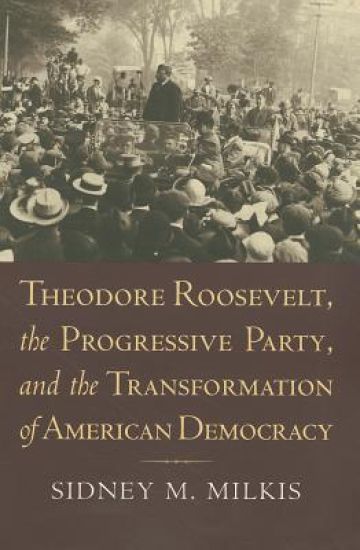
Theodore Roosevelt, the Progressive Party, and the Transformation of American Democracy
Sidney M. Milkis
University Press of Kansas
2009
nidottu
Led by Theodore Roosevelt, the Progressive Party made the 1912 campaign a passionate contest for the soul of the American people. Promoting an ambitious program of economic, social, and political reform—“New Nationalism”—that posed profound challenges to constitutional government, TR and his Progressive supporters provoked an extraordinary debate about the future of the country. Sidney Milkis revisits this emotionally charged contest to show how a party seemingly consumed by its leader’s ambition dominated the election and left an enduring legacy that set in motion the rise of mass democracy and the expansion of national administrative power. Milkis depicts the Progressive Party as a collective enterprise of activists, spearheaded by TR, who pursued a program of reform dedicated to direct democracy and social justice and a balance between rights and civic duty. These reformers hoped to create a new concept of citizenship that would fulfil the lofty aspirations of “we the people” in a quest for a “more perfect union”—a quest hampered by fierce infighting over civil rights and antitrust policy. Milkis shows that the Progressive campaign aroused not just an important debate over reforms but also a battle for the very meaning of Progressivism. He describes how Roosevelt gave focus to the party with his dedication to “pure democracy”—even shoehorning judicial recall into his professed “true conservative” stance. Although this pledge to make the American people “masters of their Constitution” provoked considerable controversy, Milkis contends that the Progressives were not all that far removed from the more nationally minded of the Founders. As Milkis reveals, the party’s faith in a more plebiscitary form of democracy would ultimately rob it of the very organization it needed in order to survive after Roosevelt. Yet the Progressive Party’s program of social reform and “direct democracy” has reverberated through American politics—especially in 2008, with Barack Obama appealing to similar instincts. By probing the deep historical roots of contemporary developments in American politics, his book shows that Progressivism continues to shape American politics a century later.
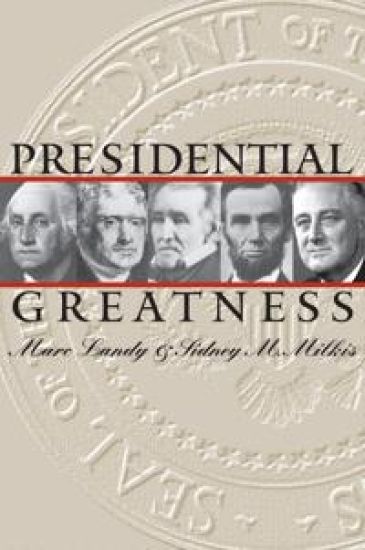
This work argues that there has not been a truly great American President in the latter half of the 20th century. It examines five past presidencies, including Washington and Lincoln, showing what made them great and highlighting the possibilities and limitations of the office.
Political Parties and Constitutional Government
Sidney M. Milkis
Johns Hopkins University Press
1999
pokkari
The U. S. Constitution makes no mention of political parties, yet parties began to form shortly after its ratification. Today, American democracy would not work without them. In Political Parties and Constitutional Government, Sidney Milkis explores the uneasy relationship between the Constitution and the party system to advance a novel argument: political parties arose as part of a deliberate program of constitutional reform. Forged on the anvil of Jeffersonian and Jacksonian democracy, parties initially formed as decentralized political associations that engaged the attention of ordinary citizens and held presidents accountable to local constituencies. But as the power of the presidency and the federal government grew, parties shifted their attention from building political support in the states and localities to vying for control over national administration and, in the process, lost their vital connection to the electorate. In the past thirty years, partisan disputes have more often than not involved confrontations between the president and Congress that have undermined the public's respect for American political institutions. With the decline of localized parties, Milkis concludes, there has arisen an administrative politics of rights and entitlements that belittles the efforts of Democrats and Republicans alike to define a collective purpose. Ending with a discussion of possible methods of revitalization and reform, this timely book does much to explain the reasons behind Americans' disenchantment with parties and the party system.