Kirjojen hintavertailu – 12 859 828 kirjaa ja 27 kauppaa

Kirjailija

Sieglinde Gstöhl

Kirjat ja teokset yhdessä paikassa: 7 kirjaa, julkaisuja vuosilta 2007–2019, suosituimpiin kuuluu The Trade Policy of the European Union. Vertaile teosten hintoja ja tarkista saatavuus suomalaisista kirjakaupoista.

Nimi esiintyy myös muodoissa: Sieglinde GStohl

7 kirjaa

Kirjojen julkaisuvuodet: 2007–2019.

The European Neighbourhood Policy in a Comparative Perspective
The European Neighbourhood Policy (ENP) has evolved into one of the European Union's major foreign policy instruments and received considerable attention. However, other EU neighbourhood policies, and their relevance for the ENP, also require examination. The Arab uprisings, civil wars in Libya and Syria, the continuing Israeli-Palestinian conflict, the crisis in Ukraine and Russia's annexation of the Crimean peninsula have all brought the institutional design and tools of the ENP into question and a comparative perspective is crucial to understand EU neighbourhood policies in a wider sense. This timely book puts the ENP into context by exploring the major challenges and key lessons of the EU's other policy frameworks with neighbouring countries. Mapping the EU's bi-lateral and multilateral neighbourhood relations in comparison to the ENP and investigating the major challenges faced, it provides a comprehensive, up-to-date view of the EU's relations with its neighbours. Focusing on current affairs and future challenges, the comparison with the ENP and the lessons to be drawn, generate novel insights into the EU's closest external relations. This book will be of key interest to students and scholars studying European Politics, policies and comparative politics.
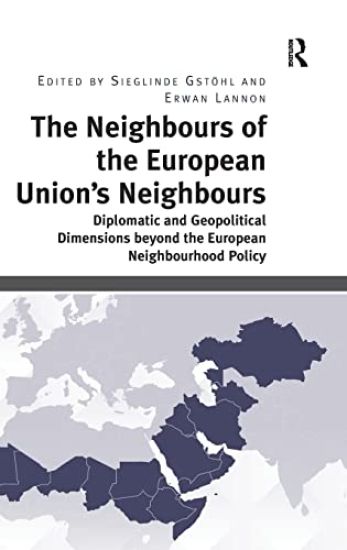
The Neighbours of the European Union's Neighbours

The Neighbours of the European Union's Neighbours

Sieglinde Gstöhl; Erwan Lannon

Routledge
2018
nidottu
Should the European Neighbourhood Policy stop at the borders of the European Union’s immediate neighbouring countries? This book is the first full length study of the ’neighbours of the EU’s neighbours’, a concept originally introduced by the European Commission with reference to Saharan Africa, the Middle East and Central Asia. These regions in the EU’s broader neighbourhood are often perceived as an ’arc of crisis’ from which manifold challenges emanate for Europe. This timely book takes stock of the state of the EU’s cooperation with the neighbours of its neighbours and explores how the concept might help promote security, stability and prosperity beyond the countries which are formally part of the European Neighbourhood Policy. How can the EU create bridges between these regions? What instruments does the EU have at its disposal and how can it link them in order to respond to the challenges and overcome the current fragmentation? One of the conclusions is the suggestion to consider a pragmatic ’EU Strategy for the Neighbours of its Neighbours’ which addresses the needs of the broader EU neighbourhood in a more systematic and consistent manner and helps transform in the long run the ’arc of crisis’ into another ’ring of friends’.
The Trade Policy of the European Union

The Trade Policy of the European Union

Sieglinde Gstöhl; Dirk De Bièvre

Red Globe Press
2017
sidottu
This comprehensive and clearly written textbook offers a long-awaited introduction to the trade policy of the European Union, the world's largest trading entity. Gstöhl and De Bièvre provide a comprehensive assessment of the common commercial policy, its relationship with other policies, like development policy, and of the EU's multi-level policy-making and international bargaining in this area. As well as providing a broad overview of the nature and development of the EU's trade policy, the authors analyse how relevant institutions and decision-making processes are organized and how this set-up fosters particular policy outcomes. Gstöhl and De Bièvre show how the thorough and critical study of EU trade policy can be conducted from an interdisciplinary viewpoint, enabling the student to tackle the ever-evolving political, economic, and legal questions that arise. Given the accessible writing, this book is recommended for both undergraduate and Master's students studying the EU and Europe in their Politics, International Relations, Economics or Law degrees, as well as those focusing on international trade policy.
The Trade Policy of the European Union

The Trade Policy of the European Union

Sieglinde Gstöhl; Dirk De Bièvre

Red Globe Press
2017
nidottu
This comprehensive and clearly written textbook offers a long-awaited introduction to the trade policy of the European Union, the world's largest trading entity. Gstöhl and De Bièvre provide a comprehensive assessment of the common commercial policy, its relationship with other policies, like development policy, and of the EU's multi-level policy-making and international bargaining in this area. As well as providing a broad overview of the nature and development of the EU's trade policy, the authors analyse how relevant institutions and decision-making processes are organized and how this set-up fosters particular policy outcomes. Gstöhl and De Bièvre show how the thorough and critical study of EU trade policy can be conducted from an interdisciplinary viewpoint, enabling the student to tackle the ever-evolving political, economic, and legal questions that arise. Given the accessible writing, this book is recommended for both undergraduate and Master's students studying the EU and Europe in their Politics, International Relations, Economics or Law degrees, as well as those focusing on international trade policy.
The European Neighbourhood Policy in a Comparative Perspective
The European Neighbourhood Policy (ENP) has evolved into one of the European Union's major foreign policy instruments and received considerable attention. However, other EU neighbourhood policies, and their relevance for the ENP, also require examination. The Arab uprisings, civil wars in Libya and Syria, the continuing Israeli-Palestinian conflict, the crisis in Ukraine and Russia's annexation of the Crimean peninsula have all brought the institutional design and tools of the ENP into question and a comparative perspective is crucial to understand EU neighbourhood policies in a wider sense. This timely book puts the ENP into context by exploring the major challenges and key lessons of the EU's other policy frameworks with neighbouring countries. Mapping the EU's bi-lateral and multilateral neighbourhood relations in comparison to the ENP and investigating the major challenges faced, it provides a comprehensive, up-to-date view of the EU's relations with its neighbours. Focusing on current affairs and future challenges, the comparison with the ENP and the lessons to be drawn, generate novel insights into the EU's closest external relations. This book will be of key interest to students and scholars studying European Politics, policies and comparative politics.

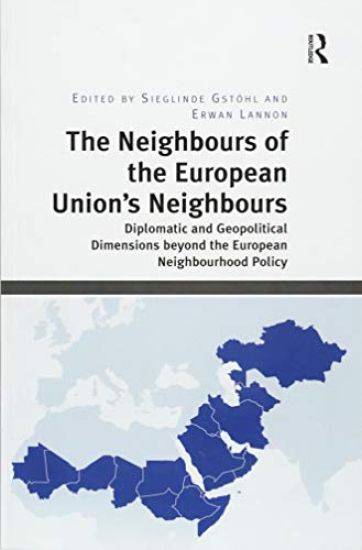
The Neighbours of the European Union's Neighbours

The Neighbours of the European Union's Neighbours

Sieglinde Gstöhl; Erwan Lannon

Routledge
2015
sidottu
Should the European Neighbourhood Policy stop at the borders of the European Union’s immediate neighbouring countries? This book is the first full length study of the ’neighbours of the EU’s neighbours’, a concept originally introduced by the European Commission with reference to Saharan Africa, the Middle East and Central Asia. These regions in the EU’s broader neighbourhood are often perceived as an ’arc of crisis’ from which manifold challenges emanate for Europe. This timely book takes stock of the state of the EU’s cooperation with the neighbours of its neighbours and explores how the concept might help promote security, stability and prosperity beyond the countries which are formally part of the European Neighbourhood Policy. How can the EU create bridges between these regions? What instruments does the EU have at its disposal and how can it link them in order to respond to the challenges and overcome the current fragmentation? One of the conclusions is the suggestion to consider a pragmatic ’EU Strategy for the Neighbours of its Neighbours’ which addresses the needs of the broader EU neighbourhood in a more systematic and consistent manner and helps transform in the long run the ’arc of crisis’ into another ’ring of friends’.
Small States in International Relations

Small States in International Relations

Christine Ingebritsen; Iver B. Neumann; Sieglinde GStohl; Jessica Beyer

University of Washington Press
2007
nidottu
Smaller nations have a special place in the international system, with a striking capacity to defy the expectations of most observers and many prominent theories of international relations. This volume of classic essays highlights the ability of small states to counter power with superior commitment, to rely on tightly knit domestic institutions with a shared ideology of social partnership, and to set agendas as entrepreneurs. The volume is organised around themes such as how and why small states defy expectations of realist approaches to the study of power; the agenda-setting capacity of smaller powers in international society and in regional governance structures such as the European Union; and how small states and representatives from these societies play the role of entrepreneurs in world politics - from the promotion of sustainable solutions to innovative humanitarian programmes and policies.