Kirjojen hintavertailu – 12 859 829 kirjaa ja 27 kauppaa

Kirjailija

Simon Baron-Cohen

Kirjat ja teokset yhdessä paikassa: 15 kirjaa, julkaisuja vuosilta 1997–2023, suosituimpiin kuuluu The Essential Difference. Vertaile teosten hintoja ja tarkista saatavuus suomalaisista kirjakaupoista.

Nimi esiintyy myös muodoissa: Simon Baron Cohen

15 kirjaa

Kirjojen julkaisuvuodet: 1997–2023.

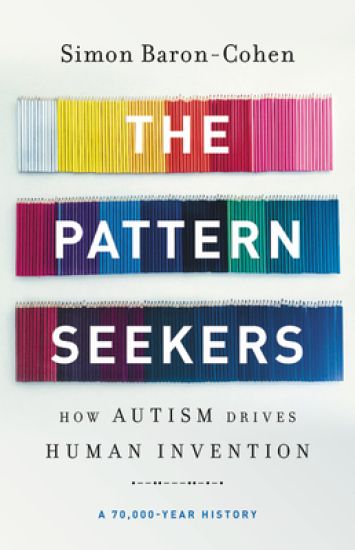
The Pattern Seekers: How Autism Drives Human Invention
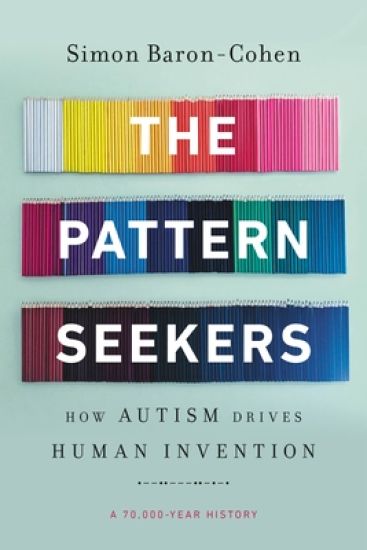
*A New York Times Editors' Choice Pick* An "ambitious work" (Washington Post) tracing the links between autism and ingenuity Is the ability to invent things unique to humans? In The Pattern Seekers, Cambridge University psychologist Simon Baron-Cohen argues that it is, and proposes that autistic people have played a key role in human progress for seventy to one hundred thousand years, from the first complex tools like the bow and arrow and the first musical instrument to the digital revolution. He presents the science that the same genes that contribute to autism enable a special kind of pattern seeking that is essential to our species' inventiveness. However, these abilities come at a cost for autistic people, including social and neurological challenges. Baron-Cohen calls on us to support and celebrate autistic people in both their disabilities and their talents. Ultimately, The Pattern Seekers isn't just a new theory of human evolution, but a call to reconsider how society treats those who think differently.
The Science of Evil: On Empathy and the Origins of Cruelty

The Science of Evil: On Empathy and the Origins of Cruelty

Simon Baron-Cohen

BASIC BOOKS
2022
nidottu

Halvin toimitettuna 22,20 €

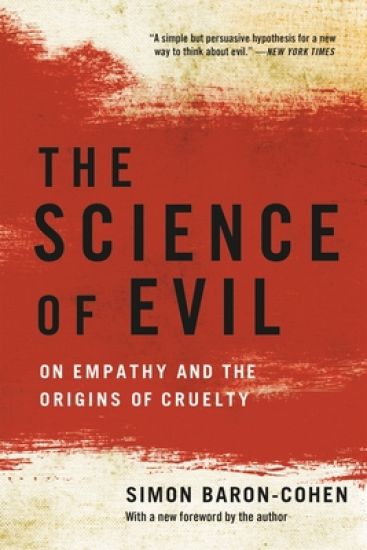
An award-winning psychologist draws on years of research to unveil "a simple but persuasive hypothesis for a new way to think about evil" (New York Times). How can we explain both cruelty and kindness? To award-winning psychologist Simon Baron-Cohen, the explanation for cruelty is low levels of empathy, and the explanation for kindness is high levels of empathy. In The Science of Evil, Baron-Cohen draws on decades of research to develop a new, brain-based theory of human cruelty and kindness. He explores the social and biological factors that can influence our empathy levels, explains the key distinction between cognitive and affective forms of empathy, and shows how low empathy can lead to dehumanizing behavior. Updated with a new introduction by the author, The Science of Evil will continue to challenge our understanding of human cruelty.
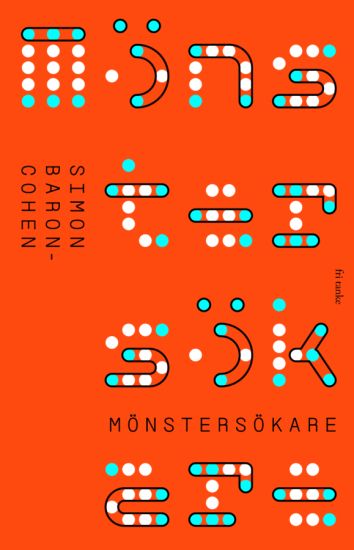
Mönstersökare

Mönstersökare

Simon Baron Cohen

Fri Tanke
2022
sidottu
Sedan urminnes tider har vi människor försökt att förstå världen genom att se mönster och strukturer i tillvaron. Denna förmåga bör ha utvecklats någon gång för 70 000-100 000 år sedan och lär vara unik för vår art. Hos autistiska personer är denna förmåga att särskilja och systematisera extra känslig. Al var en pojke som tidigt visade en förmåga att systematisera och uppfinna nya saker. Som 12-åring läste han Newton och under tonåren skulle han sedan ta fram sina första vetenskapliga patent och bli en berömd uppfinnare. Jonah är en annan pojke som har sett mönster tydligare än andra barn. Men för honom har hans unika förmåga isolerat honom från världen och gjort livet till en svår kamp. Mönstersökare handlar om Al och Jonah och människans vilja att förstå och systematisera. Den handlar om hur förmågan att söka mönster har varit avgörande för vår utveckling. Och varför vi måste se autistiska personers läggning som en möjlighet istället för ett hinder. Simon Baron-Cohen är professor i Cambridge och anses vara en av världens främsta forskare inom autism, som han har studerat i trettiofem år. Mönstersökare har redan nått en stor publik och håller på att översättas till flera språk.
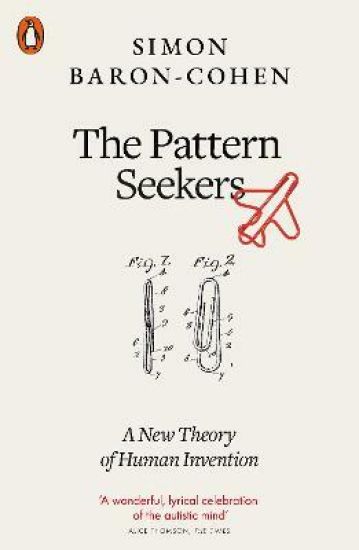
The Pattern Seekers

The Pattern Seekers

Simon Baron-Cohen

Penguin Books Ltd
2022
pokkari

Halvin toimitettuna 18,70 €

'Celebrates human cognitive diversity, and is rich with empathy and psychological insight' Steven Pinker 'Bold, intriguing, profound' Jay Elwes, Spectator Why can humans alone invent? In this book, psychologist and world renowned autism expert Simon Baron-Cohen puts forward a bold new theory: because we can identify patterns, specifically if-and-then patterns. Baron-Cohen argues that the genes for this unique ability overlap with the genes for autism and have driven human progress for 70,000 years. From the first musical instruments to the agricultural, industrial, and digital revolutions, Pattern Seekers links one of our greatest human strengths with a condition that is so often misunderstood and challenges us to think differently about those who think differently.
The Pattern Seekers: How Autism Drives Human Invention
A groundbreaking argument about the link between autism and ingenuity. Why can humans alone invent? In The Pattern Seekers, Cambridge University psychologist Simon Baron-Cohen makes a case that autism is as crucial to our creative and cultural history as the mastery of fire. Indeed, Baron-Cohen argues that autistic people have played a key role in human progress for seventy thousand years, from the first tools to the digital revolution. How? Because the same genes that cause autism enable the pattern seeking that is essential to our species's inventiveness. However, these abilities exact a great cost on autistic people, including social and often medical challenges, so Baron-Cohen calls on us to support and celebrate autistic people in both their disabilities and their triumphs. Ultimately, The Pattern Seekers isn't just a new theory of human civilization, but a call to consider anew how society treats those who think differently.
Teaching Children with Autism to Mind-Read

Teaching Children with Autism to Mind-Read

Julie A. Hadwin; Patricia Howlin; Simon Baron-Cohen

John Wiley Sons Inc
2015
nidottu
This workbook expands upon the authors? Teaching Children with Autism to Mind-Read: A Practical Guide to present the most effective approaches, strategies, and practical guidelines to help alleviate social and communication problems in individuals with Autism Spectrum Disorders (ASD). Complements the best-selling Teaching Children with Autism to Mind-Read: A Practical Guide for use in practical settingsAnswers the need for more training of professionals in early interventions for children assessed with ASD called for by the National Plan for AutismWritten by a team of experts in the fieldCovers issues such as how to interpret facial expressions; how to recognize feelings of anger, sadness, fear and happiness; how to perceive how feelings are affected by what happens and what is expected to happen; how to see things from another person?s perspective; and how to understand another person?s knowledge and beliefs
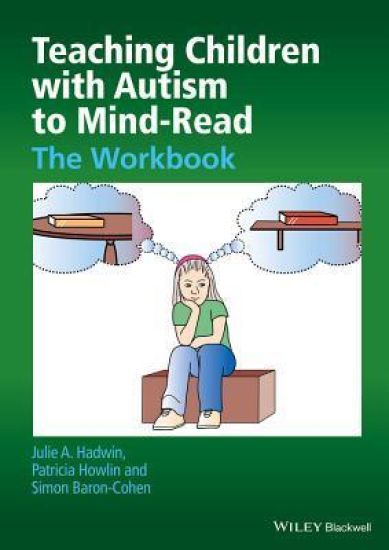
Teaching Children with Autism to Mind-Read

Teaching Children with Autism to Mind-Read

Julie A. Hadwin; Patricia Howlin; Simon Baron-Cohen

Wiley-Blackwell
2015
muu
This workbook expands upon the authors' Teaching Children with Autism to Mind-Read: A Practical Guide to present the most effective approaches, strategies, and practical guidelines to help alleviate social and communication problems in individuals with Autism Spectrum Disorders (ASD). * Complements the best-selling Teaching Children with Autism to Mind-Read: A Practical Guide for use in practical settings * Answers the need for more training of professionals in early interventions for children assessed with ASD called for by the National Plan for Autism * Written by a team of experts in the field * Covers issues such as how to interpret facial expressions; how to recognize feelings of anger, sadness, fear and happiness; how to perceive how feelings are affected by what happens and what is expected to happen; how to see things from another person's perspective; and how to understand another person's knowledge and beliefs
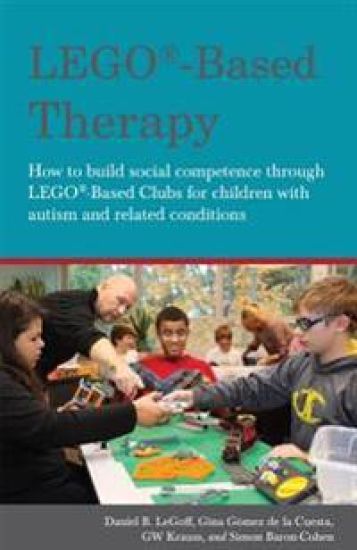
LEGO®-Based Therapy

LEGO®-Based Therapy

Simon Baron-Cohen; Georgina Gomez De La Gomez De La Cuesta; Daniel B. LeGoff; GW Krauss

Jessica Kingsley Publishers
2014
pokkari
This complete guide to LEGO® Therapy contains everything you need to know in order to set up and run a LEGO® Club for children with autism spectrum disorders or related social communication difficulties and anxiety conditions. By providing a joint interest and goal, LEGO® building can become a medium for social development such as sharing, turn-taking, making eye-contact, and following social rules. This book outlines the theory and research base of the approach and gives advice on all practical considerations including space, the physical layout of the room and choosing and maintaining materials, as well as strategies for managing behaviour, further skill development, and how to assess progress. Written by the pioneer of the approach alongside those who helped form it through their research and evaluation, this evidence-based manual is essential reading for professionals working with autism who are interested in running a LEGO® Club or learning more about the therapy.
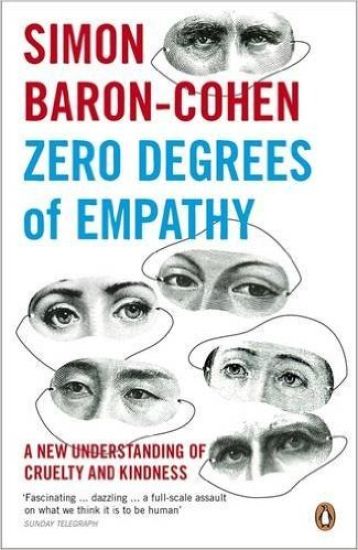
Zero Degrees of Empathy

Zero Degrees of Empathy

Simon Baron-Cohen

Penguin Books Ltd
2012
pokkari

Halvin toimitettuna 17,00 €

In Zero Degrees of Empathy: A New Theory of Human Cruelty and Kindness Simon Baron-Cohen takes fascinating and challenging new look at what exactly makes our behaviour uniquely human. How can we ever explain human cruelty? We have always struggled to understand why some people behave in the most evil way imaginable, while others are completely self-sacrificing. Is it possible that - rather than thinking in terms of 'good' and 'evil' - all of us instead lie somewhere on the empathy spectrum, and our position on that spectrum can be affected by both genes and our environments? Why do some people treat others as objects? Why is empathy our most precious resource? And does a lack of it always mean a negative outcome? From the Nazi concentration camps of World War Two to the playgrounds of today, Simon Baron-Cohen examines empathy, cruelty and understanding in a groundbreaking study of what it means to be human. 'Fascinating ... dazzling ... a full-scale assault on what we think it is to be human' Sunday Telegraph 'Highly readable ... this is a valuable book' Charlotte Moore, Spectator 'Important ... humane and immensely sympathetic' Richard Holloway, Literary Review Simon Baron-Cohen is Professor at Cambridge University in the fields of psychology and psychiatry. He is also the Director of the Autism Research Centre there. He has carried out research into social neuroscience over a 20 year career. His popular science book entitled The Essential Difference has been translated in over a dozen languages, and has been widely reviewed.
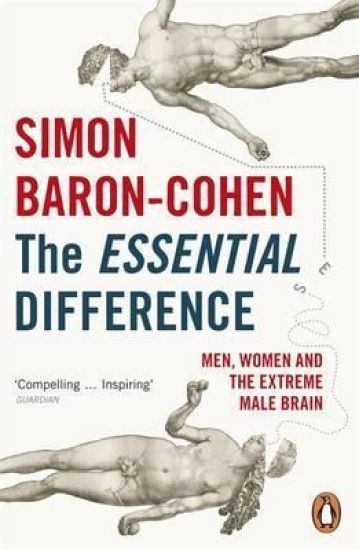
The Essential Difference

The Essential Difference

Simon Baron-Cohen

Penguin Books Ltd
2012
pokkari

Halvin toimitettuna 18,70 €

Simon Baron-Cohen's The Essential Difference: Men, Women and the Extreme Male Brain is an unflinching look at the scientific evidence behind the innate sex differences of the mind. Men and women have always seemed to think in entirely different ways, from conversation and communication to games and gadgets. But are these differences created by society, or do our minds come ready-wired one way or another, with female brains tending towards interaction and male towards organisation? And could this mean that autism - rather than being a mental anomaly - is in fact simply an extreme male brain? Why are female brains better at empathasing? How are male brains designed to analyse systems? And what really makes men and women different? Simon Baron-Cohen explores list-making, lying and two decades of research in a ground-breaking examination of how our brains can be male or female but always completely fascinating. 'Compelling ... Inspiring' Guardian 'This is no Mars/Venus whimsy, but the conclusion from twenty years of experiment' Evening Standard 'A devastating contribution to the gender debate' Mail on Sunday 'A fascinating, thought-provoking book' Observer Simon Baron-Cohen is Professor at Cambridge University in the fields of psychology and psychiatry. He is also the Director of Cambridge's internationally renowned Autism Research Centre. He has carried out research into social neuroscience over a career spanning twenty years. He is the author of Mindblindness and Zero Degrees of Empathy.
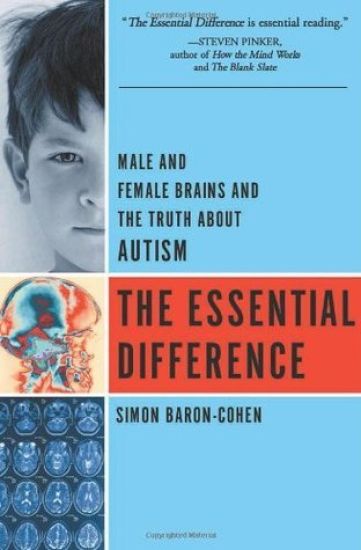
The Essential Difference

The Essential Difference

Simon Baron-Cohen

Basic Books
2004
pokkari
We all know the opposite sex can be a baffling, even infuriating, species. Why do most men use the phone to exchange information rather than have a chat? Why do women love talking about relationships and feelings with their girlfriends while men seem drawn to computer games, new gadgets, or the latest sports scores? Does it really all just come down to our upbringing? In The Essential Difference , leading psychologist Simon Baron-Cohen confirms what most of us had suspected all along: that male and female brains are different. This ground-breaking and controversial study reveals the scientific evidence (present even in one-day-old babies) that proves that female-type brains are better at empathizing and communicating, while male brains are stronger at understanding and building systems-not just computers and machinery, but abstract systems such as politics and music. Most revolutionary of all, The Essential Difference also puts forward the compelling new theory that autism (and its close relative, Asperger's Syndrome) is actually an example of the extreme male brain. His theory can explain why those who live with this condition are brilliant at analyzing the most complex systems yet cannot relate to the emotional lives of those with whom they live. Understanding our essential difference, Baron-Cohen concludes, may help us not only make sense of our partners' foibles, but also solve one of the most mysterious scientific riddles of our time.
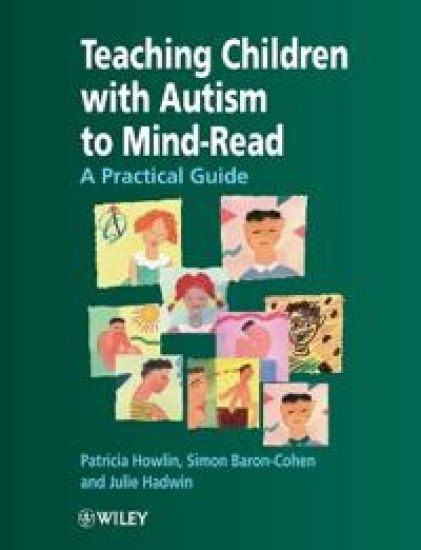
Teaching Children with Autism to Mind-Read

Teaching Children with Autism to Mind-Read

Patricia Howlin; Simon Baron-Cohen; Julie A. Hadwin

John Wiley Sons Inc
1998
nidottu
The difficulties experienced by children with autism and related conditions in inferring the thoughts, beliefs, desires and intentions of others are well documented in numerous studies. It now seems that these deficits underlie many of the social and communication problems that are characteristic of autism. Teaching Children with Autism to Mind-Read explores the relationship of "theory of mind" deficits to other areas of children's functioning and describes existing experimental work that has attempted to enhance the skills associated with understanding others' minds. Drawing on their own intervention programme, and providing detailed information about the teaching materials and strategies they use, the authors provide practical guidelines for helping children with autism spectrum conditions to improve their understanding of beliefs, emotions and pretence. The authors tackle specific problematic issues including: * how to interpret facial expressions * how to recognise feelings of anger, sadness, fear and happiness * how feelings are affected by what happens and what is expected to happen * how to see things from another person's perspective * how to understand another person's knowledge and beliefs This easy-to-follow graded teaching guide is of particular relevance to special needs teachers, educational and clinical psychologists, speech and language therapists, and carers of children with autism spectrum conditions.
Mindblindness

Mindblindness

Simon Baron-Cohen; Leda Cosmides; John Tooby

MIT Press
1997
pokkari
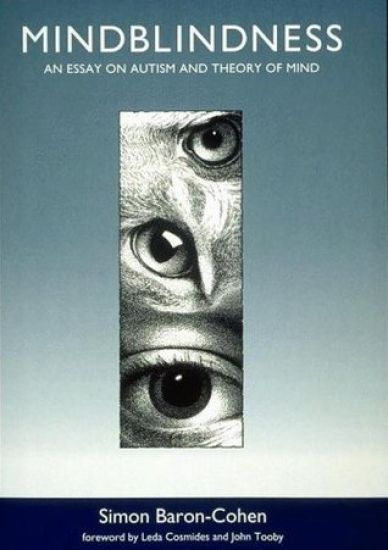
In Mindblindness, Simon Baron-Cohen presents a model of the evolution and development of "mindreading." He argues that we mindread all the time, effortlessly, automatically, and mostly unconsciously. It is the natural way in which we interpret, predict, and participate in social behavior and communication. We ascribe mental states to people: states such as thoughts, desires, knowledge, and intentions. Building on many years of research, Baron-Cohen concludes that children with autism, suffer from "mindblindness" as a result of a selective impairment in mindreading. For these children, the world is essentially devoid of mental things. Baron-Cohen develops a theory that draws on data from comparative psychology, from developmental, and from neuropsychology. He argues that specific neurocognitive mechanisms have evolved that allow us to mindread, to make sense of actions, to interpret gazes as meaningful, and to decode "the language of the eyes." A Bradford Book