Kirjojen hintavertailu – 12 859 818 kirjaa ja 27 kauppaa

Kirjailija

Simon Batten

Kirjat ja teokset yhdessä paikassa: 4 kirjaa, julkaisuja vuosilta 2018–2025, suosituimpiin kuuluu Futile Exercise?. Vertaile teosten hintoja ja tarkista saatavuus suomalaisista kirjakaupoista.

4 kirjaa

Kirjojen julkaisuvuodet: 2018–2025.

The Battle of Denain

The Battle of Denain

Simon Batten

HELION COMPANY
2025
nidottu
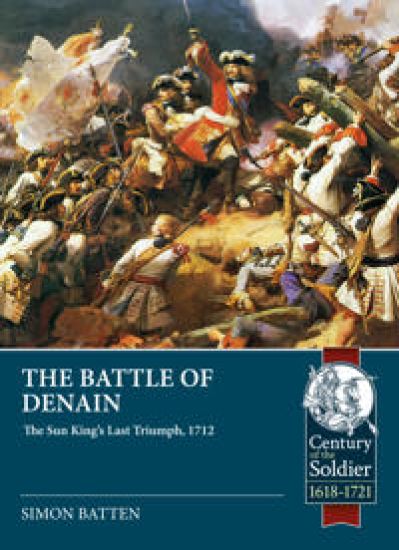
After 10 years of the War of Spanish Succession and repeated defeats in Flanders, Louis XIV's France found itself in a desperate predicament, facing an imminent invasion. The Battle of Denain tells the story of the little-known battle that saved France and gave the Sun King the final triumph of his long reign. The Battle of Denain is the first comprehensive account of the 1712 campaign in English. Previous Anglophone historians of the war have concentrated on the iconic figure of the Duke of Marlborough, which has hindered our understanding of Britain's true role within the multinational alliance opposing Louis XIV's France. Particularly, the contributions of the Dutch Republic have been overlooked and misrepresented, and Denain was primarily a Dutch battle. The Battle of Denain examines the diplomatic manoeuvres early in the year that led to British troops marching away, leaving the Dutch and Imperial forces to confront the French army for the remainder of the campaign, and assesses how this may explain the French victory. The author's incorporation of French and Dutch primary sources allows for a more rounded perspective on the 1712 campaign. Alongside the central figure of Louis XIV himself, four generals receive particular attention: the Allied commander Prince Eugene and his French counterpart Marshal Villars will be well known to many readers, while the Earl of Albemarle, the Dutch commander at Denain, and the Duke of Ormonde, the leader of the British contingent, are likely less familiar figures.
Futile Exercise?

Futile Exercise?

Simon Batten

HELION COMPANY
2024
nidottu
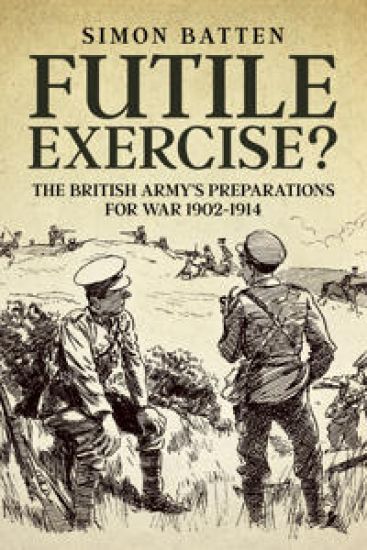
According to the official historian Brigadier-General James Edmonds: 'In every respect the Expeditionary Force of 1914 was incomparably the best trained, best organized, and best equipped British Army which ever went forth to war'. There has been considerable debate over the extent to which Edmonds' claim was justified, and to which the British Army had learnt the lessons of recent events (above all, its chastening experiences in South Africa). Conventional wisdom has it that the British Army in 1914 was utterly unprepared for the development of trench warfare from October 1914 onwards, and that it took many lives and a costly 'learning curve' for the British to come to terms with the new conditions of warfare. Given that war was expected in the decade before August 1914 - and that a great deal of time and money was spent preparing for that war - it seems obvious to ask why the British Army was not better prepared for the war when it came. This raises important issues about how armies learn from their experiences and how they prepare for the unknowable - namely, a war - without employing bullets and shells. How realistic and useful were the exercises and manoeuvres the British Army used in the period between the end of the Boer War in 1902 and the outbreak of war in August 1914? The approach of most historians has been either to ignore them, or to dismiss them as a waste of time and money. The manoeuvres carried out between 1902 and 1913 featured large forces - sometimes as many as 45,000 men and 12,000 horses - as well as guns, trucks, trains and the first sizeable force of military aircraft ever employed in Britain. Many of the names later familiar from the Western Front were involved - Haig, French, Rawlinson and Allenby - as well as a great many of the troops who would cross to France with the British Expeditionary Force (BEF) in August 1914. Their efforts were witnessed by large crowds, as well as politicians, representatives of foreign armies and journalists (some of them 'embedded' with army units); there was comprehensive and opinionated coverage in the newspapers of the time.//What lessons were learnt, what value did these manoeuvres have and how do they relate to the events of the war - especially, its opening months? How does the British experience compare with those of the continental armies, who also made extensive use of manoeuvres in this period? Winner of the 2018 Arthur Goodzeit Book Award, presented at The New York Affair Symposium.
Remember Him at the Altar

Remember Him at the Altar

Matthew Dixon; Simon Batten

HELION COMPANY
2022
pokkari
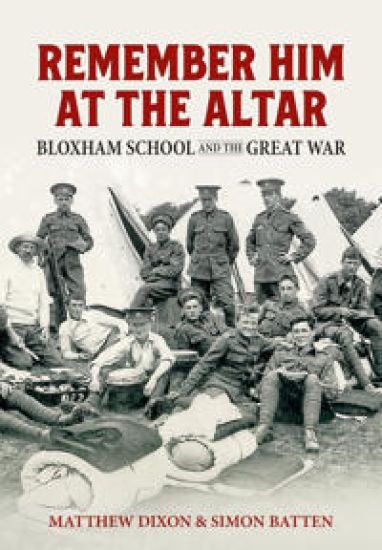
On 22 July 1916 Lieutenant Arthur Stevens of the 9th Battalion, Royal Fusiliers, sat down to write a letter to the chaplain of his old school, Bloxham School in Oxfordshire. Informing him of the death of Gordon Peecock, an officer in the same battalion as well as a contemporary at Bloxham, he had a favor to ask of the Rev. Hugh Willimott: 'As his closest friend out here, I would like to ask you to remember him at the altar.' Peecock was killed by machine gun fire coming from Prussian positions to the North of Ovillers on 7 July, a week into the Battle of the Somme. By the time the school received Stevens' letter the summer holidays had begun, and so it was not until the first Saturday of term in September that Gordon Peecock's name was remembered in the school chapel, and by this time Arthur Stevens too was dead, killed in early August at Pozi res, a couple of miles away from where Gordon was killed. Arthur Stevens was 19 years of age. Taking one small boarding school in rural Oxfordshire, this book tells the story of the 80 Bloxhamists who died in the Great War, tracing their lives from school to the grave, but it also examines the experiences of those who served and survived and looks at the way in which the lives of those at home were affected by the war. The authors take the story up to the present day to study the way in which the remembrance of those who fell has changed over the years, and what these changes tell us about how we view the war. The two authors are uniquely well qualified to tackle this subject, having dedicated many years to researching the lives of the men whose stories form the centerpiece of this book. This research project, often a long and difficult process, is itself part of the story of how the 80 men continue to be commemorated at their old school.
Futile Exercise?

Futile Exercise?

Simon Batten

Helion Company
2018
sidottu
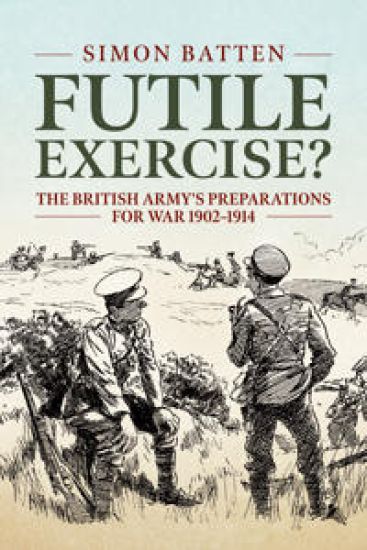
Winner of the 2018 Arthur Goodzeit Book Award, presented at The New York Affair Symposium. According to the official historian Brigadier-General James Edmonds: `In every respect the Expeditionary Force of 1914 was incomparably the best trained, best organized, and best equipped British Army which ever went forth to war’. There has been considerable debate over the extent to which Edmonds’ claim was justified, and to which the British Army had learnt the lessons of recent events (above all, its chastening experiences in South Africa). Conventional wisdom has it that the British Army in 1914 was utterly unprepared for the development of trench warfare from October 1914 onwards, and that it took many lives and a costly `learning curve’ for the British to come to terms with the new conditions of warfare. Given that war was expected in the decade before August 1914 - and that a great deal of time and money was spent preparing for that war - it seems obvious to ask why the British Army was not better prepared for the war when it came. This raises important issues about how armies learn from their experiences and how they prepare for the unknowable - namely, a war - without employing bullets and shells. How realistic and useful were the exercises and manoeuvres the British Army used in the period between the end of the Boer War in 1902 and the outbreak of war in August 1914? The approach of most historians has been either to ignore them, or to dismiss them as a waste of time and money. The manoeuvres carried out between 1902 and 1913 featured large forces – sometimes as many as 45,000 men and 12,000 horses – as well as guns, trucks, trains and the first sizeable force of military aircraft ever employed in Britain. Many of the names later familiar from the Western Front were involved – Haig, French, Rawlinson and Allenby – as well as a great many of the troops who would cross to France with the British Expeditionary Force (BEF) in August 1914. Their efforts were witnessed by large crowds, as well as politicians, representatives of foreign armies and journalists (some of them `embedded’ with army units); there was comprehensive and opinionated coverage in the newspapers of the time. What lessons were learnt, what value did these manoeuvres have and how do they relate to the events of the war - especially, its opening months? How does the British experience compare with those of the continental armies, who also made extensive use of manoeuvres in this period?