Kirjojen hintavertailu – 12 859 819 kirjaa ja 27 kauppaa

Kirjailija

Simon Blackburn

Kirjat ja teokset yhdessä paikassa: 31 kirjaa, julkaisuja vuosilta 1984–2024, suosituimpiin kuuluu Expressivism, Pragmatism and Representationalism. Vertaile teosten hintoja ja tarkista saatavuus suomalaisista kirjakaupoista.

31 kirjaa

Kirjojen julkaisuvuodet: 1984–2024.

Truth

Truth

Simon Blackburn

Oxford University Press Inc
2007
nidottu
The author of the highly popular book Think, which Time magazine hailed as "the one book every smart person should read to understand, and even enjoy, the key questions of philosophy," Simon Blackburn is that rara avis--an eminent thinker who is able to explain philosophy to the general reader. Now Blackburn offers a tour de force exploration of what he calls "the most exciting and engaging issue in the whole of philosophy"--the age-old war over truth. The front lines of this war are well defined. On one side are those who believe in plain, unvarnished facts, rock-solid truths that can be found through reason and objectivity--that science leads to truth, for instance. Their opponents mock this idea. They see the dark forces of language, culture, power, gender, class, ideology and desire--all subverting our perceptions of the world, and clouding our judgement with false notions of absolute truth. Beginning with an early skirmish in the war--when Socrates confronted the sophists in ancient Athens--Blackburn offers a penetrating look at the longstanding battle these two groups have waged, examining the philosophical battles fought by Plato, Protagoras, William James, David Hume, Hans-Georg Gadamer, Jacques Derrida, Michel Foucault, Richard Rorty, and many others, with a particularly fascinating look at Nietzsche. Among the questions Blackburn considers are: is science mere opinion, can historians understand another historical period, and indeed can one culture ever truly understand another. Blackburn concludes that both sides have merit, and that neither has exclusive ownership of truth. What is important is that, whichever side we embrace, we should know where we stand and what is to be said for our opponents.
Truth: A Guide for the Perplexed

Truth: A Guide for the Perplexed

Simon Blackburn

Penguin Books Ltd
2006
pokkari

Halvin toimitettuna 17,00 €

This important book is about truth, and the enemies of truth, and the wars that are fought between them. As Simon Blackburn says in his introduction, "the ground is complicated, strewn with abandoned fortresses and trenches, fought over by shifting alliances". Truth is an essential sure-footed guide through the territory, from classical to modern times. It looks at relativism and absolutism, toleration and belief, objectivity and knowledge, science and pseudo-science, and the moral and political implications, as well as the nuances, of all these.
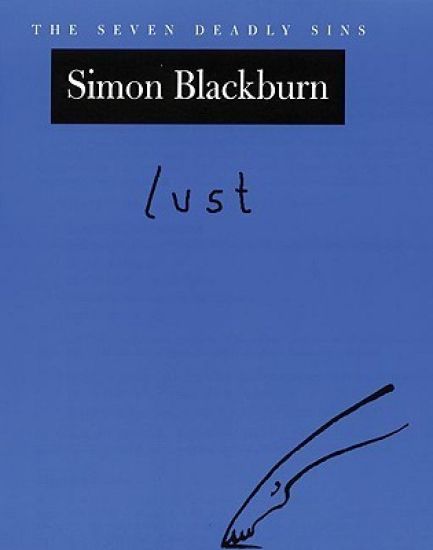
Lust

Lust

Simon Blackburn

Oxford University Press Inc
2004
sidottu
Blackburn, author of such popular philosophy books as "Think" and "Being Good," here offers a sharp-edged probe into the heart of lust, blending together insight from some of the world's greatest thinkers on sex, human nature, and common cultural foibles. Lust, says Simon Blackburn, is furtive, headlong, always sizing up opportunities. It is a trail of clothing in the hallway, the trashy cousin of love. But be that as it may, the aim of this delightful book is to rescue lust "from the denunciations of old men of the deserts, to deliver it from the pallid and envious confessor and the stocks and pillories of the Puritans, to drag it from the category of sin to that of virtue." Blackburn, author of such popular philosophy books as Think and Being Good, here offers a sharp-edged probe into the heart of lust, blending together insight from some of the world's greatest thinkers on sex, human nature, and our common cultural foibles. Blackburn takes a wide ranging, historical approach, discussing lust as viewed by Aristophanes and Plato, lust in the light of the Stoic mistrust of emotion, and the Christian fear of the flesh that catapulted lust to the level of deadly sin. He describes how philosophical pessimists like Schopenhauer and Sartre contributed to our thinking about lust and explores the false starts in understanding lust represented by Freud, Kinsey, and modern "evolutionary psychology." But most important, Blackburn reminds us that lust is also life-affirming, invigorating, fun. He points to the work of David Hume (Blackburn's favorite philosopher) who saw lust not only as a sensual delight but also "a joy of the mind." Written by one of the most eminent living philosophers, attractively illustrated and colourfully packaged, Lust is a book that anyone would lust over.
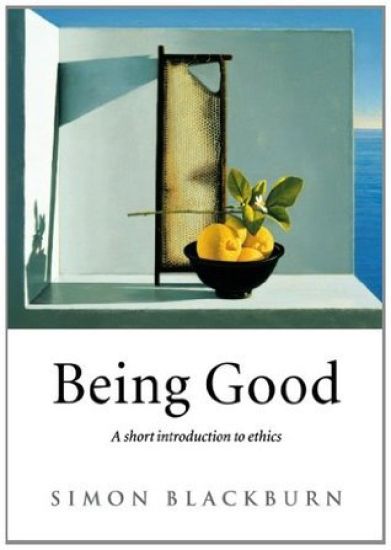
Being Good

Being Good

Simon Blackburn

Oxford University Press
2002
nidottu

Halvin toimitettuna 20,90 €

It is not only in our dark hours that scepticism, relativism, hypocrisy, and nihilism dog ethics. Whether it is a matter of giving to charity, or sticking to duty, or insisting on our rights, we can be confused, or be paralysed by the fear that our principles are groundless. Many are afraid that in a Godless world science has unmasked us as creatures fated by our genes to be selfish and tribalistic, or competitive and aggressive. Simon Blackburn, author of the best-selling Think, structures this short introduction around these and other threats to ethics. Confronting seven different objections to our self-image as moral, well-behaved creatures, he charts a course through the philosophical quicksands that often engulf us. Then, turning to problems of life and death, he shows how we should think about the meaning of life, and how we should mistrust the sound-bite sized absolutes that often dominate moral debates. Finally he offers a critical tour of the ways the philosophical tradition has tried to provide foundations for ethics, from Plato and Aristotle through to contemporary debates.
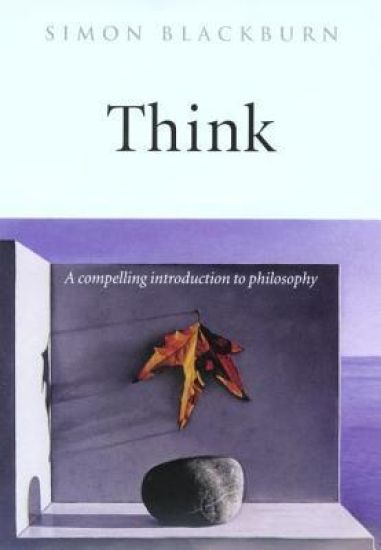
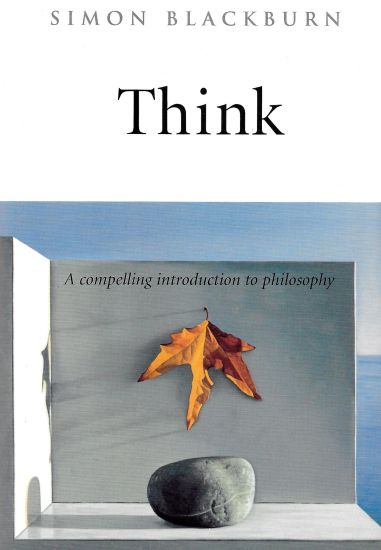
Think

Think

Simon Blackburn

Oxford University Press
2001
nidottu

Halvin toimitettuna 21,30 €

This is a book about the big questions in life: knowledge, consciousness, fate, God, truth, goodness, justice. It is for anyone who believes there are big questions out there, but does not know how to approach them. Think sets out to explain what they are and why they are important. Simon Blackburn begins by putting forward a convincing case for the study of philosophy and goes on to give the reader a sense of how the great historical figures such as Descartes, Hume, Kant, and Wittgenstein have approached its central themes. Each chapter explains a major issue, and gives the reader a self-contained guide through the problems that philosophers have studied. The large scope of topics covered range from scepticism, the self, mond and body, and freedom to ethics and the arguments surrounding the existence of God. Lively and approachable, this book is ideal for all those who want to learn how the basic techniques of thinking shape our existence.
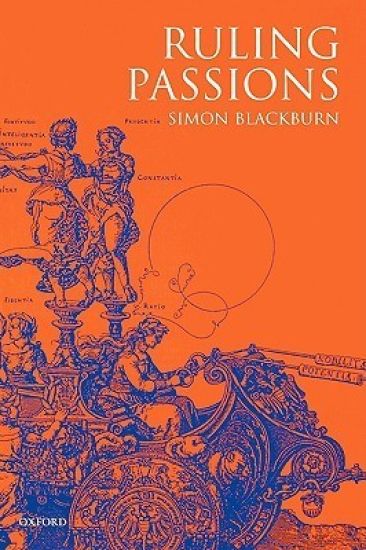
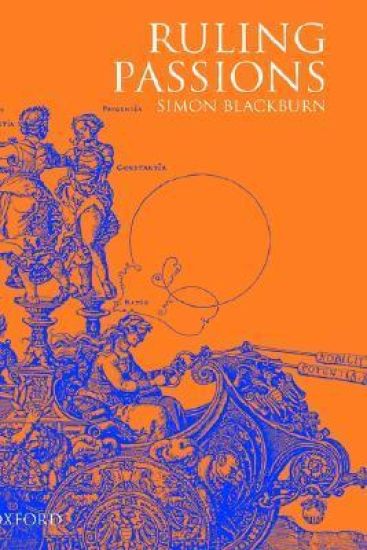
Ruling Passions

Ruling Passions

Simon Blackburn

Clarendon Press
2000
nidottu
Simon Blackburn puts forward a compelling original philosophy of human motivation and morality. He maintains that we cannot get clear about ethics until we get clear about human nature. So these are the sorts of questions he addresses: Why do we behave as we do? Can we improve? Is our ethics at war with our passions, or is it an upshot of those passions? Blackburn seeks the answers in an exploration of guilt, shame, disgust, and other moral emotions; he draws also on game theory and cognitive science in his account of the structures of human motivation. Many philosophers have wanted a naturalistic ethics a theory that integrates our understanding of human morality with the rest of our understanding of the world we live in. What is special about Blackburn's naturalistic ethics is that it does not debunk the ethical by reducing it to the non-ethical. At the same time he banishes the spectres of scepticism and relativism that have haunted recent moral philosophy. Ruling Passions sets ethics in the context of human nature: it offers a solution to the puzzle of how ethics can maintain its authority even though it is rooted in the very emotions and motivations that it exists to control.
Think

Think

Simon Blackburn

Oxford University Press Inc
1999
sidottu

Halvin toimitettuna 32,60 €

What am I? What is consciousness? What is the difference between past and future? Does the world presuppose a creator? Do we always act out of self-interest? This is a book about the big questions in life: knowledge, consciousness, fate, God, truth, goodness, justice. It is for anyone who believes there are big questions out there, but does not know how to approach them. Written by the author of the bestselling Oxford Dictionary of Philosophy, Think sets out to explain what they are and why they are important. Simon Blackburn begins by putting forward a convincing case for the study of philosophy and goes on to give the reader a sense of how the great historical figures such as Plato, Hume, Kant, and Descartes have approached its central themes. Each chapter explains a major issue, and gives the reader a self-contained guide through the problems that philosophers have studied. The large range of topics covered range from scepticism, the self, mind and body, and freedom to ethics and the arguments surrounding the existence of God. Written in a lively and approachable manner, this book is ideal for all those who want to learn how the basic techniques of thinking shape our existence.
Ruling Passions

Ruling Passions

Simon Blackburn

Clarendon Press
1998
sidottu
Simon Blackburn puts forward a compelling original philosophy of human motivation and morality. He maintains that we cannot get clear about ethics until we get clear about human nature. So these are the sorts of questions he addresses: Why do we behave as we do? Can we improve? Is our ethics at war with our passions, or is it an upshot of those passions? Blackburn seeks the answers in an exploration of guilt, shame, disgust, and other moral emotions; he draws also on game theory and cognitive science in his account of the structures of human motivation. Many philosophers have wanted a naturalistic ethics--a theory that integrates our understanding of human morality with the rest of our understanding of the world we live in. What is special about Blackburn's naturalistic ethics is that it does not debunk the ethical by reducing it to the non-ethical. At the same time he banishes the spectres of scepticism and relativism that have haunted recent moral philosophy. Ruling Passions sets ethics in the context of human nature: it offers a solution to the puzzle of how ethics can maintain its authority even though it is rooted in the very emotions and motivations that it exists to control.
Essays in Quasi-Realism

Essays in Quasi-Realism

Simon Blackburn

Oxford University Press Inc
1993
nidottu
This volume collects together some influential essays in which Simon Blackburn explores one of the most profound and fertile of philosophical problems: the way in which our judgements relate to the world. This debate has centered on realism, or the view that what we say is validated by the way things stand in the world, and a variety of oppositions to it. Prominent among the latter are expressive and projective theories, but also a relaxed pluralism that discourages the view that there are substantial issues at stake. The figure of the `quasi-realist' dramatizes the difficulty of conducting these debates. Typically philosophers thinking of themselves as realists will believe that they alone can give a proper or literal account of some of our attachments - to truth, to facts, to the independent world, to knowledge, and to certainty. The quasi-realist challenge, developed by Blackburn in this volume, is that we can have those attachments without any metaphysic that deserves calling realism, so that the metaphysical picture that goes with our practices is quite idle. The cases treated here include the theory of value, of knowledge, modality, probability, causation, intentionality and rule-following, and explanation. A substantial new introduction has been added, drawing together some of the central themes. The essays articulate a fresh alternative to a primitive realist/anti-realist opposition, and their cumulative effect is to yield a new appreciation of the delicacy of the debate in these central areas.
Essays in Quasi-Realism

Essays in Quasi-Realism

Simon Blackburn

Oxford University Press Inc
1993
sidottu
In these essays, Simon Blackburn explores one of the most profound and fertile of philosophical problems: the way in which our judgements relate to the world. This debate has centred on realism, or the view that what we say is validated by the way things stand in the world, and a variety of oppositions to it. Prominent among the latter are expressive and projective theories, but also a relaxed pluralism that discourages the view that there are substantial issues at stake. The figure of the `quasi-realist' dramatizes the difficulty of conducting these debates. Typically philosophers thinking of themselves as realists will believe that they alone can give a proper or literal account of some of our attachments–to truth, to facts, to the independent world, to knowledge, and to certainty. The quasi-realist challenge, developed by Blackburn in this volume, is that we can have those attachments without any metaphysic that deserves calling realism, so that the metaphysical picture that goes with our practices is quite idle. The cases treated here include the theories of value and of knowledge, modality, probability, causation, intentionality and rule-following, and explanation. A substantial new introduction has been added, drawing together some of the central themes.