Kirjojen hintavertailu – 12 903 735 kirjaa ja 27 kauppaa

Kirjailija

Simon Butt

Kirjat ja teokset yhdessä paikassa: 7 kirjaa, julkaisuja vuosilta 2011–2023, suosituimpiin kuuluu The Constitution of Indonesia. Vertaile teosten hintoja ja tarkista saatavuus suomalaisista kirjakaupoista.

7 kirjaa

Kirjojen julkaisuvuodet: 2011–2023.

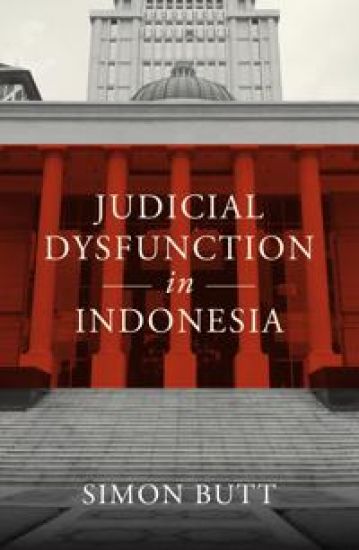
Judicial Dysfunction in Indonesia

Judicial Dysfunction in Indonesia

Simon Butt

MELBOURNE UNIVERSITY PRESS
2023
nidottu
Indonesia's judicial system has long been described as dysfunctional. Many of its problems developed out of decades of authoritarian rule, which began in the last few years of the reign of Indonesia's first president, Soekarno. By the time President Soeharto's regime fell in 1998, the judiciary had virtually collapsed. Judicial dependence on government, inefficiency and corruption were commonly seen as the main indicators of poor performance, resulting in very low levels of public trust in the courts. To address these problems, reformists focused on improving judicial independence. Yet while independence is a basic prerequisite for adequate judicial performance, much depends on how this independence is exercised. Judicial Dysfunction in Indonesia demonstrates that Indonesian courts have tended to act without accountability and offers detailed analysis of highly controversial decisions by Indonesian courts, many of which have been of major political significance, both domestically and internationally. It sets out in concrete terms, for the first time, how bribes are negotiated and paid to judges and demonstrates that judges have issued poor decisions and engaged in corruption and other misconduct, largely without fear of retribution. Further, it explores unsafe convictions and public pressure as a threat to judicial independence. Judicial Dysfunction in Indonesia shines a sorely needed empirical light on the Indonesian judicial system, and is an essential resource for readers, scholars and students of Indonesian law and society.
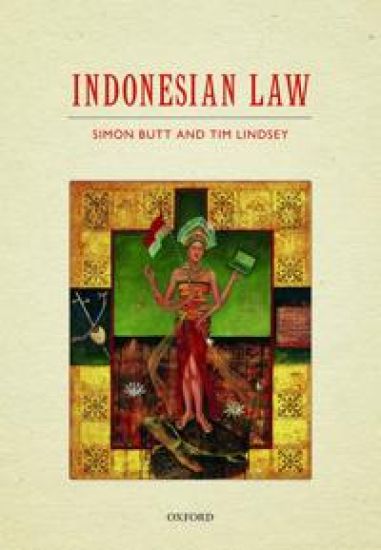
Indonesian Law

Indonesian Law

Tim Lindsey; Simon Butt

Oxford University Press
2018
sidottu
Indonesia has a growing population of almost 300 million people, it is increasingly involved in world affairs, and has a booming economy. The need to better understand its unique, complex, and often obscure legal system, has become pressing. This is true across a wide range of sectors including, but not limited to, trade and investment, crime and terrorism, and human rights. Indonesia's democratization after the fall of Soeharto in 1998 triggered massive social and political changes that opened up this diverse, and formerly tightly-controlled, society. Law reform was a key driver of Indonesia's transformation and its full effect remains to be seen. This book offers clear and detailed explanations of the foundations of Indonesia's legal system in the context of its legal reform and rapid development. It offers succinct commentaries on a wide range of issues, examining the judicial process, the constitution, corruption and the court system, contract law, administrative law, foreign investment, taxation, Islamic law, and family law. It examines current substantive law and judicial interpretation and presents case studies of how the system operates in practice. Written in an accessible and engaging style, this book is an essential guide for readers seeking quick and clear answers to questions regarding the law and its application in Indonesia.
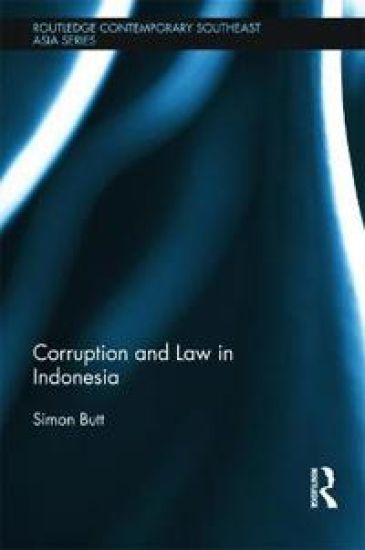
Corruption and Law in Indonesia
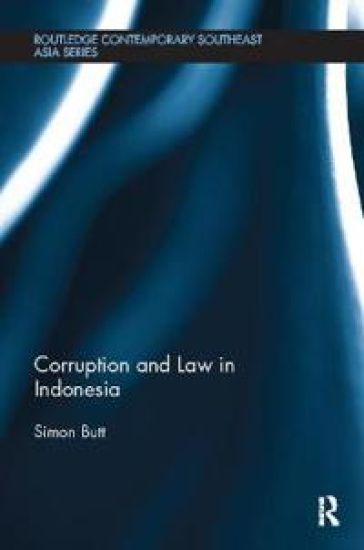
Indonesia has transformed from one of South East Asia’s most repressive and centralised political systems to its most decentralised and democratic. Despite this, obstacles still remain that hinder Indonesia achieving the ‘rule of law’, and in particular, the country is consistently ranked as having one of the highest levels of corruption in the world. This book assesses Indonesia’s anti-corruption reforms over the past decade, focusing on the Anti-corruption Commission (KPK) and the Anti-corruption Court (ACC). The book discusses how both institutions have been largely successful since they began operating on 2004. Before 2008, the KPK and ACC largely focused on mid-senior level targets and faced resistance primarily in the form of constitutional challenges to their jurisdictions and powers. From 2008, however, the KPK began targeting politically-powerful figures, drawing resistance that now threatens the future efficacy of both institutions. It is largely in Indonesia’s courtrooms and lawmaking institutions that key battles between reformists and those preferring the status quo have played out. This book describes and analyses these judicial processes and legal changes. It shows that despite persistent claims that Indonesia’s legal system is dysfunctional, law is far from irrelevant in modern day Indonesia. The book is a useful contribution to South East Asian politics and Asian law.
Climate Change and Forest Governance

Climate Change and Forest Governance

Simon Butt; Rosemary Lyster; Tim Stephens

Routledge
2016
nidottu
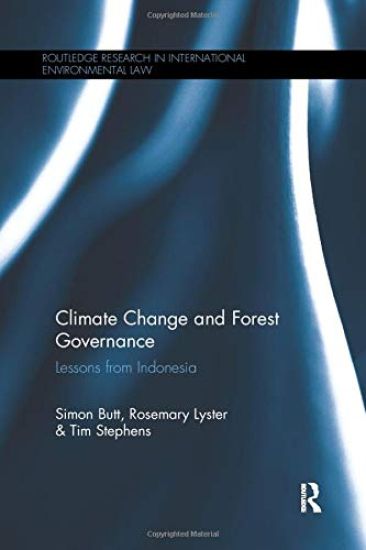
Deforestation in tropical rainforest countries is one of the largest contributors to human-induced climate change. Deforestation, especially in the tropics, contributes around 20 per cent of annual global greenhouse gas emissions, and, in the case of Indonesia, amounts to 85 per cent of its annual emissions from human activities. This book provides a comprehensive assessment of the emerging legal and policy frameworks for managing forests as a key means to address climate change. The authors uniquely combine an assessment of the international rules for forestry governance with a detailed assessment of the legal and institutional context of Indonesia; one of the most globally important test case jurisdictions for the effective roll-out of ‘Reduced Emissions from Deforestation and Degradation’ (REDD). Using Indonesia as a key case study, the book explores challenges that heavily forested States face in resource management to address climate mitigation imperatives, such as providing safeguards for local communities and indigenous peoples. This book will be of great relevance to students, scholars and policymakers with an interest in international environmental law, climate change and environment and sustainability studies in general.
Climate Change and Forest Governance

Climate Change and Forest Governance

Simon Butt; Rosemary Lyster; Tim Stephens

Routledge
2015
sidottu
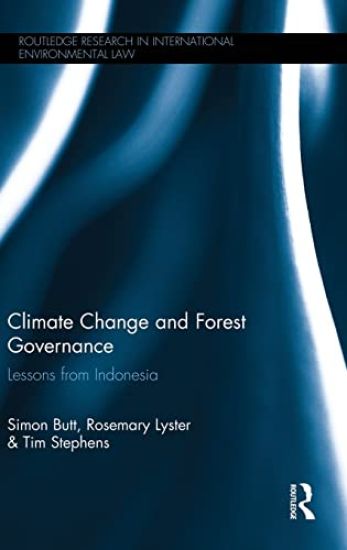
Deforestation in tropical rainforest countries is one of the largest contributors to human-induced climate change. Deforestation, especially in the tropics, contributes around 20 per cent of annual global greenhouse gas emissions, and, in the case of Indonesia, amounts to 85 per cent of its annual emissions from human activities. This book provides a comprehensive assessment of the emerging legal and policy frameworks for managing forests as a key means to address climate change. The authors uniquely combine an assessment of the international rules for forestry governance with a detailed assessment of the legal and institutional context of Indonesia; one of the most globally important test case jurisdictions for the effective roll-out of ‘Reduced Emissions from Deforestation and Degradation’ (REDD). Using Indonesia as a key case study, the book explores challenges that heavily forested States face in resource management to address climate mitigation imperatives, such as providing safeguards for local communities and indigenous peoples. This book will be of great relevance to students, scholars and policymakers with an interest in international environmental law, climate change and environment and sustainability studies in general.
The Constitution of Indonesia

The Constitution of Indonesia

Simon Butt; Tim Lindsey

Hart Publishing
2012
nidottu
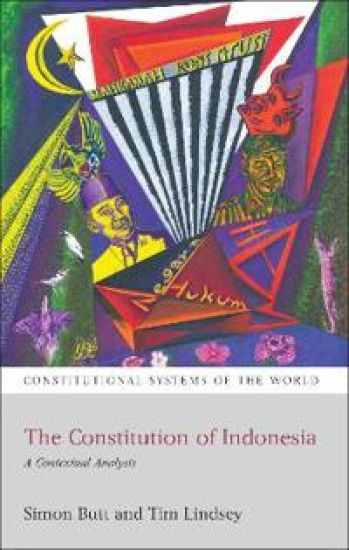
For decades, Indonesia's 1945 Constitution, the second shortest in the modern world, was used as an apologia by successive authoritarian regimes. A bare-bones text originally intended as a temporary measure, it did little beyond establish basic state organs, including a powerful presidency. It did not offer citizens real guarantees or protections. These weaknesses were ruthlessly exploited by the military-backed regime that President Soeharto headed from 1966 until his fall in 1998. The (first ever) amendments to the Constitution, which began the following year and were completed in 2002, changed all this. Enlarging and rethinking the Constitution, they ushered in a liberal democratic system based around human rights, an open society and separation of powers. These reforms also created a Constitutional Court that has provided Indonesia's first judicial forum for serious debate on the interpretation and application of the Constitution, as well as its first significant and easily-accessible body of detailed and reasoned judgments. Today, Indonesian constitutional law is rich, sophisticated and complex. This book surveys this remarkable constitutional transition, assessing the implementation of Indonesia's new constitutional model and identifying its weaknesses. After covering key institutions exercising executive, legislative and judicial powers, the book focuses on current constitutional debates, ranging from human rights to decentralisation, religious freedom and control of the economy.
Corruption and Law in Indonesia
Indonesia has transformed from one of South East Asia’s most repressive and centralised political systems to its most decentralised and democratic. Despite this, obstacles still remain that hinder Indonesia achieving the ‘rule of law’, and in particular, the country is consistently ranked as having one of the highest levels of corruption in the world. This book assesses Indonesia’s anti-corruption reforms over the past decade, focusing on the Anti-corruption Commission (KPK) and the Anti-corruption Court (ACC). The book discusses how both institutions have been largely successful since they began operating on 2004. Before 2008, the KPK and ACC largely focused on mid-senior level targets and faced resistance primarily in the form of constitutional challenges to their jurisdictions and powers. From 2008, however, the KPK began targeting politically-powerful figures, drawing resistance that now threatens the future efficacy of both institutions. It is largely in Indonesia’s courtrooms and lawmaking institutions that key battles between reformists and those preferring the status quo have played out. This book describes and analyses these judicial processes and legal changes. It shows that despite persistent claims that Indonesia’s legal system is dysfunctional, law is far from irrelevant in modern day Indonesia. The book is a useful contribution to South East Asian politics and Asian law.