Kirjojen hintavertailu – 12 859 829 kirjaa ja 27 kauppaa

Kirjailija

Simon Chesterman

Kirjat ja teokset yhdessä paikassa: 20 kirjaa, julkaisuja vuosilta 2001–2026, suosituimpiin kuuluu Law & Practice of the United Nations. Vertaile teosten hintoja ja tarkista saatavuus suomalaisista kirjakaupoista.

20 kirjaa

Kirjojen julkaisuvuodet: 2001–2026.

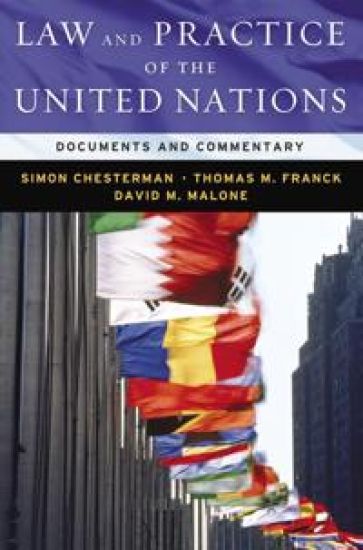
Law & Practice of the United Nations

Law & Practice of the United Nations

The Late Thomas Franck; Simon Chesterman; David Malone

Oxford University Press Inc
2008
sidottu
Law & Practice of the United Nations: Documents and Commentary combines primary materials with expert commentary, demonstrating the interaction between law and practice in the UN organization, as well as the possibilities and limitations of multilateral institutions in general. Each chapter begins with a short introductory essay by the authors that describes how the documents that follow illustrate a set of legal, institutional, and political issues relevant to the practice of diplomacy and the development of public international law through the United Nations. The authors help students form a realistic idea of the work of international diplomacy, as the negotiation and interpretation of such texts is an important part of what actually takes place at the United Nations and other international organizations. A wide variety of documents are presented, each of which must be read differently: treaties and resolutions based on political compromises, judicial opinions that are based on legal reasoning, policy documents intended to justify specific actions, and advocacy intended to pursue a national or other interest. Students will develop the ability to read these documents critically, parsing not only the meaning but the political and bureaucratic interests behind them. Law & Practice of the United Nations is ideal for courses on the United Nations or International Organizations, taught in both law and international relations programs.
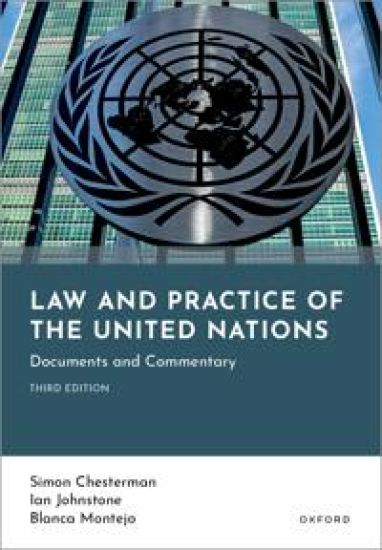
Law and Practice of the United Nations, 3e

Law and Practice of the United Nations, 3e

Simon Chesterman; Ian Johnstone; Blanca Montejo

Oxford University Press
2026
sidottu
Law and Practice of the United Nations: Documents and Commentary combines primary materials with expert commentary, exploring the interaction between law, policy, and practice in the United Nations, as well as the challenges and opportunities global multilateral institutions face in a fast-changing global climate. The third edition of this renowned volume, used by teachers, practitioners, and scholars around the world, begins with a section on why the UN remains relevant in an era of geopolitical tension and legal uncertainty, focusing on conflicts in Ukraine and Gaza. Following several chapters on the organizations legal and institutional capacities, it then turns to the most challenging issues confronting the UN and the global community, from conflict, weapons of mass destruction, and mass atrocities to poverty, climate change, and artificial intelligence. The book concludes with a section on accountability for wrongs committed by or in the name of the organization, and reform proposals to make it fit for purpose 80 years after its creation. Each chapter includes short essays by the authors that connect the primary documents to the legal, institutional and political issues relevant to the practice of diplomacy and development of international law. Each chapter also includes questions and hypotheticals to guide discussion of the primary materials. This book helps students, scholars and practitioners to understand the central role the United Nations has played in the international legal order since 1945 and suggests avenues to ensure that the organization continues to serve the important purposes for which it was established.
Law and Practice of the United Nations, 3e

Law and Practice of the United Nations, 3e

Simon Chesterman; Ian Johnstone; Blanca Montejo

Oxford University Press
2026
nidottu
Law and Practice of the United Nations: Documents and Commentary combines primary materials with expert commentary, exploring the interaction between law, policy, and practice in the United Nations, as well as the challenges and opportunities global multilateral institutions face in a fast-changing global climate. The third edition of this renowned volume, used by teachers, practitioners, and scholars around the world, begins with a section on why the UN remains relevant in an era of geopolitical tension and legal uncertainty, focusing on conflicts in Ukraine and Gaza. Following several chapters on the organizations legal and institutional capacities, it then turns to the most challenging issues confronting the UN and the global community, from conflict, weapons of mass destruction, and mass atrocities to poverty, climate change, and artificial intelligence. The book concludes with a section on accountability for wrongs committed by or in the name of the organization, and reform proposals to make it fit for purpose 80 years after its creation. Each chapter includes short essays by the authors that connect the primary documents to the legal, institutional and political issues relevant to the practice of diplomacy and development of international law. Each chapter also includes questions and hypotheticals to guide discussion of the primary materials. This book helps students, scholars and practitioners to understand the central role the United Nations has played in the international legal order since 1945 and suggests avenues to ensure that the organization continues to serve the important purposes for which it was established.
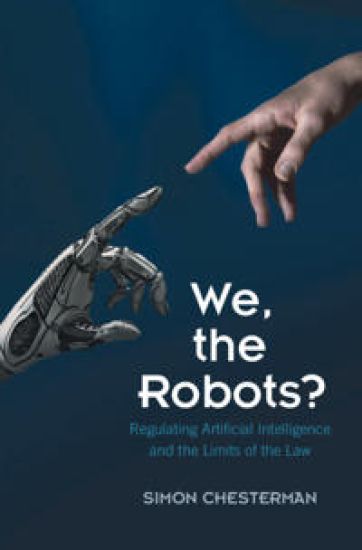
We, the Robots?

We, the Robots?

Simon Chesterman

Cambridge University Press
2022
pokkari
Should we regulate artificial intelligence? Can we? From self-driving cars and high-speed trading to algorithmic decision-making, the way we live, work, and play is increasingly dependent on AI systems that operate with diminishing human intervention. These fast, autonomous, and opaque machines offer great benefits – and pose significant risks. This book examines how our laws are dealing with AI, as well as what additional rules and institutions are needed – including the role that AI might play in regulating itself. Drawing on diverse technologies and examples from around the world, the book offers lessons on how to manage risk, draw red lines, and preserve the legitimacy of public authority. Though the prospect of AI pushing beyond the limits of the law may seem remote, these measures are useful now – and will be essential if it ever does.
We, the Robots?

We, the Robots?

Simon Chesterman

Cambridge University Press
2021
sidottu
Should we regulate artificial intelligence? Can we? From self-driving cars and high-speed trading to algorithmic decision-making, the way we live, work, and play is increasingly dependent on AI systems that operate with diminishing human intervention. These fast, autonomous, and opaque machines offer great benefits – and pose significant risks. This book examines how our laws are dealing with AI, as well as what additional rules and institutions are needed – including the role that AI might play in regulating itself. Drawing on diverse technologies and examples from around the world, the book offers lessons on how to manage risk, draw red lines, and preserve the legitimacy of public authority. Though the prospect of AI pushing beyond the limits of the law may seem remote, these measures are useful now – and will be essential if it ever does.
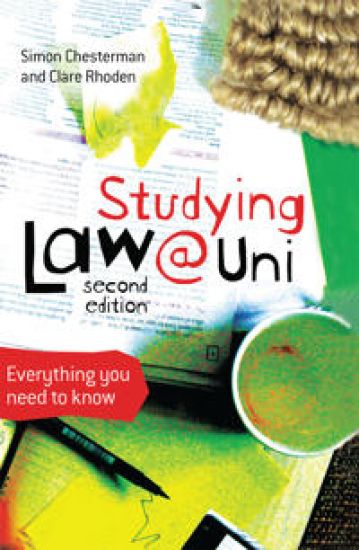
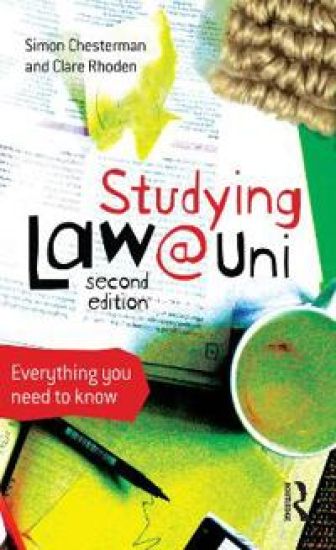
Studying Law at University

Studying Law at University

Simon Chesterman; Clare Rhoden

Routledge
2021
sidottu
Do you want to do well in Law from day one? Law is a challenging and competitive subject to study at university. You need to become familiar with its peculiar language and complicated practices as quickly as possible if you want to do well. Drawing on the experiences of hundreds of students, Studying Law at University demystifies your law course. With reliable tips and practical suggestions, it shows you how to: understand key legal concepts; read cases; take useful notes; become an active learner; manage your time; write law essays; sit law exams. Updated to take into account the increasing use of the internet, this second edition of Studying Law at University tells you everything you need to know to get good marks and enjoy your studies.
I, Huckleberry

I, Huckleberry

Simon Chesterman

Marshall Cavendish International (Asia) Pte Ltd
2020
nidottu
Magna Carta: The most famous legal text in history. The foundation of the rule of law. Stolen. When Huckleberry Jones is packed off by his parents from New York to a camp for "exceptional teenagers" at Oxford University, his first question is: Why? But meeting the beautiful, enigmatic Kat might just make his time there worthwhile. Together with new friends Mei and Tshombe, he discovers that teenagers from four continents can have more in common than their differences. Then Huck finds himself trapped in a mystery linked to an 800-year-old parchment-and solving it could cost him his life.
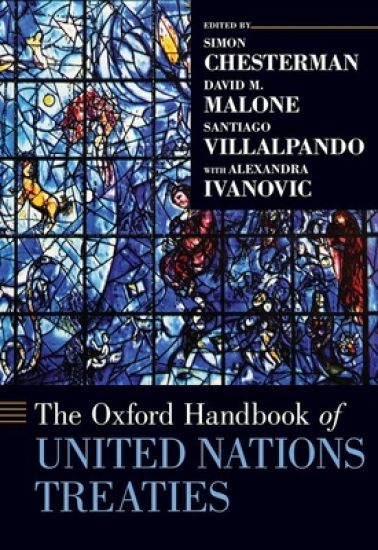
The Oxford Handbook of United Nations Treaties

The Oxford Handbook of United Nations Treaties

Simon Chesterman; David M. Malone; Santiago Villalpando

Oxford University Press Inc
2019
sidottu
The United Nations is a vital part of the international order. Yet this book argues that the greatest contribution of the UN is not what it has achieved (improvements in health and economic development, for example) or avoided (global war, say, or the use of weapons of mass destruction). It is, instead, the process through which the UN has transformed the structure of international law to expand the range and depth of subjects covered by treaties. This handbook offers the first sustained analysis of the UN as a forum in which and an institution through which treaties are negotiated and implemented. Chapters are written by authors from different fields, including academics and practitioners; lawyers and specialists from other social sciences (international relations, history, and science); professionals with an established reputation in the field; younger researchers and diplomats involved in the negotiation of multilateral treaties; and scholars with a broader view on the issues involved. The volume thus provides unique insights into UN treaty-making. Through the thematic and technical parts, it also offers a lens through which to view challenges lying ahead and the possibilities and limitations of this understudied aspect of international law and relations.
Being Arcadia

Being Arcadia

Simon Chesterman

Marshall Cavendish International (Asia) Pte Ltd
2017
nidottu
Arcadia Greentree confronts her past – and her future. In Book 1, sixteen-year-old Arcadia discovered she was adopted and that her development had been shaped and monitored by her “parents” together with the headmaster of her school. The discovery resulted in a tragedy as her father was murdered and her mother put in a coma. In Book 2, Arcadia tries to locate the “professor” whom she believes to be ultimately responsible for her situation. A series of bomb threats lead her to Oxford University and a confrontation with her enemy—but all is not as it seems. The pieces of Arcadia’s life are slowly falling into place when her estranged sister returns to scatter them once more. Arcadia must now choose whether to trust her nemesis as they uncover the dark secret of their birth.
Finding Arcadia

Finding Arcadia

Simon Chesterman

Marshall Cavendish International (Asia) Pte Ltd
2017
pokkari
The stunning sequel to Raising Arcadia! To understand the present, Arcadia Greentree must dig deep into her past. Her family torn apart by tragedy, Arcadia tries to locate the professor" whom she believes to be ultimately responsible. A series of clues lead her to Oxford University and a confrontation with her enemybut all is not as it seems.
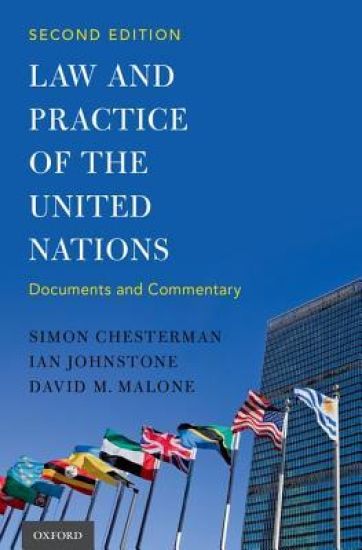
Law and Practice of the United Nations

Law and Practice of the United Nations

Simon Chesterman; Ian Johnstone; David M. Malone

Oxford University Press Inc
2016
sidottu
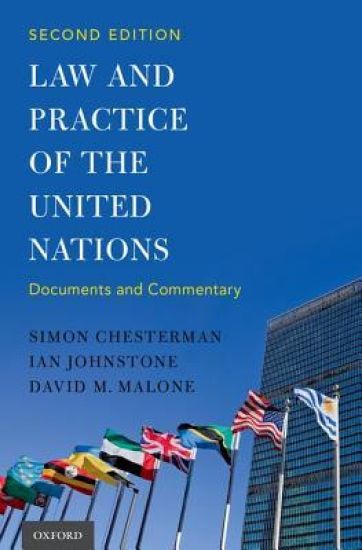
Law and Practice of the United Nations: Documents and Commentary combines primary materials with expert commentary demonstrating the interaction between law and practice in the UN organization, as well as the possibilities and limitations of multilateral institutions in general. Each chapter begins with a short introductory essay describing how the documents that ensue illustrate a set of legal, institutional, and political issues relevant to the practice of diplomacy and the development of public international law through the United Nations. Each chapter also includes questions to guide discussion of the primary materials, and a brief bibliography to facilitate further research on the subject. This second edition addresses the most challenging issues confronting the United Nations and the global community today, from terrorism to climate change, from poverty to nuclear proliferation. New features include hypothetical fact scenarios to test the understanding of concepts in each chapter. This edition contains expanded author commentary, while maintaining the focus on primary materials. Such materials enable a realistic presentation of the work of international diplomacy: the negotiation, interpretation and application of such texts are an important part of what actually takes place at the United Nations and other international organizations. This work is ideal for courses on the United Nations or International Organizations, taught in both law and international relations programs.
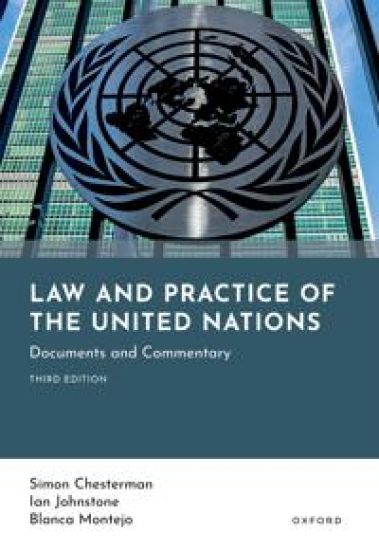
Law and Practice of the United Nations

Law and Practice of the United Nations

Simon Chesterman; Ian Johnstone; David M. Malone

Oxford University Press Inc
2016
nidottu

Halvin toimitettuna 117,00 €

Law and Practice of the United Nations: Documents and Commentary combines primary materials with expert commentary demonstrating the interaction between law and practice in the UN organization, as well as the possibilities and limitations of multilateral institutions in general. Each chapter begins with a short introductory essay describing how the documents that ensue illustrate a set of legal, institutional, and political issues relevant to the practice of diplomacy and the development of public international law through the United Nations. Each chapter also includes questions to guide discussion of the primary materials, and a brief bibliography to facilitate further research on the subject. This second edition addresses the most challenging issues confronting the United Nations and the global community today, from terrorism to climate change, from poverty to nuclear proliferation. New features include hypothetical fact scenarios to test the understanding of concepts in each chapter. This edition contains expanded author commentary, while maintaining the focus on primary materials. Such materials enable a realistic presentation of the work of international diplomacy: the negotiation, interpretation and application of such texts are an important part of what actually takes place at the United Nations and other international organizations. This work is ideal for courses on the United Nations or International Organizations, taught in both law and international relations programs.
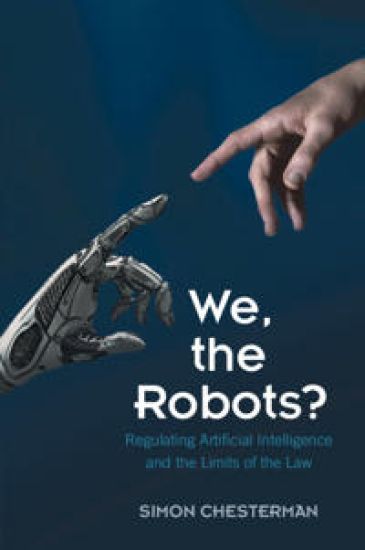
From Community to Compliance?

From Community to Compliance?

Simon Chesterman

Cambridge University Press
2015
pokkari
In the past decade, the Association of Southeast Asian Nations (ASEAN) has transformed from a periodic meeting of ministers to setting ambitious goals of becoming a Community by 2015. ASEAN is now the most important regional organisation in the history of the continent of Asia. An important tension in this transformation is the question of whether the 'ASEAN way' - defined by consultation and consensus, rather than enforceable obligations - is consistent with the establishment of a community governed by law. This book examines the growing interest in following through on international commitments, in particular monitoring implementation and compliance. Key barriers remain, in particular the lack of resources and ongoing resistance to accepting binding obligations. It remains to be seen whether these trends herald a more measured approach to decision-making in ASEAN. Written for practitioners and researchers alike, this important book provides the first systematic survey of monitoring within ASEAN.
One Nation Under Surveillance

One Nation Under Surveillance

Simon Chesterman

Oxford University Press
2013
nidottu
What limits, if any, should be placed on a government's efforts to spy on its citizens in the interests of national security? Spying on foreigners has long been regarded as an unseemly but necessary enterprise. Spying on one's own citizens in a democracy, by contrast, has historically been subject to various forms of legal and political restraint. For most of the twentieth century these regimes were kept distinct. That position is no longer tenable. Modern threats do not respect national borders. Changes in technology make it impractical to distinguish between 'foreign' and 'local' communications. And our culture is progressively reducing the sphere of activity that citizens can reasonably expect to be kept from government eyes. The main casualty of this transformed environment will be privacy. Recent battles over privacy have been dominated by fights over warrantless electronic surveillance or CCTV; the coming years will see debates over data-mining and biometric identification. There will be protests and lawsuits, editorials and elections resisting these attacks on privacy. Those battles are worthy. But they will all be lost. Modern threats increasingly require that governments collect such information, governments are increasingly able to collect it, and citizens increasingly accept that they will collect it. The point of this book is to shift focus away from questions of whether governments should collect information and onto more problematic and relevant questions concerning its use. By reframing the relationship between privacy and security in the language of a social contract, mediated by a citizenry who are active participants rather than passive targets, the book offers a framework to defend freedom without sacrificing liberty.
One Nation Under Surveillance

One Nation Under Surveillance

Simon Chesterman

Oxford University Press
2011
sidottu
What limits, if any, should be placed on a government's efforts to spy on its citizens in the name of national security? Spying on foreigners has long been regarded as an unseemly but necessary enterprise. Spying on one's own citizens in a democracy, by contrast, has historically been subject to various forms of legal and political restraint. For most of the twentieth century these regimes were kept distinct. That position is no longer tenable. Modern threats do not respect national borders. Changes in technology make it impractical to distinguish between 'foreign' and 'local' communications. And our culture is progressively reducing the sphere of activity that citizens can reasonably expect to be kept from government eyes. The main casualty of this transformed environment will be privacy. Recent battles over privacy have been dominated by fights over warrantless electronic surveillance and CCTV; the coming years will see debates over DNA databases, data mining, and biometric identification. There will be protests and lawsuits, editorials and elections resisting these attacks on privacy. Those battles are worthy. But the war will be lost. Modern threats increasingly require that governments collect such information, governments are increasingly able to collect it, and citizens increasingly accept that they will collect it. This book proposes a move away from questions of whether governments should collect information and onto more problematic and relevant questions concerning its use. By reframing the relationship between privacy and security in the language of a social contract, mediated by a citizenry who are active participants rather than passive targets, the book offers a framework to defend freedom without sacrificing liberty.
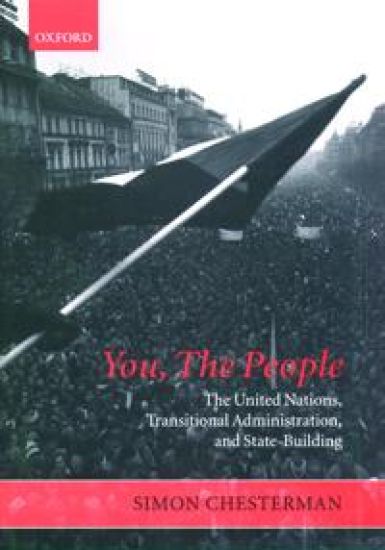
You, The People: The United Nations, Transitional Administration, and State-Building
The governance of post-conflict territories embodies a central contradiction: how does one help a population prepare for democratic governance and the rule of law by imposing a form of benevolent autocracy? Transitional administrations represent the most complex operations attempted by the United Nations. The operations in East Timor and Kosovo are commonly seen as unique in the history of the UN - perhaps never to be repeated. But they may also be seen as the latest in a series of operations that have involved the United Nations in 'state-building' activities, where it has attempted to develop the institutions of government by assuming some or all of those sovereign powers on a temporary basis. The circumstances that have demanded such interventions certainly will be repeated. Seen in the context of earlier UN operations, such as those in Namibia, Cambodia, and Eastern Slavonia, the view that these exceptional circumstances may not recur is somewhat disingenuous. Moreover, the need for such policy research has been brought into sharp focus by the weighty but ambiguous role assigned to the UN in Afghanistan and the possibility of a comparable role in Iraq. This book fills that gap. Aimed at policy-makers, diplomats, and a wide academic audience (including international relations, political science, international law, and war studies), the book provides a concise history of UN state-building operations and a treatment of the five key issues confronting such an operation on the ground: peace and security, the role of the UN as government, judicial reconstruction, economic reconstruction, and exit strategies.
Studying Law at University

Studying Law at University

Simon Chesterman; Clare Rhoden

Allen Unwin
2005
nidottu
Do you want to do well in Law from day one? Law is a challenging and competitive subject to study at university. You need to become familiar with its peculiar language and complicated practices as quickly as possible if you want to do well. Drawing on the experiences of hundreds of students, Studying Law at University demystifies your law course. With reliable tips and practical suggestions, it shows you how to: understand key legal concepts; read cases; take useful notes; become an active learner; manage your time; write law essays; sit law exams. Updated to take into account the increasing use of the internet, this second edition of Studying Law at University tells you everything you need to know to get good marks and enjoy your studies.
You, The People

You, The People

Simon Chesterman

Oxford University Press
2004
sidottu
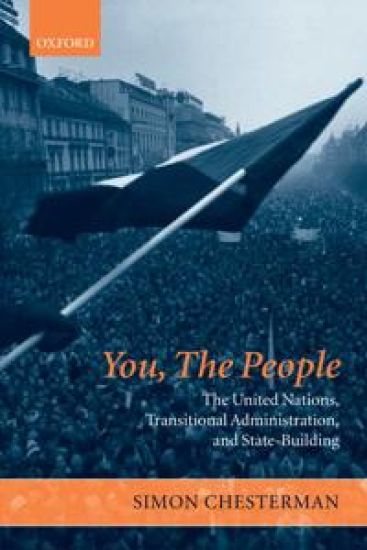
The governance of post-conflict territories embodies a central contradiction: how does one help a population prepare for democratic governance and the rule of law by imposing a form of benevolent autocracy? Transitional administrations represent the most complex operations attempted by the United Nations. The operations in East Timor and Kosovo are commonly seen as unique in the history of the UN - perhaps never to be repeated. But they may also be seen as the latest in a series of operations that have involved the United Nations in 'state-building' activities, where it has attempted to develop the institutions of government by assuming some or all of those sovereign powers on a temporary basis. The circumstances that have demanded such interventions certainly will be repeated. Seen in the context of earlier UN operations, such as those in Namibia, Cambodia, and Eastern Slavonia, the view that these exceptional circumstances may not recur is somewhat disingenuous. Moreover, the need for such policy research has been brought into sharp focus by the weighty but ambiguous role assigned to the UN in Afghanistan and the possibility of a comparable role in Iraq. This book fills that gap. Aimed at policy-makers, diplomats, and a wide academic audience (including international relations, political science, international law, and war studies), the book provides a concise history of UN state-building operations and a treatment of the five key issues confronting such an operation on the ground: peace and security, the role of the UN as government, judicial reconstruction, economic reconstruction, and exit strategies.
Just War or Just Peace?

Just War or Just Peace?

Simon Chesterman

Oxford University Press
2002
nidottu
This text examines the long-standing arguments that a right of unilateral intervention pre-existed the Charter of the United Nations - which clearly prohibits the use of force (exceptions being self-defence and enforcement actions authorized by the Security Council).
Just War or Just Peace?

Just War or Just Peace?

Simon Chesterman

Oxford University Press
2001
sidottu
The question of the legality of humanitarian intervention is a simple one - the Charter of the United Nations prohibits the use of force, with only two exceptions. This study examines the argument that a right of unilateral intervention pre-existed the charter.