Kirjojen hintavertailu – 12 903 724 kirjaa ja 27 kauppaa

Kirjailija

Simon Gathercole

Kirjat ja teokset yhdessä paikassa: 7 kirjaa, julkaisuja vuosilta 2007–2022, suosituimpiin kuuluu The Composition of the Gospel of Thomas. Vertaile teosten hintoja ja tarkista saatavuus suomalaisista kirjakaupoista.

7 kirjaa

Kirjojen julkaisuvuodet: 2007–2022.

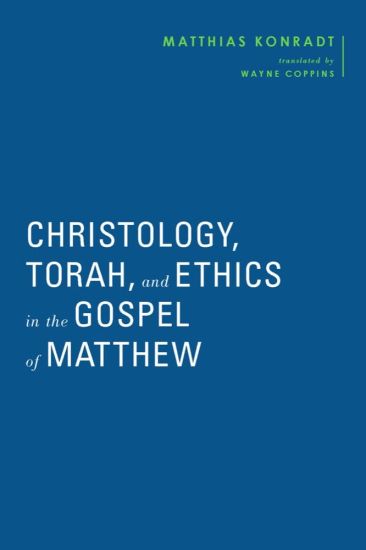
Christology, Torah, and Ethics in the Gospel of Matthew

Christology, Torah, and Ethics in the Gospel of Matthew

Matthias Konradt; Wayne Coppins; Simon Gathercole

Baylor University Press
2022
sidottu
Christology, Torah, and Ethics in the Gospel of Matthew, the tenth and final volume in the Baylor–Mohr Siebeck Studies in Early Christianity series, brings together seven of Matthias Konradt's most important essays on the Gospel of Matthew. Together they highlight key themes of this major early Christian text and demonstrate its formative role in shaping both the identity and theology of the growing Christian movement. The first chapter on the context of Matthew is foundational. It presents the main points of controversy in recent scholarship on the relationship of the Matthean community to Judaism, identifies the interpretive problems that underlie the disagreements, and sketches out perspectives for subsequent scholarship. The next two chapters deal with central aspects of Matthean Christology: chapter 2 with the Davidic-messianic aspects of Matthean Christology and chapter 3 with the character of the Son of God concept in Matthew alongside the controversial question of the meaning of righteousness in Matthew. With chapters 4 and 5, Konradt works out his sophisticated understanding of Matthew's Torah hermeneutic, giving special attention to the interpretation of the antitheses in the Sermon on the Mount and to Matthew's reception and interpretation of the decalogue. Finally, with the analysis of mercy in chapter 6 and the detailed interpretation of the invitation of Jesus in Matthew 11:28–30 in chapter 7, the last two chapters show that Matthean ethics are not exhausted in the interpretation of the Torah. Rather, in the way the Gospel of Matthew brings together Old Testament and early Jewish heritage with an orientation toward the ethical potential of the Christ event, it proves to be one of the main testimonies of New Testament ethics.
What Did the Cross Accomplish?

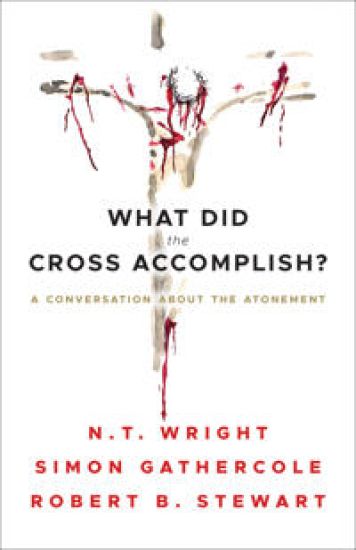
What Did the Cross Accomplish?

Simon Gathercole; Robert B. Stewart; N.T. Wright

Westminster/John Knox Press,U.S.
2021
nidottu
In this book, readers will enjoy a fascinating and cordial discussion between N. T. Wright and Simon Gathercole on the meaning and nature of the doctrine of atonement. These two highly respected scholars discuss in clear and understandable language the meanings of the crucifixion of Jesus Christ. Their discussion explores various theories of atonement and looks closely at the Old Testament to discover Paul's meaning of his words that "Christ died for our sins in accordance with the Scriptures." Wright presents his case first, then Gathercole responds with a contrary point of view. Their discussion confronts questions including: What exactly is this “scandal of the cross”? What role does the notion of sacrifice, as understood in its ancient context, play in the atonement of Christ? Is the atonement a “victory”? How so? Was Christ a “substitute,” taking humankind’s place on the cross and suffering the death and judgment that sinners deserve? How does the death of Christ on the cross rescue or liberate sinners from death? Does the cross achieve benefits for only humans, or do those benefits extend to the entirety of creation? This book is a succinct conversation in which all these questions receive attention, with nuanced differences between the two interlocutors. This conversation along with Robert Stewart’s introductory framework make this book an excellent primer to the study of the atonement, and readers will come away with a deeper understanding of the meanings of the cross.
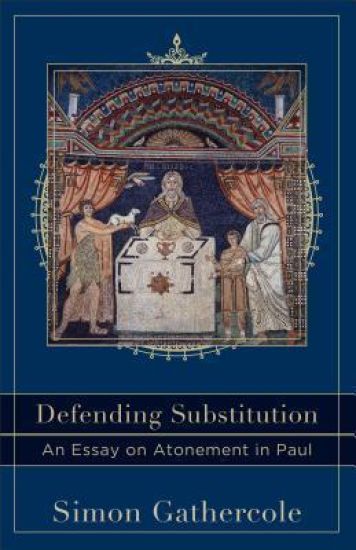
Defending Substitution – An Essay on Atonement in Paul

Defending Substitution – An Essay on Atonement in Paul

Simon Gathercole; Craig Evans; Lee Mcdonald

Baker Academic, Div of Baker Publishing Group
2015
nidottu

Halvin toimitettuna 27,50 €

In recent decades, the church and academy have witnessed intense debates concerning the concept of penal substitution to describe Christ's atoning sacrifice. Some claim it promotes violence, glorifies suffering and death, and amounts to divine child abuse. Others argue it plays a pivotal role in classical Christian doctrine. Here world-renowned New Testament scholar Simon Gathercole offers an exegetical and historical defense of the traditional substitutionary view of the atonement. He provides critical analyses of various interpretations of the atonement and places New Testament teaching in its Old Testament and Greco-Roman contexts, demonstrating that the interpretation of atonement in the Pauline corpus must include substitution.
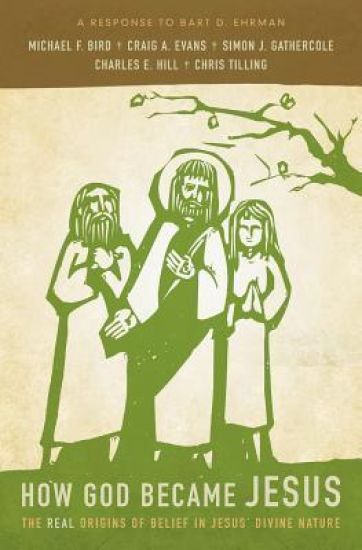
How God Became Jesus

How God Became Jesus

Michael F. Bird; Craig A. Evans; Simon Gathercole; Charles E. Hill; Chris Tilling

Zondervan
2014
nidottu
In his recent book How Jesus Became God: The Exaltation of a Jewish Preacher From Galilee historian Bart Ehrman explores a claim that resides at the heart of the Christian faith— that Jesus of Nazareth was, and is, God. According to Ehrman, though, this is not what the earliest disciples believed, nor what Jesus claimed about himself. The first response book to this latest challenge to Christianity from Ehrman, How God Became Jesus features the work of five internationally recognized biblical scholars. While subjecting his claims to critical scrutiny, they offer a better, historically informed account of why the Galilean preacher from Nazareth came to be hailed as “the Lord Jesus Christ.” Namely, they contend, the exalted place of Jesus in belief and worship is clearly evident in the earliest Christian sources, shortly following his death, and was not simply the invention of the church centuries later.
The Composition of the Gospel of Thomas

The Composition of the Gospel of Thomas

Simon Gathercole

Cambridge University Press
2014
pokkari
This book addresses two central questions in current research on the Gospel of Thomas: what was its original language and which early Christian works influenced it? At present, theories of Thomas as a Semitic work abound. Simon Gathercole dismantles these approaches, arguing instead that Thomas is Greek literature and that the matter of Thomas's original language is connected with an even more controverted question: that of the relationship between Thomas and the canonical New Testament. Rather than being independent of Matthew, Mark and Luke (as in most Western Aramaic theories of Thomas) or thoroughly dependent on the four gospels (as in most Syriac approaches), Gathercole develops a newly refined approach to how Thomas is influenced by the Synoptic Gospels. Thomas can be seen to refer to Matthew as a gospel writer, and evidence is discussed showing that Thomas incorporates phraseology distinctive to Luke, while also extending that special Lukan language.
The Composition of the Gospel of Thomas

The Composition of the Gospel of Thomas

Simon Gathercole

Cambridge University Press
2012
sidottu
This book addresses two central questions in current research on the Gospel of Thomas: what was its original language and which early Christian works influenced it? At present, theories of Thomas as a Semitic work abound. Simon Gathercole dismantles these approaches, arguing instead that Thomas is Greek literature and that the matter of Thomas's original language is connected with an even more controverted question: that of the relationship between Thomas and the canonical New Testament. Rather than being independent of Matthew, Mark and Luke (as in most Western Aramaic theories of Thomas) or thoroughly dependent on the four gospels (as in most Syriac approaches), Gathercole develops a newly refined approach to how Thomas is influenced by the Synoptic Gospels. Thomas can be seen to refer to Matthew as a gospel writer, and evidence is discussed showing that Thomas incorporates phraseology distinctive to Luke, while also extending that special Lukan language.
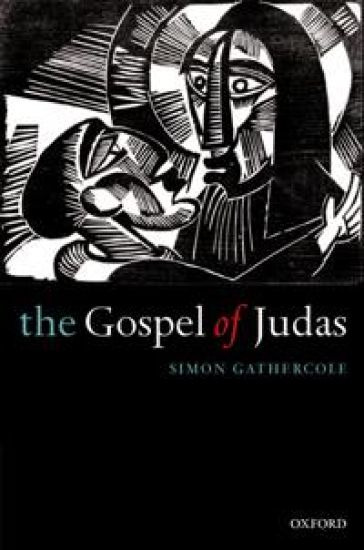
The Gospel of Judas

The Gospel of Judas

Simon Gathercole

Oxford University Press
2007
sidottu
`Judas' is synonymous with `traitor'. But a newly-discovered ancient text of the Gospel of Judas offers a picture of Judas Iscariot radically different from the Church's traditional understanding of him, and maintains that far from being the infamous betrayer, Judas was actually Jesus' trusted friend and the recipient of secret revelation. Simon Gathercole's new book includes a translation of the ancient Egyptian text of the Gospel of Judas and a running commentary, and offers new translations of all the ancient evidence about Judas Iscariot and the Gospel attributed to him. It gets behind the hype which the Gospel of Judas has attracted, and looks at why the group which produced the work were in such bitter conflict with the mainstream Christian church, and shows how the document provides us with a window into the turbulent world of Christianity and Gnosticism in the century after Jesus.