Kirjojen hintavertailu – 12 859 818 kirjaa ja 27 kauppaa

Kirjailija

Simon Gaunt

Kirjat ja teokset yhdessä paikassa: 7 kirjaa, julkaisuja vuosilta 1995–2020, suosituimpiin kuuluu Marco Polo's Le Devisement du Monde. Vertaile teosten hintoja ja tarkista saatavuus suomalaisista kirjakaupoista.

7 kirjaa

Kirjojen julkaisuvuodet: 1995–2020.

Medieval French Literary Culture Abroad

Medieval French Literary Culture Abroad

Jane Gilbert; Simon Gaunt; William Burgwinkle

Oxford University Press
2020
sidottu
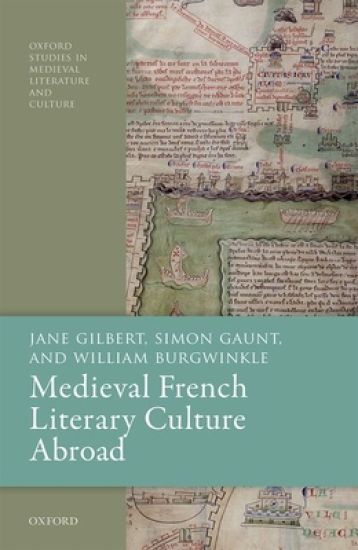
The monograph series Oxford Studies in Medieval Literature and Culture showcases the plurilingual and multicultural quality of medieval literature and actively seeks to promote research that not only focuses on the array of subjects medievalists now pursue in literature, theology, and philosophy, in social, political, jurisprudential, and intellectual history, the history of art, and the history of science but also that combines these subjects productively. It offers innovative studies on topics that may include, but are not limited to, manuscript and book history; languages and literatures of the global Middle Ages; race and the post-colonial; the digital humanities, media and performance; music; medicine; the history of affect and the emotions; the literature and practices of devotion; the theory and history of gender and sexuality, ecocriticism and the environment; theories of aesthetics; medievalism. The field of medieval francophone literary culture outside France was for many years a minor and peripheral sub-field of medieval French literary studies (or, in the case of Anglo-Norman, of English studies). The past two decades, however, have seen a major reassessment of the use of French in England, in the Low Countries, in Italy, and in the eastern Mediterranean, and this impacts significantly upon the history of literature in French more generally. This book is the first to look at the question overall, rather than just at one region. It also takes a more sustained theorised approach than other studies, drawing particularly on Derrida and on Actor-Network Theory. It discusses a wide range of texts, some of which have hitherto been regarded as marginal to French literary history, and makes the case for this material being more central to the literary history of French than was allowed in more traditional approaches focused narrowly on 'France'. Many of the arguments in Medieval French Literary Culture Abroad are grounded in readings of texts in manuscript (rather than in modern critical editions), and sustained attention is paid throughout to manuscripts that were produced or travelled outside the kingdom of France.
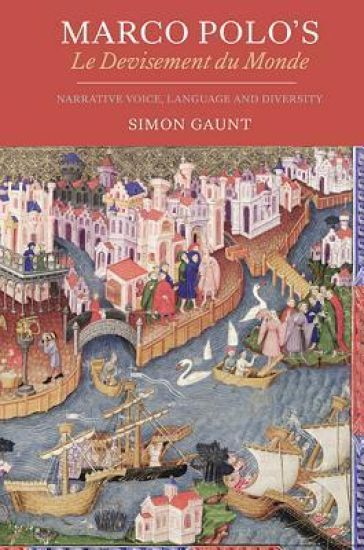
Marco Polo's Le Devisement du Monde
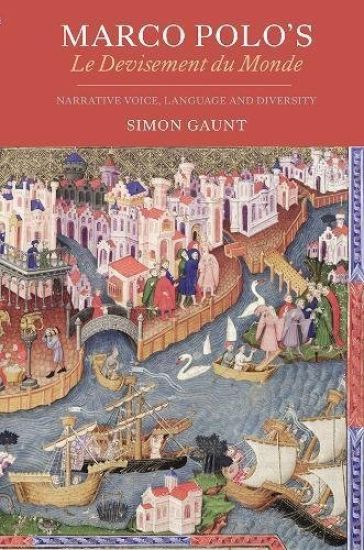
The first book in English to examine one of the most important and influential texts from a literary perspective. Le Devisement du Monde (1298), better though inaccurately known in English as Marco Polo's Travels, is one of only a handful of medieval texts that remain iconic today for European cultural history, and Marco Polo is one of only a handful of medieval writers who still enjoys instant name-recognition. Yet there is little awareness of the Devisement's complex history and development. This book examines the text from a fresh, literary viewpoint, drawing upon a range of different disciplines and approaches: philology, manuscript studies, narratology, cultural history, postcolonial studies and theory. It contains comparative readings of multiple versions of the text in French, Italian and Latin, Rather than offering a Eurocentric vision of the world grounded in a sense of the absolute alterity of the non-Christian world as is often asserted, the author shows how the Devisement expounds a sense of the relative nature of difference, crucially positioning Marco uncannily between two worlds (East and West), just as he is positioned awkwardly between two languages, French and Italian, and (in modern reception at least) awkwardly between two literary histories. The author also calls into question traditional accounts of the use of French outside France in the Middle Ages and offers a re-assessment of Marco Polo's position in the evolution of European travel writing. SIMON GAUNT is Professor of French Language and Literature at King's College London.
Marco Polo's Le Devisement du Monde
The first book in English to examine one of the most important and influential texts from a literary perspective. Le Devisement du Monde (1298), better though inaccurately known in English as Marco Polo's Travels, is one of only a handful of medieval texts that remain iconic today for European cultural history, and Marco Polo is one of only a handful of medieval writers who still enjoys instant name-recognition. Yet there is little awareness of the Devisement's complex history and development. This book examines the text from a fresh, literary viewpoint, drawing upon a range of different disciplines and approaches: philology, manuscript studies, narratology, cultural history, postcolonial studies and theory. It contains comparative readings of multiple versions of the text in French, Italian and Latin, Rather than offering a Eurocentric vision of the world grounded in a sense of the absolute alterity of the non-Christian world as is often asserted, the author shows how the Devisement expounds a sense of the relative nature of difference, crucially positioning Marco uncannily between two worlds (East and West), just as he is positioned awkwardly between two languages, French and Italian, and (in modern reception at least) awkwardly between two literary histories. The author also calls into question traditional accounts of the use of French outside France in the Middle Ages and offers a re-assessment of Marco Polo's position in the evolution of European travel writing. SIMON GAUNT was Professor of French Language and Literature at King's College London.
Troubadours and Irony

Troubadours and Irony

Simon Gaunt

Cambridge University Press
2008
pokkari
From Petrarch and Dante to Pound and Eliot, the influence of the troubadours on European poetry has been profound. They have rightly stimulated a vast amount of critical writing, but the majority of modern critics see the troubadour tradition as a corpus of earnestly serious and confessional love poetry, with little or no humour. Troubadours and Irony re-examines the work of five early troubadours, namely Marcabru, Bernart Marti, Peire d'Alvernha, Raimbaut d'Aurenga and Giraut de Borneil, to argue that the courtly poetry of southern France in the twelfth century was permeated with irony and that many troubadour songs were playful, laced with humorous sexual innuendo and far from serious; attention is also drawn to the large corpus of texts that are not love poems, but comic or satirical songs.
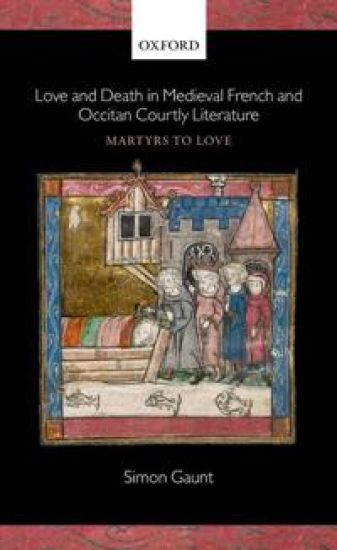
Love and Death in Medieval French and Occitan Courtly Literature
Some of medieval culture's most arresting images and stories inextricably associate love and death. Thus the troubadour Jaufre Rudel dies in the arms of the countess of Tripoli, having loved her from afar without ever having seen her. Or in Marie de France's Chevrefoil, Tristan and Iseult's fatal love is hauntingly symbolized by the fatally entwined honeysuckle and hazel. And who could forget the ethereal spectacle of the Damoisele of Escalot's body carried to Camelot on a supernatural funerary boat with a letter on her breast explaining how her unrequited love for Lancelot killed her? Medieval literature is fascinated with the idea that love may be a fatal affliction. Indeed, it is frequently suggested that true love requires sacrifice, that you must be ready to die for, from, and in love. Love, in other words, is represented, sometimes explicitly, as a form of martyrdom, a notion that is repeatedly reinforced by courtly literature's borrowing of religious vocabulary and imagery. The paradigm of the martyr to love has of course remained compelling in the early modern and modern period. This book seeks to explore what is at stake in medieval literature's preoccupation with love's martyrdom. Informed by modern theoretical approaches, particularly Lacanian psychoanalysis and Jacques Derrida's work on ethics, it offers new readings of a wide range of French and Occitan courtly texts from the twelfth and thirteenth centuries, and argues that a new secular ethics of desire emerges from courtly literature because of its fascination with death. This book also examines the interplay between lyric and romance in courtly literary culture and shows how courtly literature's predilection for sacrificial desire imposes a repressive sex-gender system that may then be subverted by fictional women and queers who either fail to die on cue, or who die in troublesome and disruptive ways.
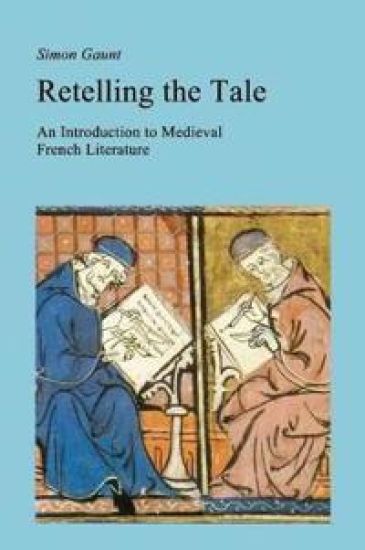
Retelling the Tale

Retelling the Tale

Simon Gaunt

Bristol Classical Press
2001
pokkari
The function of literature and words changes dramatically over the centuries, particularly when dealing with medieval literature. The most common misconception among students and dated textbooks is that medieval French literature is merely a 'recording' of an oral tradition. In this book Simon Gaunt draws a picture of medieval literature, showing that medieval writers were in fact very aware that they were retelling tales in a new medium.
Gender and Genre in Medieval French Literature

Gender and Genre in Medieval French Literature

Simon Gaunt

Cambridge University Press
1995
sidottu
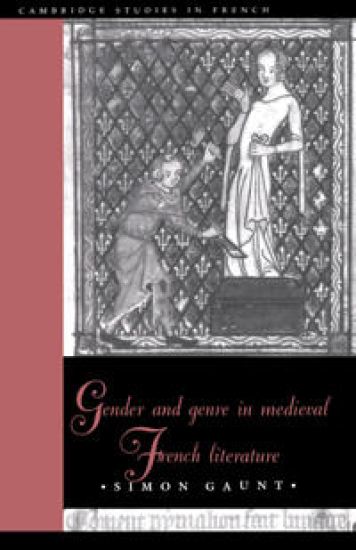
This wide-ranging study explores the ideological framework of genre in Old French and Occitan literature by charting the relationship between ideology and gender in five key genres: the chansons de geste, courtly romance, the Occitan canso, hagiography, and the fabliaux. Simon Gaunt offers new readings of canonical Old French and medieval Occitan texts such as the Chanson de Roland, Chrétien de Troyes’s Chevalier de la charrette, and lyrics by Bernart de Ventadorn, and in addition he considers many less well-known works and less familiar genres such as hagiography and the fabliaux. Drawing on contemporary feminist theory, he examines how masculinity, as well as femininity, is constructed in medieval French and Occitan texts, and shows that gender is a crucial element in the formation of the ideologies that underpin medieval literary genres.