Kirjojen hintavertailu – 12 859 818 kirjaa ja 27 kauppaa

Kirjailija

Simon Horobin

Kirjat ja teokset yhdessä paikassa: 18 kirjaa, julkaisuja vuosilta 2002–2025, suosituimpiin kuuluu Wardrobes and Rings. Vertaile teosten hintoja ja tarkista saatavuus suomalaisista kirjakaupoista.

18 kirjaa

Kirjojen julkaisuvuodet: 2002–2025.

Wardrobes and Rings

Wardrobes and Rings

Julia Golding; Malcolm Guite; Simon Horobin

CANTERBURY PRESS NORWICH
2025
nidottu
Journey through Lent with the insight and imagination of the Oxford Inklings - a group of writers who reshaped Christian thought and storytelling in the twentieth century. Drawing on the work of some of the Inklings’ most well-known members, C. S. Lewis and J. R. R. Tolkien, as well as friends of the Inklings such as Dorothy Sayers and T. S. Eliot, Wardrobes and Rings explores through their eyes a faith which is tinged with seriousness, creativity and joy. This devotional draws on their writings - fiction, poetry, and essays - offering daily readings and reflections that illuminate the path to the cross and resurrection. Weekly themes such as temptation, time, nature and creativity guide the way. Written by Julia Golding, Malcolm Guite and Simon Horobin: a novelist, a poet-priest, and an Oxford professor all deeply immersed in the Inklings’ world and wisdom, Wardrobes and Rings invites you to rediscover Lent through the lens of imagination-infused faith.
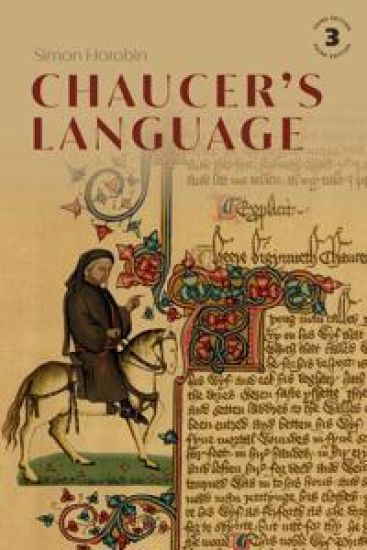
Chaucer's Language

Chaucer's Language

Simon Horobin

BLOOMSBURY PUBLISHING PLC
2025
sidottu
Assuming no previous linguistic knowledge or familiarity with Middle English, Simon Horobin introduces students to Chaucer's language and the importance of reading Chaucer in the original, rather than in a modern translation. Chaucer's Language leads the reader gently through basic linguistic concepts with appropriate explanation, highlighting how Chaucer's English differs from present-day English, and the significance of this for interpreting and understanding his work. It provides close analysis and comparison with the writings of Chaucer's contemporaries to show how Chaucer drew on the variety of Middle English to achieve particular poetic effects. Annotated texts, an extensive glossary of linguistic terms, common Middle English words and 'false friends', a bibliography and suggestions for further reading all support students and aid study. This 3rd edition has been fully revised throughout and includes:- a new chapter on using digital images to study Chaucer’s texts - references to a greater range of recent editions and translations- updated examples and insights from the most recent scholarship on rhetoric, punning, word studies, Middle English dialectology and new approaches to the history of standardisation. Authoritative and easy to follow, this is an indispensable guide to understanding, appreciating and enjoying the language of Chaucer.
Chaucer's Language

Chaucer's Language

Simon Horobin

BLOOMSBURY PUBLISHING PLC
2025
nidottu

Halvin toimitettuna 42,10 €

Assuming no previous linguistic knowledge or familiarity with Middle English, Simon Horobin introduces students to Chaucer's language and the importance of reading Chaucer in the original, rather than in a modern translation. Chaucer's Language leads the reader gently through basic linguistic concepts with appropriate explanation, highlighting how Chaucer's English differs from present-day English, and the significance of this for interpreting and understanding his work. It provides close analysis and comparison with the writings of Chaucer's contemporaries to show how Chaucer drew on the variety of Middle English to achieve particular poetic effects. Annotated texts, an extensive glossary of linguistic terms, common Middle English words and 'false friends', a bibliography and suggestions for further reading all support students and aid study. This 3rd edition has been fully revised throughout and includes:- a new chapter on using digital images to study Chaucer’s texts - references to a greater range of recent editions and translations- updated examples and insights from the most recent scholarship on rhetoric, punning, word studies, Middle English dialectology and new approaches to the history of standardisation. Authoritative and easy to follow, this is an indispensable guide to understanding, appreciating and enjoying the language of Chaucer.
A History of English Spelling

A History of English Spelling

Simon Horobin

EDINBURGH UNIVERSITY PRESS
2025
nidottu

Halvin toimitettuna 31,00 €

Popularly viewed as eccentric and illogical, dismissed by linguists as fixed and therefore uninteresting, English spelling is the Cinderella of modern linguistics. But it is a complex and fascinating subject. With a rich history of variation, English spelling has much to offer diachronic sociolinguists, while study of its history helps to explain many of today's apparent irregularities. The story of its standardisation, beginning with the advent of the printing press, and the destandardisation currently being witnessed on social media platforms such as Twitter and Facebook, offers new perspectives on how technology drives linguistic change, and reveals fascinating insights into the ways in which variable spelling is being repurposed today. With plenty of exercises, worked examples throughout and a concluding chapter on how to create your own research project, Simon Horobin encourages you to delve into the rich and varied landscape of English spelling.
A History of English Spelling

A History of English Spelling

Simon Horobin

EDINBURGH UNIVERSITY PRESS
2025
sidottu
Popularly viewed as eccentric and illogical, dismissed by linguists as fixed and therefore uninteresting, English spelling is the Cinderella of modern linguistics. But it is a complex and fascinating subject. With a rich history of variation, English spelling has much to offer diachronic sociolinguists, while study of its history helps to explain many of today's apparent irregularities. The story of its standardisation, beginning with the advent of the printing press, and the destandardisation currently being witnessed on social media platforms such as Twitter and Facebook, offers new perspectives on how technology drives linguistic change, and reveals fascinating insights into the ways in which variable spelling is being repurposed today. With plenty of exercises, worked examples throughout and a concluding chapter on how to create your own research project, Simon Horobin encourages you to delve into the rich and varied landscape of English spelling.
C.S. Lewis's Oxford

C.S. Lewis's Oxford

Simon Horobin

BODLEIAN LIBRARY
2024
sidottu
The fantastical fictional land of Narnia, famously reached via a magical wardrobe, has many connections to the world in which its creator C. S. Lewis lived. The influence of Oxford can be seen not only in medieval buildings and towers but also in the literature which Lewis encountered there, through a lifetime’s reading and teaching of classical, medieval and renaissance literature. This book examines the role Oxford, its colleges, libraries, chapels, clubs, common rooms and pubs, played in fostering the work of one of the twentieth century’s most influential writers and thinkers. It brings to light a number of new archival discoveries, including letters, tutorial reports and even an unpublished poem, as well as offering new insights into Lewis’s Oxford life, his transition to Cambridge, his Christian faith and his global influence today. It also takes a fresh look at his extensive involvement in Oxford’s various clubs and societies, including the Coalbiters, the Socratic Club and, of course, the Inklings, whose distinguished members coalesced around him and his great friend, J. R. R. Tolkien. Written by an expert in medieval literature who teaches at Magdalen College, where Lewis himself taught, this book, illustrated with letters, manuscripts and Oxford landmarks, helps us understand the author of the Narnia stories and of The Screwtape Letters as a student, scholar and teacher in greater depth.
Bagels, Bumf, and Buses

Bagels, Bumf, and Buses

Simon Horobin

Oxford University Press
2019
sidottu
Where do our everyday words come from? The bagel you eat for breakfast, the bumf you have to wade through at the office, and the bus that takes you home again: we use these words without thinking about their origins or how their meanings have changed over time. Simon Horobin takes the reader on a journey through a typical day, showing how the words we use to describe routine activities - getting up, going to work, eating meals - have surprisingly fascinating histories.
The English Language

The English Language

Simon Horobin

Oxford University Press
2018
nidottu

Halvin toimitettuna 18,90 €

The English language is spoken by more than a billion people throughout the world. But where did English come from? And how has it evolved into the language used today? In this Very Short Introduction Simon Horobin investigates how we have arrived at the English we know today, and celebrates the way new speakers and new uses mean that it continues to adapt. Engaging with contemporary concerns about correctness, Horobin considers whether such changes are improvements, or evidence of slipping standards. What is the future for the English language? Will Standard English continue to hold sway, or we are witnessing its replacement by newly emerging Englishes? ABOUT THE SERIES: The Very Short Introductions series from Oxford University Press contains hundreds of titles in almost every subject area. These pocket-sized books are the perfect way to get ahead in a new subject quickly. Our expert authors combine facts, analysis, perspective, new ideas, and enthusiasm to make interesting and challenging topics highly readable.
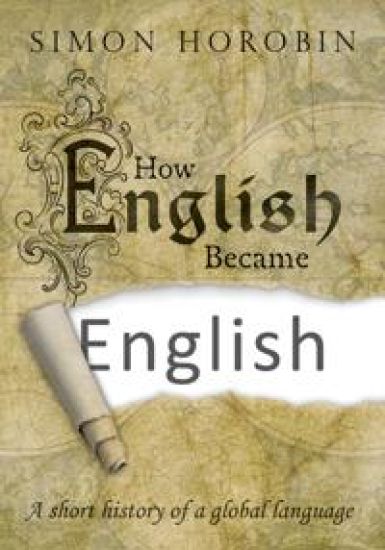
How English Became English

How English Became English

Simon Horobin

Oxford University Press
2016
sidottu
The English Language is spoken by more than a billion people throughout the world. But where did English come from? And how has it evolved into the language used today? In How English Became English Simon Horobin investigates the evolution of the English language, examining how the language continues to adapt even today, as English continues to find new speakers and new uses. Engaging with contemporary concerns about correctness, Horobin considers whether such changes are improvements, or evidence of slipping standards. What is the future for the English Language? Will Standard English continue to hold sway, or are we witnessing its replacement by newly emerging Englishes?
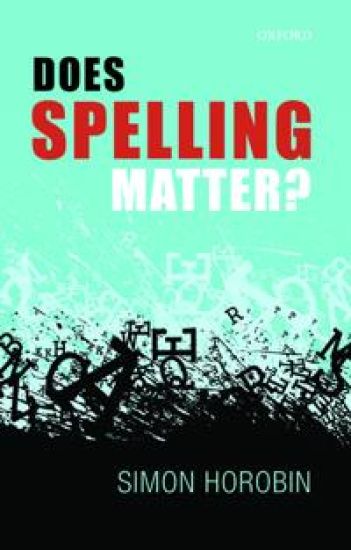
Does Spelling Matter?

Does Spelling Matter?

Simon Horobin

Oxford University Press
2014
nidottu
This book narrates the history of English spelling from the Anglo-Saxons to the present-day, charting the various changes that have taken place and the impact these have had on the way we spell today. While good spelling is seen as socially and educationally desirable, many people struggle to spell common words like accommodate, occurrence, dependent. Is it our spelling system that is to blame, and should we therefore reform English spelling to make it easier to learn? Or are such calls for change further evidence of the dumbing-down of our educational standards, also witnessed by the tolerance of poor spelling in text-messaging and email? This book evaluates such views by considering previous attempts to reform the spelling of English and other languages, while also looking critically at claims that the electronic age heralds the demise of correct spelling.
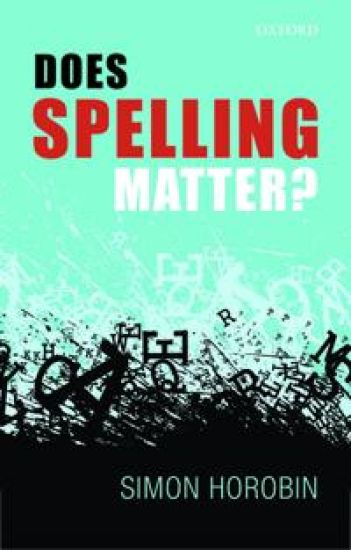
Does Spelling Matter?

Does Spelling Matter?

Simon Horobin

Oxford University Press
2013
sidottu
This book narrates the history of English spelling from the Anglo-Saxons to the present-day, charting the various changes that have taken place and the impact these have had on the way we spell today. While good spelling is seen as socially and educationally desirable, many people struggle to spell common words like accommodate, occurrence, dependent. Is it our spelling system that is to blame, and should we therefore reform English spelling to make it easier to learn? Or are such calls for change further evidence of the dumbing-down of our educational standards, also witnessed by the tolerance of poor spelling in text-messaging and email? This book evaluates such views by considering previous attempts to reform the spelling of English and other languages, while also looking critically at claims that the electronic age heralds the demise of correct spelling.
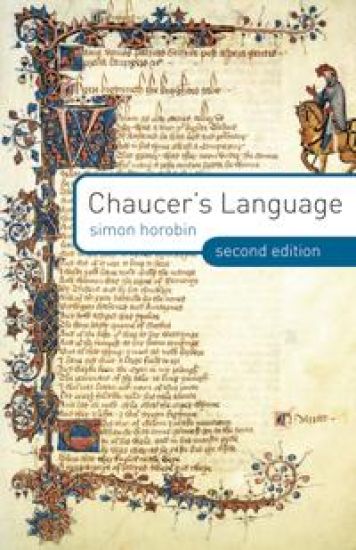
Chaucer's Language

Chaucer's Language

Simon Horobin

Red Globe Press
2012
nidottu
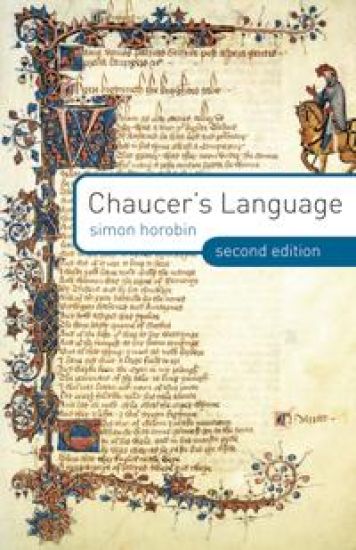
The English language has changed dramatically over the past 500 years, making it increasingly difficult for students to read Chaucer's works. Assuming no previous linguistic knowledge or familiarity with Middle English, Simon Horobin introduces students to Chaucer's language and the importance of reading Chaucer in the original, rather than modern translation. Chaucer's Language- leads the reader gently through basic linguistic concepts with appropriate explanation- highlights how Chaucer's English differs from present-day English, and the significance of this for interpreting and understanding his work- provides close analysis and comparison with the writings of Chaucer's contemporaries to show how Chaucer drew on the variety of Middle English to achieve particular poetic effects- includes sample texts, a glossary of linguistic terminology, a bibliography and suggestions for further reading to aid study. Authoritative and easy-to-follow, this is an indispensable guide to understanding, appreciating and enjoying the language of Chaucer. Assuming no previous linguistic knowledge, Simon Horobin introduces students to Chaucer's language and the importance of reading Chaucer in the original, rather than in a modern translation. This updated edition includes references to most recent scholarship, suggestions for future research and an extensive glossary with sample quotations. Assumes no prior knowledge of Middle EnglishOne of the few books available devoted exclusively to Chaucer's languageIncorporates the latest research and scholarship, draws on modern linguistic methods
Chaucer's Language

Chaucer's Language

Simon Horobin

Red Globe Press
2012
sidottu
The English language has changed dramatically over the past 500 years, making it increasingly difficult for students to read Chaucer's works. Assuming no previous linguistic knowledge or familiarity with Middle English, Simon Horobin introduces students to Chaucer's language and the importance of reading Chaucer in the original, rather than modern translation. Chaucer's Language- leads the reader gently through basic linguistic concepts with appropriate explanation- highlights how Chaucer's English differs from present-day English, and the significance of this for interpreting and understanding his work- provides close analysis and comparison with the writings of Chaucer's contemporaries to show how Chaucer drew on the variety of Middle English to achieve particular poetic effects- includes sample texts, a glossary of linguistic terminology, a bibliography and suggestions for further reading to aid study. Authoritative and easy-to-follow, this is an indispensable guide to understanding, appreciating and enjoying the language of Chaucer. Assuming no previous linguistic knowledge, Simon Horobin introduces students to Chaucer's language and the importance of reading Chaucer in the original, rather than in a modern translation. This updated edition includes references to most recent scholarship, suggestions for future research and an extensive glossary with sample quotations. Assumes no prior knowledge of Middle EnglishOne of the few books available devoted exclusively to Chaucer's languageIncorporates the latest research and scholarship, draws on modern linguistic methods
Studying the History of Early English

Studying the History of Early English

Simon Horobin

Red Globe Press
2009
nidottu
All living languages are subject to change, and in this highly accessible handbook, Simon Horobin shows the importance of thinking about why, as well as how, language changes over time. Studying the History of Early English introduces students to the theories and methodologies that underpin the historical study of English. Drawing on a wealth of approaches, textual, historical and sociolinguistic, Horobin provides detailed explanations of key developments in the history of English, in spelling, pronunciation, grammar and vocabulary and introduces students to the various ways in which scholars have attempted to explain these changesLively and original, Studying the History of Early English:• equips students with key analytical tools and methods for the historical study of English • includes practical information on gathering evidence and provides a wealth of worked-through textual examples• contains suggestions for further reading at the end of each chapter• employs a methodological, rather than chronological approach, with each chapter designed to address a specific topic and consider its relevance to the three major periods in the history of English: Old English, Middle English and Early Modern EnglishPerspectives on the English Language is an innovative series of textbooks for the English language student, together forming a wide-ranging course for undergraduate students of English. The basis of the series is a 'core' of three books which together lay the foundations for further study. A set of higher level textbooks builds on these core books by bringing together the latest thinking in a range of topics in English language. Clearly set out and including relevant exercises and questions, they make both the foundations of language and the latest research accessible to a student audience. Series Editors: Lesley Jeffries and Dan McIntyre
The Language of the Chaucer Tradition

The Language of the Chaucer Tradition

Simon Horobin

D.S. Brewer
2003
sidottu
A study of the language of Chaucerian manuscripts, printed editions and Chaucer's 15th century followers. Winner of the 2005 Beatrice White Prize for outstanding scholarly work in the field of English literature before 1590 The manuscript copies of Chaucer's works preserve valuable information concerning Chaucer's linguistic practices and the ways in which scribes responded to these. This book draws on recent developments in Middle English dialectology, textual criticism and the application of computers to manuscript studies to assess the evidence Chaucerian manuscripts provide for reconstructing Chaucer's own language and his linguistic environment. This book considershow scribes, editors and Chaucerian poets transmitted and updated Chaucer's language and the implications of this for our understanding of Chaucerian book production and reception, and the processes of linguistic change in the fifteenth century. Winner of the 2005 Beatrice White Prize for outstanding scholarly work in the field of English literature before 1590 SIMON HOROBIN lectures on English language at the University of Glasgow.
An Introduction to Middle English

An Introduction to Middle English

Simon Horobin; Jeremy Smith

Oxford University Press Inc
2003
nidottu

Halvin toimitettuna 31,40 €

This authoritative survey offers a concise description of Middle English, the language of Chaucer, during the period from 1100 to 1500. Middle English is discussed in relation to both earlier and later stages in the history of English and in regard to other languages with which it came into contact. The book covers the principal features of Middle English spelling, pronunciation, grammar, and vocabulary and also introduces Middle English textual studies.
An Introduction to Middle English

An Introduction to Middle English

Simon Horobin; Jeremy Smith

Edinburgh University Press
2002
nidottu

Halvin toimitettuna 29,80 €

An Introduction to Middle English is designed to provide undergraduate students of English historical linguistics with a concise description of the language during the period 1100-1500. Middle English, the language of Chaucer, is discussed in relation to both earlier and later stages in the history of English, and in relation to other languages with which it came into contact. Features: * the historical and geographical contexts of Middle English * the evidence for Middle English * the principal features of Middle English spelling, pronunciation, grammar and vocabulary * an introduction to Middle English textual studies * selected Middle English texts, both literary and non-literary * notes, glossaries and annotated bibliographies * questions for review Most other introductory books on Middle English focus on literary rather than linguistic matters; this book is designed to redress the balance, by providing students of English language with an up-to-date, authoritative survey which takes account of recent trends in historical linguistics.
An Introduction to Middle English

An Introduction to Middle English

Simon Horobin; Jeremy Smith

Edinburgh University Press
2002
sidottu
An Introduction to Middle English is designed to provide undergraduate students of English historical linguistics with a concise description of the language during the period 1100-1500. Middle English, the language of Chaucer, is discussed in relation to both earlier and later stages in the history of English, and in relation to other languages with which it came into contact. Features: * the historical and geographical contexts of Middle English * the evidence for Middle English * the principal features of Middle English spelling, pronunciation, grammar and vocabulary * an introduction to Middle English textual studies * selected Middle English texts, both literary and non-literary * notes, glossaries and annotated bibliographies * questions for review Most other introductory books on Middle English focus on literary rather than linguistic matters; this book is designed to redress the balance, by providing students of English language with an up-to-date, authoritative survey which takes account of recent trends in historical linguistics.