Kirjojen hintavertailu – 12 903 725 kirjaa ja 27 kauppaa

Kirjailija

Simon Marsden

Kirjat ja teokset yhdessä paikassa: 12 kirjaa, julkaisuja vuosilta 2008–2020, suosituimpiin kuuluu Emily Bronte and the Religious Imagination. Vertaile teosten hintoja ja tarkista saatavuus suomalaisista kirjakaupoista.

12 kirjaa

Kirjojen julkaisuvuodet: 2008–2020.

Emily Bronte and the Religious Imagination

Emily Bronte and the Religious Imagination

Simon Marsden

Bloomsbury Academic
2015
nidottu
Readers of Emily Brontë's poetry and of Wuthering Heights have seen in their author, variously, a devout if somewhat unorthodox Christian, a heretic, or a visionary "mystic of the moors". Rather than seeking to resolve this matter, Emily Brontë and the Religious Imagination suggests that such conflicting readings are the product of tensions, conflicts and ambiguities within the texts themselves. Rejecting the idea that a single, coherent set of religious doctrines are to be found in Brontë's work, this book argues that Wuthering Heights and the poems dramatise individual experiences of faith in the context of a world in which such faith is always conflicted, always threatened. Brontë's work dramatises the experience of imaginative faith that is always contested by the presence of other voices, other worldviews. Her characters cling to visionary faith in the face of death and mortality, awaiting and anticipating a final vindication, an eschatological fulfilment that always lies in a future beyond the scope of the text.

Emily Bronte and the Religious Imagination

Emily Bronte and the Religious Imagination

Simon Marsden

Bloomsbury Academic USA
2013
sidottu
Readers of Emily Brontë's poetry and of Wuthering Heights have seen in their author, variously, a devout if somewhat unorthodox Christian, a heretic, or a visionary "mystic of the moors". Rather than seeking to resolve this matter, Emily Brontë and the Religious Imagination suggests that such conflicting readings are the product of tensions, conflicts and ambiguities within the texts themselves. Rejecting the idea that a single, coherent set of religious doctrines are to be found in Brontë's work, this book argues that Wuthering Heights and the poems dramatise individual experiences of faith in the context of a world in which such faith is always conflicted, always threatened. Brontë's work dramatises the experience of imaginative faith that is always contested by the presence of other voices, other worldviews. Her characters cling to visionary faith in the face of death and mortality, awaiting and anticipating a final vindication, an eschatological fulfilment that always lies in a future beyond the scope of the text.
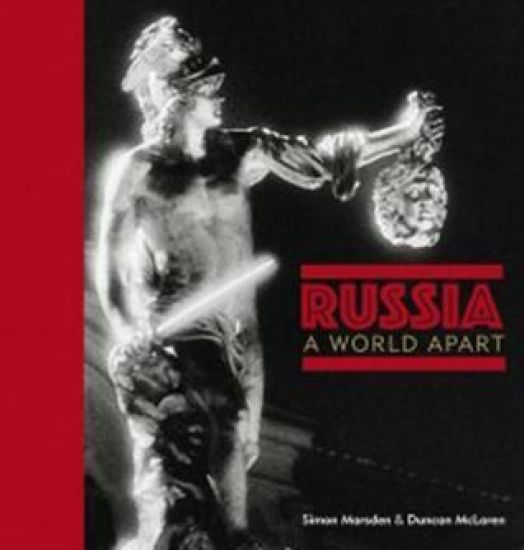
Russia

Russia

Simon Marsden; Duncan Mclaren

Mudds and Stoke
2020
sidottu
Russia: A World Apart is a haunting evocation of the ruined country estates of the Russian aristocracy of the 18th and 19th centuries. Revolution, civil war, invasion, anarchy and casual indifference have conspired against many of the grand buildings of Russia’s rich and complex past. The architectural riches of Moscow and St Petersburg still exist for everyone to see, but when the photographer Simon Marsden and author Duncan McLaren entered the Russian countryside, away from the obvious tourist trails, they encountered a very different world. McLaren relates how “The further from Moscow and St Petersburg, the more desolate and derelict the landscape became. Endless pot-holed roads pass through one dead or dying village after another whose vandalized churches are now the refuge of owls and pigeons. This is the plight of modern-day Russia where the countryside is dying and its population declining while the big cities are thriving. Hidden away within all this desolation and chaos, many devastated country estates can be found. The statuary and formal gardens gone forever, replaced by an overgrown wilderness where stray dogs forage amongst the crumbling outhouses, garbage and rotting tyres.” This book, the result of four trips undertaken by Marsden and McLaren, illustrates a diverse mix of pre-revolutionary buildings and memorials, manor houses, palaces, churches, statuary and tombs, interspersed with more recent monuments from Soviet times. Each picture tells its own tale. In the newly found freedom and optimism of the post-communist era, some of these estates are being restored by individuals and organizations whose immense dedication to rescuing their past is nothing short of inspiring. Others will simply crumble to dust in the face of indifference from the majority of the population making Russia: A World Apart a beautiful and melancholy testament to the glories and grandeur of the past few centuries.
Protecting the Third Pole

Protecting the Third Pole

Simon Marsden

Edward Elgar Publishing Ltd
2019
sidottu
This highly topical book considers the important question of how best to protect the environment of the Third Pole - the area comprising the Hindu Kush Himalayas and Tibetan Plateau - using the tool of international law; specifically, international environmental law and the law of international watercourses. Following detailed analysis of weaknesses in current legal protections according to comparative legal theory, Simon Marsden recommends three potential options for implementation by policy and lawmakers. The first option is to transplant existing international law, including conventions from the UN Economic Commission for Europe and the Council of Europe. Secondly, transplantation of a comprehensive international treaty, based upon the Alpine and Carpathian regimes, is suggested. The overwhelmingly European focus of the first two options, and possible contextual constraints to implementation, informs a third option: the development of a new treaty, giving appropriate attention to the Asian context on one hand, and the need for access of information and public participation on the other, to ensure effective implementation and compliance. Taking a comparative, interdisciplinary approach, Protecting the Third Pole will be a key resource for legal and policy scholars. NGO's and practitioners will also benefit from its detailed analysis.
The Theological Turn in Contemporary Gothic Fiction

The Theological Turn in Contemporary Gothic Fiction

Simon Marsden

Springer Nature Switzerland AG
2018
nidottu
This study examines theological themes and resonances in post-1970 Gothic fiction. It argues that contemporary Gothic is not simply a secularised genre, but rather one that engages creatively – and often subversively – with theological texts and traditions. This creative engagement is reflected in Gothic fiction’s exploration of theological concepts including sin and evil, Christology and the messianic, resurrection, eschatology and apocalypse. Through readings of fiction by Gothic and horror writers including Stephen King, Joyce Carol Oates, Peter Straub, William Peter Blatty and others, this book demonstrates that Christianity continues to haunt the Gothic imagination and that the genre’s openness to the mysterious, numinous and non-rational opens space in which to explore religious beliefs and experiences less easily accessible to more overtly realist forms of representation. The book offers a new perspective on contemporary Gothic fiction that will be of interest to students and scholars of contemporary Gothic and of the relationship between literature and religion more generally.
The Theological Turn in Contemporary Gothic Fiction

The Theological Turn in Contemporary Gothic Fiction

Simon Marsden

Springer International Publishing AG
2018
sidottu
This study examines theological themes and resonances in post-1970 Gothic fiction. It argues that contemporary Gothic is not simply a secularised genre, but rather one that engages creatively – and often subversively – with theological texts and traditions. This creative engagement is reflected in Gothic fiction’s exploration of theological concepts including sin and evil, Christology and the messianic, resurrection, eschatology and apocalypse. Through readings of fiction by Gothic and horror writers including Stephen King, Joyce Carol Oates, Peter Straub, William Peter Blatty and others, this book demonstrates that Christianity continues to haunt the Gothic imagination and that the genre’s openness to the mysterious, numinous and non-rational opens space in which to explore religious beliefs and experiences less easily accessible to more overtly realist forms of representation. The book offers a new perspective on contemporary Gothic fiction that will be of interest to students and scholars of contemporary Gothic and of the relationship between literature and religion more generally.
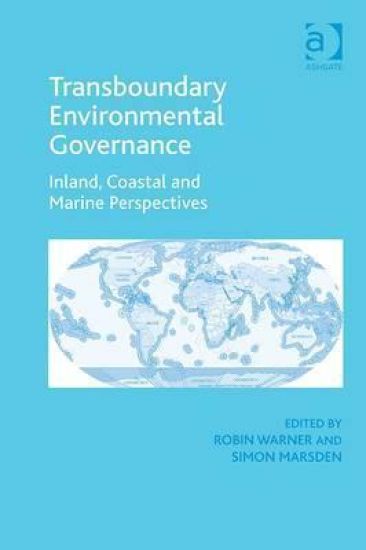
Transboundary Environmental Governance
Effective protection of the marine and terrestrial environment increasingly requires cooperation between neighbouring States, international organizations, government entities and communities within States. This book analyses key aspects of transboundary environmental law and policy and their implementation in Asia, Australasia and Australian offshore territories, and surrounding areas beyond national jurisdiction including Antarctica. It discusses the potential for implementing key transboundary environmental mechanisms such as the 1991 Convention on Environmental Impact Assessment in a Transboundary Context (Espoo Convention) and its 1997 Protocol on Strategic Environmental Assessment (Kiev Protocol) in Australia and Asia drawing on experience from other regions and the potential application of these agreements to all UN member states. The book makes an innovative contribution to research in the area of transboundary environmental governance particularly as it applies to Asia, Australasia and international areas, supplementing similar research which has predominantly focused on Europe and North America.
Environmental Regimes in Asian Subregions

Environmental Regimes in Asian Subregions

Simon Marsden

Edward Elgar Publishing Ltd
2017
sidottu
Informed by international law, international relations and environment management scholarship, this interdisciplinary analysis of environmental regimes in Asian subregions proposes a new regime for the Himalayas and Tibetan Plateau based on China's cooperation with its south Asian neighbors. After evaluating the nine existing environmental regimes across the subregions of southwest, central, southeast and northeast Asia, Simon Marsden proposes a tenth regime for the cross subregion in south and east Asia known as the Third Pole. The role of China in connection with each of the existing agreements-as lender, dialogue partner or Party-is a key aspect of the analysis, considering it in developmental, legal and political contexts. Conclusions recommend future research to progress efforts in developing such a regime and caution the need for context in any legal transplant. This book will have a strong appeal for international environmental law and environmental planning and management researchers. Meanwhile those in international relations or international politics will find valuable insights in the book's exploration of relationships between the states of each subregion and China, whilst coverage of the regulation of oil and gas, hydroelectricity and exploitation of other resources will be of great interest to energy law scholars and practitioners.
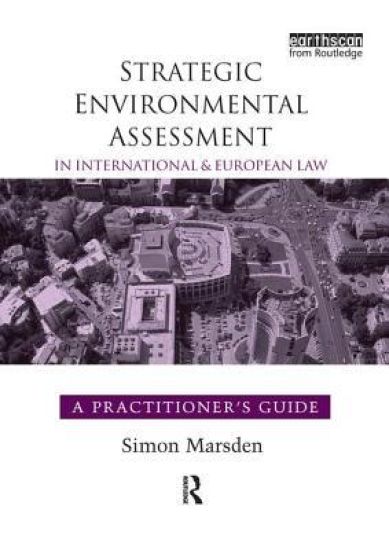
Strategic Environmental Assessment in International and European Law
Strategic environmental assessment (SEA) is a regulatory requirement for development across Europe, North America, Australasia and elsewhere, yet understanding the legal aspects is challenging. This comprehensive guide provides that understanding in a clear and straightforward way. The introduction considers SEA and the law, explaining what SEA is, why it is needed, how it works and why it is required, as well as examining the role of the law. Part One provides an overview of international law, environmental impact assessment (EIA) and international law, including treaties, customary international law and 'soft law' relevant to SEA. It analyses the Kiev SEA Protocol and related UNECE conventions, the Espoo Convention on EIA in a Transboundary Context and the Aarhus Convention on Access to Information, Public Participation and Access to Justice in Environmental Matters. It also analyses the role of SEA in conservation conventions. Part Two considers how the European legal system works, including an overview of the current status of European law. It examines the EIA Directive and SEA Directive together with other relevant directives and regulations, such as the Habitats and Wild Birds Directives, the Water Framework Directive, the Public Participation for Plans and Programmes Directive, and the Structural Funds Regulations. Finally the volume draws conclusions about the relationship and comparisons between international and European law generally, and in regulating SEA.
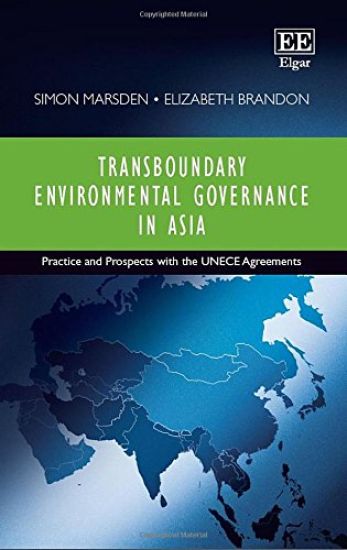
Transboundary Environmental Governance in Asia

Transboundary Environmental Governance in Asia

Simon Marsden; Elizabeth Brandon

Edward Elgar Publishing Ltd
2015
sidottu
Providing a strong comparative analysis of United Nations Economic Commission for Europe (UNECE) treaties and protocols in an Asian context, this important book is specifically concerned with treaty implementation and compliance. Until recently, the primary application of UNECE treaties has been in Europe; however UNECE membership by Asian states in the Caucasus and Central Asia, and the ability of UN states in general to accede to many of them, means that Asia is now very relevant in this context. Including a case study on Central Asia, the core focus of the book is on the five UNECE treaties: public participation, water and air pollution, environmental impact assessment and industrial accidents. Twelve related protocols are also dealt with, including: pollutant release and transfer registers, strategic environmental assessment, civil liability, water and health, and air pollutants. For these, prospects for the future, as well as current practice, are assessed. Environmental scholars and consultants, international environmental lawyers, practitioners and policymakers in institutions such as treaty regime secretariats, national ministries and international financial institutions, will find this book to be of particular interest and value.
Transboundary Environmental Governance

Transboundary Environmental Governance

Simon Marsden

Ashgate Publishing Limited
2012
sidottu
Effective protection of the marine and terrestrial environment increasingly requires cooperation between neighbouring States, international organizations, government entities and communities within States. This book analyses key aspects of transboundary environmental law and policy and their implementation in Asia, Australasia and Australian offshore territories, and surrounding areas beyond national jurisdiction including Antarctica. It discusses the potential for implementing key transboundary environmental mechanisms such as the 1991 Convention on Environmental Impact Assessment in a Transboundary Context (Espoo Convention) and its 1997 Protocol on Strategic Environmental Assessment (Kiev Protocol) in Australia and Asia drawing on experience from other regions and the potential application of these agreements to all UN member states. The book makes an innovative contribution to research in the area of transboundary environmental governance particularly as it applies to Asia, Australasia and international areas, supplementing similar research which has predominantly focused on Europe and North America.
Strategic Environmental Assessment in International and European Law
Strategic environmental assessment (SEA) is a regulatory requirement for development across Europe, North America, Australasia and elsewhere, yet understanding the legal aspects is challenging. This comprehensive guide provides that understanding in a clear and straightforward way. The introduction considers SEA and the law, explaining what SEA is, why it is needed, how it works and why it is required, as well as examining the role of the law. Part One provides an overview of international law, environmental impact assessment (EIA) and international law, including treaties, customary international law and 'soft law' relevant to SEA. It analyses the Kiev SEA Protocol and related UNECE conventions, the Espoo Convention on EIA in a Transboundary Context and the Aarhus Convention on Access to Information, Public Participation and Access to Justice in Environmental Matters. It also analyses the role of SEA in conservation conventions. Part Two considers how the European legal system works, including an overview of the current status of European law. It examines the EIA Directive and SEA Directive together with other relevant directives and regulations, such as the Habitats and Wild Birds Directives, the Water Framework Directive, the Public Participation for Plans and Programmes Directive, and the Structural Funds Regulations. Finally the volume draws conclusions about the relationship and comparisons between international and European law generally, and in regulating SEA.