Kirjojen hintavertailu – 12 903 735 kirjaa ja 27 kauppaa

Kirjailija

Simon May

Kirjat ja teokset yhdessä paikassa: 15 kirjaa, julkaisuja vuosilta 1999–2026, suosituimpiin kuuluu Love. Vertaile teosten hintoja ja tarkista saatavuus suomalaisista kirjakaupoista.

15 kirjaa

Kirjojen julkaisuvuodet: 1999–2026.

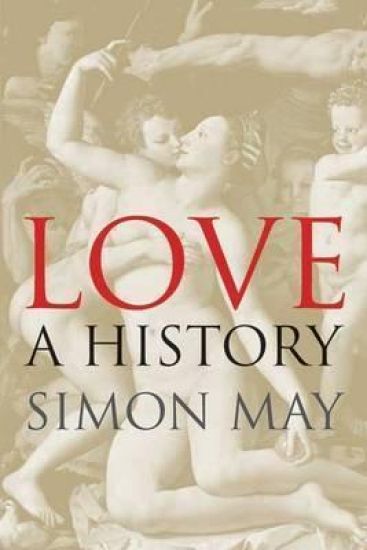
Love

Love

Simon May

Oxford University Press Inc
2019
sidottu
What is love's real aim? Why is it so ruthlessly selective in its choice of loved ones? Why do we love at all? In addressing these questions, Simon May develops a radically new understanding of love as the emotion we feel towards whomever or whatever we experience as grounding our life--as offering us a possibility of home in a world that we supremely value. He sees love as motivated by a promise of "ontological rootedness," rather than, as two thousand years of tradition variously asserts, by beauty or goodness, by a search for wholeness, by virtue, by sexual or reproductive desire, by compassion or altruism or empathy, or, in one of today's dominant views, by no qualities at all of the loved one. After arguing that such founding Western myths as the Odyssey and Abraham's call by God to Canaan in the Bible powerfully exemplify his new conception of love, May goes on to re-examine the relation of love to beauty, sex, and goodness in the light of this conception, offering among other things a novel theory of beauty--and suggesting, against Plato, that we can love others for their ugliness (while also seeing them as beautiful). Finally, he proposes that, in the Western world, romantic love is gradually giving way to parental love as the most valued form of love: namely, the love without which one's life is not deemed complete or truly flourishing. May explains why childhood has become sacred and excellence in parenting a paramount ideal--as well as a litmus test of society's moral health. In doing so, he argues that the child is the first genuinely "modern" supreme object of love: the first to fully reflect what Nietzsche called "the death of God."
Love

Love

Simon May

OXFORD UNIVERSITY PRESS INC
2022
nidottu
What is love's real intent? Why can love be so ruthlessly selective? How is it related to sex, beauty, and goodness? And is the child now the supreme object of love? In addressing these questions, Simon May develops a radically new understanding of love as the emotion we feel towards whomever or whatever we experience as grounding our life--as offering us a possibility of home in a world that we supremely value. He sees love as motivated by a promise of "ontological rootedness," rather than, as two thousand years of tradition variously asserts, by beauty or goodness, by a search for wholeness, by virtue, by sexual or reproductive desire, by compassion or altruism or empathy, or, in one of today's dominant views, by no qualities at all of the loved one. After arguing that such founding Western myths as the Odyssey and Abraham's call by God to Canaan in the Bible powerfully exemplify his new conception of love, May goes on to re-examine the relation of love to beauty, sex, and goodness in the light of this conception, offering among other things a novel theory of beauty--and suggesting, against Plato, that we can love others for their ugliness (while also seeing them as beautiful). Finally, he proposes that, in the Western world, romantic love is gradually giving way to parental love as the most valued form of love: namely, the love without which one's life is not deemed complete or truly flourishing. May explains why childhood has become sacred and excellence in parenting a paramount ideal--as well as a litmus test of society's moral health. In doing so, he argues that the child is the first genuinely "modern" supreme object of love: the first to fully reflect what Nietzsche called "the death of God." Readers will find Love "Excitingly new, yet immediately recognizable--that's the paradox at the very heart of love, and it is what Simon May has achieved." --Los Angeles Review of Books
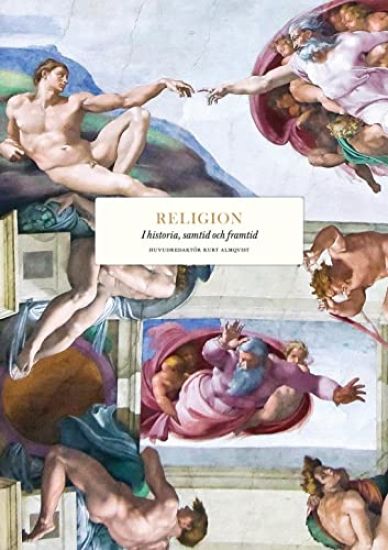
Religion : i historia, samtid och framtid

Religion : i historia, samtid och framtid

Janne Haaland Matlary; Daniel T. Potts; Julius J. Lipner; Robin Osborne; John Scheid; Martin Goodman; Diarmaid Macculloch; Elaine Pagels; Reza Aslan; Wouter J. Hanegraaff; Gary Lachman; Malise Ruthven; Marco Pasi; William O’Reilly; Ariel Glucklich; Wolfgang Palaver; Mona Siddiqui; Candida R. Moss; Esther Benbassa; Richard Miles; A.N. Wilson; Jessica Frazier; Simon May; Armin W. Geertz; Harvey Whitehouse; Pär Stenbäck; Benedetta Berti; Göran Rosenberg; Jayne Svenungsson; Adrian Wooldridge; Chakravarthi Ram-Prasad

Bokförlaget Stolpe
2020
sidottu
Tron på en styrande, övergripande, himmelsk princip har följt människan genom historien. Mer än 80 procent av världens befolkning har idag en religiös tillhörighet och även i sekulära stater fortsätter religionen att spela en viktig roll. Det går inte att förstå politik och internationella relationer idag utan att inkludera religionen som en aspekt av det kulturella sammanhanget. Essäerna i denna antologi, som härrör från Engelsbergsseminariet 2014, spänner över en mångfald ämnen i dagens såväl som gårdagens samhällen. De utforskar religionen i relation till människans villkor och skildrar hur den manifesterar sig i individens egna upplevelser. För att förstå oss själva behöver vi också förstå religionen.
Love

Love

Simon May

Yale University Press
2012
pokkari
An illuminating exploration of how love has been shaped, idolized, and misconstrued by the West over three millennia, and how we might differently conceive it Love—unconditional, selfless, unchanging, sincere, and totally accepting—is worshipped today as the West's only universal religion. To challenge it is one of our few remaining taboos. In this pathbreaking and superbly written book, philosopher Simon May does just that, dissecting our resilient ruling ideas of love and showing how they are the product of a long and powerful cultural heritage. Tracing over 2,500 years of human thought and history, May shows how our ideal of love developed from its Hebraic and Greek origins alongside Christianity until, during the last two centuries, "God is love" became "love is God"—so hubristic, so escapist, so untruthful to the real nature of love, that it has booby-trapped relationships everywhere with deluded expectations. Brilliantly, May explores the very different philosophers and writers, both skeptics and believers, who dared to think differently: from Aristotle's perfect friendship and Ovid's celebration of sex and "the chase," to Rousseau's personal authenticity, Nietzsche's affirmation, Freud's concepts of loss and mourning, and boredom in Proust. Against our belief that love is an all-powerful solution to finding meaning, security, and happiness in life, May reveals with great clarity what love actually is: the intense desire for someone whom we believe can ground and affirm our very existence. The feeling that "makes the world go round" turns out to be a harbinger of home--and in that sense, of the sacred.
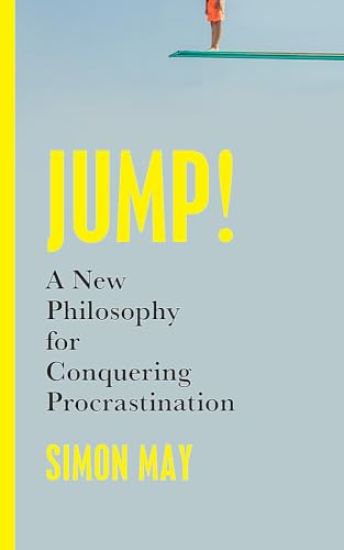
Jump!

Jump!

Simon May

John Murray Press
2025
sidottu

Halvin toimitettuna 29,90 €

Do you repeatedly defer life to later, convinced there will come a time when you'll be better prepared to seize its opportunities? Do you spend your best hours on chores or trivia before allowing yourself to get to what most matters to you? The real mystery of procrastination is why we avoid goals to which we're passionately committed. It's understandable that we'd put off cleaning the fridge or completing our tax return; but why do we swerve a loved one, a vocation, a hobby, or a new life that feels supremely meaningful to us? Simon May argues that the almost universal consensus around overcoming procrastination - setting priorities and optimizing time management: working "smarter not harder" - might work for the boring things but is of little use when it comes to treasured goals that we're avoiding. Jump! proposes seven radically new ways in which we can overcome this life-sabotaging procrastination. May claims that, for all their pain, the regret and boredom created by procrastination can shine the brightest light on our top priorities, either reaffirming our commitment to them or teaching us that we're on the wrong path. This is the unexpected blessing of procrastination: that it offers hope of becoming ourselves.
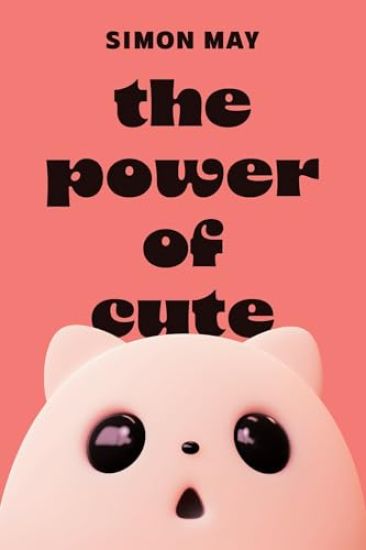
The Power of Cute

The Power of Cute

Simon May

PRINCETON UNIVERSITY PRESS
2025
pokkari

Halvin toimitettuna 19,10 €

An exploration of cuteness and its immense hold on us, from emojis and fluffy puppies to its more uncanny, subversive expressionsCuteness has taken the planet by storm. Global sensations Hello Kitty and Pokémon, the works of artists Takashi Murakami and Jeff Koons, Heidi the cross-eyed opossum and E. T.—all reflect its gathering power. But what does “cute” mean, as a sensibility and style? Why is it so pervasive? Is it all infantile fluff, or is there something more uncanny and even menacing going on—in a lighthearted way? In The Power of Cute, Simon May provides nuanced and surprising answers. We usually see the cute as merely diminutive, harmless, and helpless. May challenges this prevailing perspective, investigating everything from Mickey Mouse to Kim Jong-il to argue that cuteness is not restricted to such sweet qualities but also beguiles us by transforming or distorting them into something of playfully indeterminate power, gender, age, morality, and even species. May grapples with cuteness’s dark and unpindownable side—unnerving, artful, knowing, apprehensive—elements that have fascinated since ancient times through mythical figures, especially hybrids like the hermaphrodite and the sphinx. He argues that cuteness is an addictive antidote to today’s pressured expectations of knowing our purpose, being in charge, and appearing predictable, transparent, and sincere. Instead, it frivolously expresses the uncertainty that these norms deny: the ineliminable uncertainty of who we are; of how much we can control and know; of who, in our relations with others, really has power; indeed, of the very value and purpose of power. The Power of Cute delves into a phenomenon that speaks with strange force to our age.
How to Be a Refugee

How to Be a Refugee

Simon May

PAN MACMILLAN
2022
pokkari
'A lyrical, fascinating, important book. More than just a family story, it is an essay on belonging, denying, pretending, self-deception and, at least for the main characters, survival.' Literary Review'Simon May's remarkable How to Be a Refugee is a memoir of family secrets with a ruminative twist, one that's more interested in what we keep from ourselves than the ones we conceal from others.' Irish TimesThe most familiar fate of Jews living in Hitler’s Germany is either emigration or deportation to concentration camps. But there was another, much rarer, side to Jewish life at that time: denial of your origin to the point where you manage to erase almost all consciousness of it. You refuse to believe that you are Jewish. How to Be a Refugee is Simon May’s gripping account of how three sisters – his mother and his two aunts – grappled with what they felt to be a lethal heritage. Their very different trajectories included conversion to Catholicism, marriage into the German aristocracy, securing ‘Aryan’ status with high-ranking help from inside Hitler’s regime, and engagement to a card-carrying Nazi. Even after his mother fled to London from Nazi Germany and Hitler had been defeated, her instinct for self-concealment didn’t abate. Following the early death of his father, also a German Jewish refugee, May was raised a Catholic and forbidden to identify as Jewish or German or British. In the face of these banned inheritances, May embarks on a quest to uncover the lives of the three sisters as well as the secrets of a grandfather he never knew. His haunting story forcefully illuminates questions of belonging and home – questions that continue to press in on us today.
How to Be a Refugee

How to Be a Refugee

Simon May

Picador
2021
sidottu
'A lyrical, fascinating, important book. More than just a family story, it is an essay on belonging, denying, pretending, self-deception and, at least for the main characters, survival.' Literary Review'Simon May's remarkable How to Be a Refugee is a memoir of family secrets with a ruminative twist, one that's more interested in what we keep from ourselves than the ones we conceal from others.' Irish TimesThe most familiar fate of Jews living in Hitler’s Germany is either emigration or deportation to concentration camps. But there was another, much rarer, side to Jewish life at that time: denial of your origin to the point where you manage to erase almost all consciousness of it. You refuse to believe that you are Jewish. How to Be a Refugee is Simon May’s gripping account of how three sisters – his mother and his two aunts – grappled with what they felt to be a lethal heritage. Their very different trajectories included conversion to Catholicism, marriage into the German aristocracy, securing ‘Aryan’ status with high-ranking help from inside Hitler’s regime, and engagement to a card-carrying Nazi. Even after his mother fled to London from Nazi Germany and Hitler had been defeated, her instinct for self-concealment didn’t abate. Following the early death of his father, also a German Jewish refugee, May was raised a Catholic and forbidden to identify as Jewish or German or British. In the face of these banned inheritances, May embarks on a quest to uncover the lives of the three sisters as well as the secrets of a grandfather he never knew. His haunting story forcefully illuminates questions of belonging and home – questions that continue to press in on us today.
The Power of Cute

The Power of Cute

Simon May

PRINCETON UNIVERSITY PRESS
2019
sidottu

Halvin toimitettuna 31,30 €

An exploration of cuteness and its immense hold on us, from emojis and fluffy puppies to its more uncanny, subversive expressionsCuteness has taken the planet by storm. Global sensations Hello Kitty and Pokémon, the works of artists Takashi Murakami and Jeff Koons, Heidi the cross-eyed opossum and E. T.—all reflect its gathering power. But what does “cute” mean, as a sensibility and style? Why is it so pervasive? Is it all infantile fluff, or is there something more uncanny and even menacing going on—in a lighthearted way? In The Power of Cute, Simon May provides nuanced and surprising answers. We usually see the cute as merely diminutive, harmless, and helpless. May challenges this prevailing perspective, investigating everything from Mickey Mouse to Kim Jong-il to argue that cuteness is not restricted to such sweet qualities but also beguiles us by transforming or distorting them into something of playfully indeterminate power, gender, age, morality, and even species. May grapples with cuteness’s dark and unpindownable side—unnerving, artful, knowing, apprehensive—elements that have fascinated since ancient times through mythical figures, especially hybrids like the hermaphrodite and the sphinx. He argues that cuteness is an addictive antidote to today’s pressured expectations of knowing our purpose, being in charge, and appearing predictable, transparent, and sincere. Instead, it frivolously expresses the uncertainty that these norms deny: the ineliminable uncertainty of who we are; of how much we can control and know; of who, in our relations with others, really has power; indeed, of the very value and purpose of power. The Power of Cute delves into a phenomenon that speaks with strange force to our age.
Windows Phone 8 Plain & Simple

Windows Phone 8 Plain & Simple

Simon May

Microsoft Press,U.S.
2014
nidottu
Get the full-color, visual guide that makes learning Windows Phone 8 plain and simple! Follow the book's easy steps and screenshots and clear, concise language to learn the simplest ways to get the most fun and productivity out of your phone. Here's WHAT you'll learn: Navigate the Windows Phone 8 Start Screen Manage email, IM, contacts, and calendars Get automatic updates on what's happening in your world Create Rooms to privately share files and pictures Make your phone child-friendly with Kid's Corner Download apps from the Windows Phone Marketplace Here's HOW you'll learn it: Jump in wherever you need answers Follow easy STEPS and SCREENSHOTS to see exactly what to do Get handy TIPS for new techniques and shortcuts Use TRY THIS! exercises to apply what you learn right away
Nietzsche's Ethics and his War on 'Morality'

Nietzsche's Ethics and his War on 'Morality'

Simon May

Oxford University Press
2002
nidottu
Simon May presents a fresh and wide-ranging critique of Nietzsche's famous attack on traditional morality, and of his controversial ethics of 'life-enhancement'. He reveals Nietzsche as both revolutionary and conservative - as one who repudiates traditional 'moral' conceptions of God, guilt, asceticism, pity, and truthfulness, and yet retains a demanding ethics of discipline, conscience, 'self-creation', generosity, and honesty. In particular, May shows how Nietzsche rejects truthfulness as an unconditional value and yet celebrates it as one of his own highest values, whose worth is determined by who is pursuing it, for what end, and when in their lives. May is strongly critical of various aspects of Nietzsche's thought - his self-defeating conception of justice, his assumption that 'life-enhancement' necessarily demands world-affirmation, his ambition to de-deify the world, and the impossible and undesirable autonomy of the Übermensch. But Nietzsche is shown to offer modernity key elements of a coherent ethic, and to provide moral philosophy with important tools for reassessing some of its most cherished values and concepts. May's book will be illuminating not just for scholars and students of Nietzsche, in philosophy, literature, and history of ideas, but for anyone interested in current debates about ethics and modernity.
Nietzsche's Ethics and his War on 'Morality'

Nietzsche's Ethics and his War on 'Morality'

Simon May

Oxford University Press
1999
sidottu
Simon May presents a fresh and wide-ranging critique of Nietzsche's famous attack on traditional morality, and of his controversial ethics of 'life-enhancement'. He reveals Nietzsche as both revolutionary and conservative–as one who repudiates traditional 'moral' conceptions of God, guilt, asceticism, pity, and truthfulness, and yet retains a demanding ethics of discipline, conscience, 'self-creation', generosity, and honesty. In particular, May shows how Nietzsche rejects truthfulness as an unconditional value and yet celebrates it as one of his own highest values, whose worth is determined by who is pursuing it, for what end, and when in their lives. May is strongly critical of various aspects of Nietzsche's thought–his self-defeating conception of justice, his assumption that 'life-enhancement' necessarily demands world-affirmation, his ambition to de-deify the world, and the impossible and undesirable autonomy of the Übermensch. But Nietzsche is shown to offer modernity key elements of a coherent ethic, and to provide moral philosophy with important tools for reassessing some of its most cherished values and concepts. May's book will be illuminating not just for scholars and students of Nietzsche, in philosophy, literature, and history of ideas, but for anyone interested in current debates about ethics and modernity.
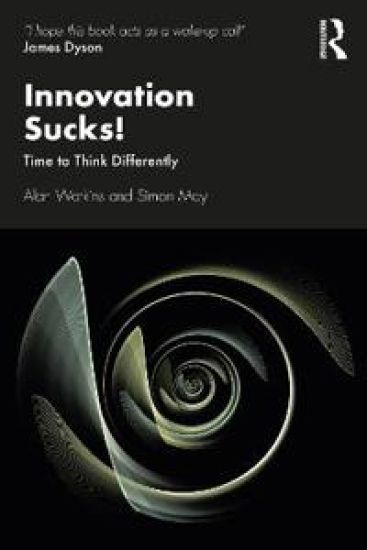
Innovation Sucks!

Innovation Sucks!

Alan Watkins; Simon May

Routledge
2021
sidottu
Businesses spend billions on innovation with very little to show for their investment or effort. This book challenges some of the ‘ingrained truths’ of innovation and suggests a different approach. Innovation is not the creation of a novel idea. It is the successful commercialisation of that novel idea. Rather than starting with a costly, time-consuming problem assessment that seeks to push potential solutions through an innovation funnel, an ‘impeller approach’ starts with possible solutions and gets the market to pull the best ones forward so they can fail fast or flourish fast. This approach is made possible by the addition of a ‘bee’ – a new type of integrative thinker who can harvest the existing knowledge from the ‘meadow of experts’. Completely reversing the innovation process means organisations are much better placed to win in the market rather than focusing on finding theoretical solutions or clearing innovation stage gates. In addition, this approach also recognises that the people who shepherd the solution through the ideation and testing stage are not the same people who must then take that solution to market for successful commercialisation. Given the current innovation failure rate, coupled with the fact that society is beset with multiple wicked problems, it’s time to think differently and innovate innovation itself. This book is essential reading for Heads of Innovation and Commercialisation, Directors of Marketing, Heads of New Product Development and New Service Development, Strategy Directors, Chief Technology Officers, Government advisers and policy makers.
Innovation Sucks!

Innovation Sucks!

Alan Watkins; Simon May

Routledge
2021
nidottu
Businesses spend billions on innovation with very little to show for their investment or effort. This book challenges some of the ‘ingrained truths’ of innovation and suggests a different approach. Innovation is not the creation of a novel idea. It is the successful commercialisation of that novel idea. Rather than starting with a costly, time-consuming problem assessment that seeks to push potential solutions through an innovation funnel, an ‘impeller approach’ starts with possible solutions and gets the market to pull the best ones forward so they can fail fast or flourish fast. This approach is made possible by the addition of a ‘bee’ – a new type of integrative thinker who can harvest the existing knowledge from the ‘meadow of experts’. Completely reversing the innovation process means organisations are much better placed to win in the market rather than focusing on finding theoretical solutions or clearing innovation stage gates. In addition, this approach also recognises that the people who shepherd the solution through the ideation and testing stage are not the same people who must then take that solution to market for successful commercialisation. Given the current innovation failure rate, coupled with the fact that society is beset with multiple wicked problems, it’s time to think differently and innovate innovation itself. This book is essential reading for Heads of Innovation and Commercialisation, Directors of Marketing, Heads of New Product Development and New Service Development, Strategy Directors, Chief Technology Officers, Government advisers and policy makers.