Kirjojen hintavertailu – 12 903 725 kirjaa ja 27 kauppaa
Kirjailija
Simon Okotie
Kirjat ja teokset yhdessä paikassa: 6 kirjaa, julkaisuja vuosilta 2012–2025, suosituimpiin kuuluu Best British Short Stories 2025. Vertaile teosten hintoja ja tarkista saatavuus suomalaisista kirjakaupoista.
David Bevan; Rose Biggin; Christopher Burns; Ian Critchley; Pippa Goldschmidt; Linden Hibbert; Hannah Hoare; Catrin Kean; Roger Luckhurst; Baret Magarian; Wyl Menmuir; Alison Moore; Okechukwu Nzelu; Simon Okotie; Imogen Reid; C. D. Rose; Iain Sinclair; Elizabeth Stott; Mark Valentine; Naomi Wood
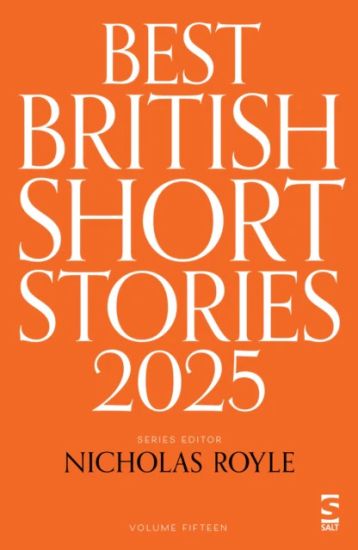
The definitive showcase of the year’s finest British short stories ‘Bravo to Salt’s beacon of delight and intrigue – its annual collection of the UK’s best short stories, from established and emerging voices.’ —Duncan Minshull Now relaunched for a new era, Best British Short Stories returns with a bold new look and a renewed commitment to celebrating the art of the short story. As we enter our fifteenth volume, this much-loved annual collection continues to be the go-to anthology for readers seeking the most exciting and diverse voices in contemporary British fiction. Assembled by series editor Nicholas Royle, Best British Short Stories 2025 presents a stellar selection of stories first published in 2024, drawn from magazines, journals, anthologies, collections, chapbooks, and online. Whether you’re a devoted follower or discovering the series for the first time, this new edition reaffirms our mission to champion storytelling in all its forms. ‘If the latest iteration of Salt’s Best British Short Stories collection is anything to go by then the genre remains in safe hands.’ —Lawrence Foley, TLS Featuring stories by: David Bevan, Rose Biggin, Christopher Burns, Ian Critchley, Pippa Goldschmidt, Linden Hibbert, Hannah Hoare, Catrin Kean, Roger Luckhurst, Baret Magarian, Wyl Menmuir, Alison Moore, Okechukwu Nzelu, Simon Okotie, Imogen Reid, C. D. Rose, Iain Sinclair, Elizabeth Stott, Mark Valentine, and Naomi Wood.
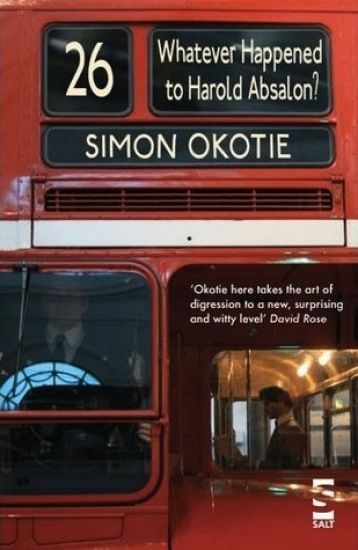
Harold Absalon, the Mayor’s Transport Advisor, has gone missing. Down-at-heel detective Marguerite is trying to find him. Aware that his every action is being monitored by those reading the novel, Marguerite’s mind and world is at constant risk of disintegration. Disturbed by attempts to understand himself and the nature of the objects he encounters, Marguerite’s minute and comically digressive inquiries threaten his very existence. As he follows and then is followed by Harold’s wife Isobel around the city, Marguerite discovers startling evidence of her involvement in the disappearance and becomes increasingly compromised by his feelings for her. Finding himself cornered by Isobel on a speeding bus, it emerges that Marguerite may be more closely implicated than we think. The resolution of the case brings a discovery that will shatter his world and well-being forever. Whatever Happened to Harold Absalon? is a unique take on the world of category, cliché and identity and heralds the emergence of a truly original new voice.
Author and essayist Simon Okotie interprets the signposts - evident through the history of the novel - that point to the form's future. We're used to the novel being declared dead, dying, or endangered. Seemingly every few years, a critic will read it the last rites - yet the form remains more popular than ever with readers. In The Future of the Novel, author Simon Okotie presents a bold future for long-form fiction, and suggests its evolution is far from over. Okotie begins by responding to and critiquing John Carruthers' book Scheherezade, or The Future of the English Novel, published in 1927 as part of the 'To-day and To-morrow' series - the inspiration for our present-day FUTURES. He then cites others who have since meditated on the direction of the form: Henry James, D. H. Lawrence, William Burroughs, Ana s Nin, Zadie Smith, and China Mi ville, among others. In doing so, he also tells the story of the novel itself, from the realism of the 18th and 19th centuries, through the early stirrings of modernism with its focus on the 'inner life', right through to the abstraction and experimentation of 21st century postmodernism, and beyond. All of which informs Okotie's own future vision for the novel - one that extends even further into the reaches of the subconscious, and speculates on the uneasy role artifical intelligence will play in the coming decades. The Future of The Novel is a rich and immersive portrait of an artform which, despite constant claims to the contrary, is more alive and exciting than ever.
We're used to the novel being declared dead, dying, or endangered. Seemingly every few years, a critic will read it the last rites - yet the form remains more popular than ever with readers. In The Future of the Novel, author Simon Okotie presents a bold future for long-form fiction, and suggests its evolution is far from over. Okotie begins by responding to and critiquing John Carruthers' book Scheherezade, or The Future of the English Novel, published in 1927 as part of the 'To-day and To-morrow' series - the inspiration for our present-day FUTURES. He then cites others who have since meditated on the direction of the form: Henry James, D. H. Lawrence, William Burroughs, Anais Nin, Zadie Smith and China Mieville, among others. In doing so, he also tells the story of the novel itself, from the realism of the 18th and 19th centuries, through the early stirrings of modernism with its focus on the 'inner life', right through to the abstraction and experimentation of 21st century postmodernism, and beyond. All of which informs Okotie's own future vision for the novel - one that extends even further into the reaches of the subconscious, and speculates on the uneasy role artifical intelligence will play in the coming decades. The Future of The Novel is a rich and immersive portrait of an artform which, despite constant claims to the contrary, is more alive and exciting than ever.
The story of a man walking down a ramp, After Absalon is the culmination of Simon Okotie’s extraordinary trilogy of novels. Marguerite, a down-at-heel detective, is on the trail of Harold Absalon, the Mayor’s transport advisor, who is missing presumed dead. Encountering a woman in a tight-fitting pinstriped suit entering a pedestrian underpass, he decides to follow her. Pursued in turn, and seemingly losing his mind, the choice he faces is impossible yet unavoidable: does he bring his investigation to a successful conclusion and risk befalling the exact same fate as Harold Absalon?
Longlisted for the 2017 Republic of Consciousness Prize In the Absence of Absalon revolves around an unnamed investigator, a set of keys and a townhouse. He is investigating a series of disappearances: of his colleague, Marguerite; of Harold Absalon, the Mayor’s transport advisor, whose disappearance Marguerite had been investigating prior to his own disappearance; of Richard Knox, the owner of the townhouse, who had fallen out with Absalon before disappearing; and of Absalon’s wife Isobel, who is glimpsed, partially undressed, in an upper storey bedroom as the investigator approaches. Pursued from all sides and seemingly losing his mind, what the investigator discovers, as he enters the house, is both familiar and utterly devastating.