Kirjojen hintavertailu – 12 859 818 kirjaa ja 27 kauppaa

Kirjailija

Simon Parke

Kirjat ja teokset yhdessä paikassa: 29 kirjaa, julkaisuja vuosilta 2009–2022, suosituimpiin kuuluu The Journey Home. Vertaile teosten hintoja ja tarkista saatavuus suomalaisista kirjakaupoista.

29 kirjaa

Kirjojen julkaisuvuodet: 2009–2022.

The Imitation of Christ

The Imitation of Christ

Thoms A. Kempis; Simon Parke

White Crow Books Ltd
2010
sidottu
'The Imitation of Christ' first appeared 1418. It was published anonymously but spread quickly around Europe. A Latin manuscript from 1441 exists, but there was a German translation as early as 1434. A French translation appeared in 1447, a Spanish edition in 1482, and an Italian one in 1488. The first English translation appeared in 1503, which was just Book 4, but the other three books followed in the same year and a complete translation appeared in 1556. In 1663, an Arabic edition was printed in Rome, and in 1837, a Hebrew version printed in Frankfurt. It has since been translated into many languages, and has won for itself a variety of celebrity admirers. John Wesley and John Newton were men of the Evangelical wing of the Church yet both named this Catholic manual as important in their conversion, while General Gordon took it into battle with him. Thomas More, St Francis Xavier and Dr Johnson were other famous devotees. The work is comprised of four books, though they are not all found in all manuscripts, and neither are they always in the same order. This makes little practical difference to the reader, however. This manual of devotion is pitched at a challenging level of Christian experience, but does not offer an ordered journey. Like a merry-go-round, the same themes are visited again and again throughout the books; Thomas is a teacher who believes in repetition. Book 4 is unique in that it has a specific subject, the Eucharist, and explores our attitudes towards the bread and wine. But even here, the author weaves in themes familiar from the other three books: human worthlessness, the need for humility, advice on temptation and adversity, disdain for the attractions of the world, contempt for scholarship, sorrow for sin, forgiveness of perceived injustice, submission to God in all things and ardour for union with the life of Jesus in his death and resurrection. There is a manic-depressive feel to much of the writing, which can be disturbing for the modern reader. Although Thomas calls Christians to an equanimity that is neither too happy when things go well or too sad when things go badly, the author's own mood tends to be either one of extreme despair and self-hate or an ecstatic happiness at the sweetness of God and the joy to be found in him. To an extent, this mirrors the character of the God he describes who both loves us unendingly whilst also preparing eternal punishment for the unfaithful. Kempis offers no resolution to this paradox; but sensed in all he writes is the fire of personal dismantlement through which humans must walk in the cause of their spiritual development. Here is a radical and disturbing self-help book, penned for the 14th century monk. Thomas writes as a monk for monks, but clearly his passion and insights spill well beyond the cloistered world of the monastery. One writer called it 'The diary of a soul on its way to perfection,' which captures well the author's spiritual ambition both for himself and others. As he himself says in the second book, 'Disdain that which is superficial, dedicate yourself to your inner being and you shall see that the Kingdom of God grows inside you.' St Augustine was patron of Thomas' monastery and it was he who famously said, 'Oh God, you have made us for yourself and our hearts are restless until they find their place in you.' The restless Thomas a Kempis could not have agreed more.
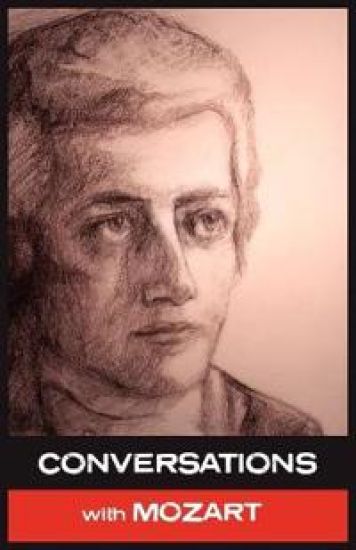
Conversations with Mozart

Conversations with Mozart

Wolfgang Amadeus Mozart; Simon Parke

White Crow Books Ltd
2010
pokkari
Wolfgang Amadeus Mozart, a child prodigy who became an adult genius, died in debt and was buried in an unmarked grave in his adopted home of Vienna. Mozart needed no formal lessons in composition. He'd been composing since the age of five, and possessed astonishing musical memory, able to re-create whatever he heard or saw. He could mimic different styles and his travels, which were endless, gave him plenty to imitate whether sacred, dramatic or instrumental. As he said, 'I can pretty well adapt or conform myself to any style or composition.' He was not the tortured artist but could compose whilst playing billiards or skittles, ordering the musical ideas in his head so exactly that writing them down was a slightly mechanical affair, requiring little effort. The music was there in its entirety in his head. Mozart struggled with relationships, revealing a strong sense of abandonment beneath the surface. Quick to judge, he possessed a sharp manner himself, but saw only the upset that others caused him. He had a long list of foes and his battles with them he describes in much detail. A difficult relationship with his controlling father Leopold was partially offset by a happy marriage to Constanze, a genuine oasis in a world he found frustrating. Mozart was a phenomenal performer as well as composer, enjoying moments of great adulation. But these never turned into financial security. For this reason, he was a reluctant piano teacher throughout his life. 'Conversations with Mozart' is an imagined conversation with the man behind the music who died largely unnoticed at the age of 35. But while the questions are imagined, Mozart's words are not; they are all authentically his, taken from his many letters. He was the eternal child. As his sister Nanerl said, 'Outside of music he was, and remained, nearly always a child.' But he was a child with a seat at the very top composers' table; a conduit for the most perfectly shaped musical argument, sublime harmonies and with a deep understanding of drama and emotion. 'There's never a dull moment with Wolfgang,' says Simon Parke. 'He's fascinating on the subject of music, and beguiling on the soap opera of his life. He understood music better than he understood himself, which brought suffering. But he was determined to be cheerful. Hope was always round the next corner for Wolfgang.'
Conversations with Jesus of Nazareth

Conversations with Jesus of Nazareth

Jesus Christ; Simon Parke

White Crow Books Ltd
2010
pokkari
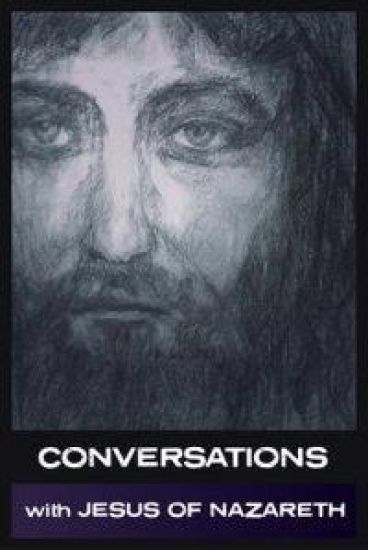
Who was Jesus of Nazareth? Many admire his spiritual teachings; some go further and claim him as the messiah, while a few deny he ever existed at all. But everyone has an opinion about this obscure preacher who lived his brief life in one of the less significant regions of the Roman Empire; and who, in being crucified, died the traditional death for criminals and trouble-makers. Jesus lived in turbulent times. Under Roman rule, Judea was a hotbed of nationalist, political and religious interests, all vying for power. Jesus was caught in the middle of these, allied to none and ultimately reviled by all. 'My kingdom is not of this world,' he said, though he agreed taxes should be paid to the Romans. 'Give to Caesar what is Caesar's and to God what is God's.' He taught simply but challengingly, advocating love for our enemies, a spirit of forgiveness and respect for children. What else was new about Jesus? He spoke of a new way of being which he called 'the kingdom of God.' This was not a place but an inner state, and the doorway to this kingdom was trust in a heavenly father. As he would often say: 'Have anxiety about nothing.'It was a trust Jesus himself required in a life full of conflict; not least with his family who largely disowned him. 'Who is my mother? Who are my brothers?' he famously asked when they attempted to rein him in. In 'Conversations with Jesus of Nazareth', the questions are imagined, but the words of Jesus are not; they are authentically his, taken from the various records of his life in the gospels of Matthew, Mark, Luke, John and Thomas. Jesus himself never wrote anything down, but in a culture of oral transmission, his words, deeds and stories were well-remembered, and it's not hard to see why. 'It's the shape of our heart which Jesus is interested in,' says Simon Parke. 'This is what comes across when talking with him. It's not what we do that matters, but who we are, and that's why he upset the religious people of his day: he didn't give them anything to hide behind. He's not always easy company, I agree, but his life and his words - they have the undoubted ring of truth.'
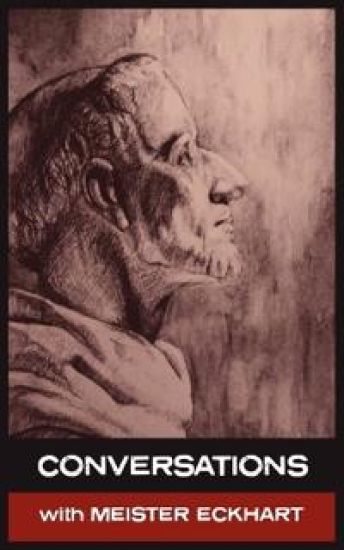
Conversations with Meister Eckhart

Conversations with Meister Eckhart

Meister Eckhart; Simon Parke

White Crow Books Ltd
2010
sidottu
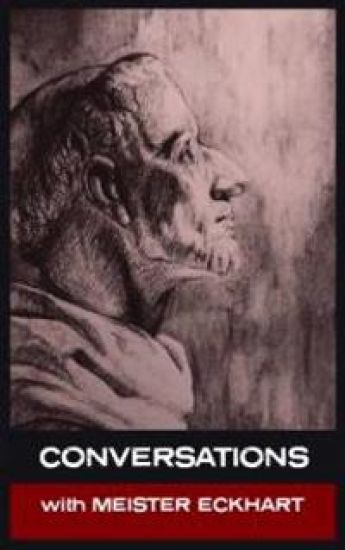
In many ways, Meister Eckhart has had to wait seven centuries to be heard. Born in 13th century Germany, much of his life was spent in a monastery; though not all. The 'Meister' in his name means 'Master', and is an academic title from the University of Paris. An admired member of the Dominican Order, he was often sent to reform ailing priories. He was known also as a spiritual counsellor; a safe haven for many who sought God in their life, but found themselves troubled by the dire state of the institutional church. And in a century of flowering female spirituality, he was a supportive figure for many Dominican nuns and women in the burgeoning lay communities which arose. He was best known, however, as a preacher - an original preacher who used his native German language to startling effect. Eckhart preached a spiritual vision which distrusted the artifice of both ritual and church dogma. Instead, he aimed at nothing less than the spiritual and psychological transformation of those given to his care. To this end, Eckhart made the disposition of the human heart the key to all things.'Conversations with Meister Eckhart' is an imagined conversation with this 13th century mystic, around such themes as detachment, which he famously placed above love; spirituality, God, the soul and suffering. But while the conversation is imagined, Eckhart's words are not; they are authentically his own. One of his controversial claims was that God cannot be described. Indeed, in one sermon, he went so far as to say 'We must take leave of God.' 'The church became very hostile towards him,' says Simon Parke, 'accusing him of heresy; and he spent his last days on trial before the pope. They also tried to ensure he'd be forgotten when he died, and nearly succeeded. But he's more popular now than ever.' Eckhart's teaching is an adventure, not a system; a call, not a creed. The depth and universality of his work means it can be contained by no established religion, but draws to itself seekers of truth from all backgrounds. 'Here we have a teaching open to all, but possessed by none,' says Parke. 'And therefore free like a butterfly, in the garden of the soul. Its perhaps my most challenging and rewarding conversation.'
Conversations with Van Gogh

Conversations with Van Gogh

Vincent van Gogh; Simon Parke

White Crow Books Ltd
2010
sidottu
Vincent van Gogh is best known for two things - his sunflowers and his ear-cutting. But there are many other ways of knowing this remarkable son of a Dutch pastor, who left his chill homeland for the sunshine of Arles in the South of France; and left us over a thousand frank letters of struggle and joy, to help us glimpse his inner world. Vincent came late to painting after spending time in London trying to be a Christian missionary. And though he is now amongst the most famous artists on earth, in his day, no one saw him coming - apart from one French art critic called Aurier. It is possible he never sold one of his paintings in his life time. When he discovered the sun in Arles, he also discovered energy. Yellow for him was the colour of hope, and in his last two years he painted almost a canvass a day. But hope ran out on July 27th , 1890 when he shot himself, aged 37. He was at this time six months out of a mental institution, where perhaps he experienced his greatest calm. Vincent compared himself to a stunted plant; damaged by the emotional frost of his childhood. 'Conversations with Van Gogh' is an imagined conversation with this remarkable figure. But while the conversation is imagined, Van Gogh's words are not; they are all authentically his. "Speaking with Vincent - which he insists on being called - was a privilege,' says Simon Parke. 'He's endlessly fascinating, contradictory, moving, funny, insightful and tragic. There's a fury in him; but also a great kindness. He found harmony in human relationships elusive; his love life was a painful shambles. But with colour, he was a harmonic genius, and he has much to say about this. And here's the thing: for a man who killed himself - he died in the arms of his brother on July 29th - spending time with him was never anything but life-affirming.'
Conversations with Van Gogh

Conversations with Van Gogh

Vinent Van Gogh; Simon Parke

White Crow Books Ltd
2010
pokkari
'Conversations with Van Gogh' is an imagined conversation with this remarkable figure. But while the conversation is imagined, Van Gogh's words are not; they are all authentically his. ' Vincent van Gogh is best known for two things - his sunflowers and his ear-cutting. But there are many other ways of knowing this remarkable son of a Dutch pastor, who left his chill homeland for the sunshine of Arles in the South of France; and left us over a thousand frank letters of struggle and joy, to help us glimpse his inner world. Vincent came late to painting after spending time in London trying to be a Christian missionary. And though he is now amongst the most famous artists on earth, in his day, no one saw him coming - apart from one French art critic called Aurier. It is possible he never sold one of his paintings in his life time. When he discovered the sun in Arles, he also discovered energy. Yellow for him was the colour of hope, and in his last two years he painted almost a canvass a day. But hope ran out on July 27th , 1890 when he shot himself, aged 37. He was at this time six months out of a mental institution, where perhaps he experienced his greatest calm. Vincent compared himself to a stunted plant; damaged by the emotional frost of his childhood. 'Speaking with Vincent - which he insists on being called - was a privilege,' says Simon Parke. 'He's endlessly fascinating, contradictory, moving, funny, insightful and tragic. There's a fury in him; but also a great kindness. He found harmony in human relationships elusive; his love life was a painful shambles. But with colour, he was a harmonic genius, and he has much to say about this. And here's the thing: for a man who killed himself - he died in the arms of his brother on July 29th - spending time with him was never anything but life-affirming.'
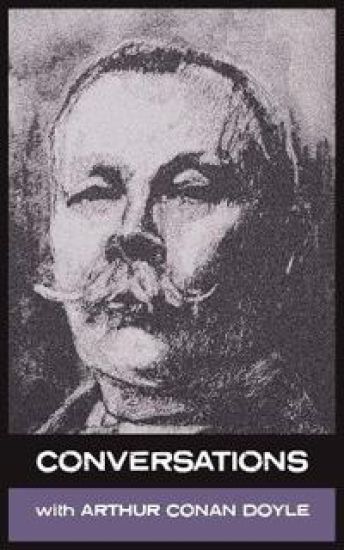
Conversations with Arthur Conan Doyle

Conversations with Arthur Conan Doyle

Arthur Conan Doyle; Simon Parke

White Crow Books Ltd
2010
pokkari
At the end of the 19th century, perhaps every man wanted to be Arthur Conan Doyle. He had written historical novels, short stories of horror and the supernatural; and displayed huge energy and talent in a variety of fields. He was a fine cricketer (he once took the wicket of the great WC Grace); played football, rugby and golf. He practiced as a doctor; campaigned for underdogs, introduced skis to Switzerland; and knew both Harry Houdini and Oscar Wilde. He was an adventurer, a controversialist, war reporter and knight of the realm. But most famously of all, he had created Sherlock Holmes, the world's most famous detective - based on his former medical professor, Joseph Bell. All in all, Doyle was a Boy's Own dream. Yet for Sir Arthur Conan Doyle, all such achievements paled into significance when set against his commitment to spiritualism. Although interested in the subject for many years, he publicly converted to the cause around time of the First World War - much to many people's amazement: 'Sir Arthur Conan Doyle has many striking characteristics,' wrote Ruth Brandon. 'He is gigantically tall and strong. He is a gifted story teller. He is a man of strong opinions and considerable political influence. But perhaps the most extraordinary thing about him is the combination of all the attributes of worldly success with an almost child-like literalness and credulity of mind, manifested particularly in relation to spiritualism.' 'Conversations with Conan Doyle' is an imagined conversation with this remarkable figure. But while the conversation is imagined, Doyle's words are not; they are all authentically his. 'For many, Conan Doyle's commitment to spiritualism is an embarrassing aberration,' says Simon Parke. 'They want him to go back and just be the creator of Sherlock Holmes. But people don't fit into boxes, and Doyle certainly doesn't! So I want people to meet the man, hear him speak - and then make up their own minds. He's often passionate; but never dull.'
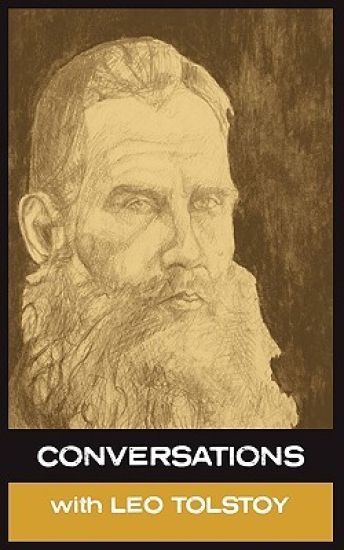
Conversations with Leo Tolstoy

Conversations with Leo Tolstoy

Leo Tolstoy; Simon Parke

White Crow Books Ltd
2010
pokkari
When most think of Tolstoy, they think of the great author. 'War and Peace' and 'Anna Karenina' brought him worldwide fame, and a good deal of money. Had he done nothing else in life, these two novels would have ensured him status and respect. Few others had written both a national epic and a great love story; and some might have been content with that. For his last thirty years, however, Tolstoy walked a different track. After his spiritual crisis, when he was 50, he exchanged his author's clothes for those of a prophet - a prophet who was to have a great influence on Gandhi amongst others. Through his prolific writing, he now became the scourge of the rich, the Church and the Government. Neither did he miss an opportunity to denounce both science and art. Darwin? Dostoyevsky? Shakespeare? No one was to be left standing. In 'Conversations with Leo Tolstoy', Simon Parke grants us the honour of sitting with the great man, towards the end of his life; and gives us the chance to chat with him. The conversation is imagined, but not Tolstoy's answers. This is Tolstoy is his own words, drawn from his extensive books, essays and letters; and the military, vegetarianism, marriage, non-violence, death, God and sex are all on the agenda. 'I want people to come away feeling they know Tolstoy,' says Simon Parke, who was keen to use only Tolstoy's authentic words. 'They will be become aware of his opinions certainly, for he was forthright in those. He had an opinion on everything! But I hope also that people leave with a sense of the man beneath the opinions. I don't always agree with him; but it is hard not to admire him. He was far from perfect, but as he says: just because he walks the road like a drunk, doesn't mean it's the wrong road.'
Conversations with Meister Eckhart

Conversations with Meister Eckhart

Meister Eckhart; Simon Parke

White Crow Books Ltd
2010
pokkari

Halvin toimitettuna 22,50 €

In many ways, Meister Eckhart has had to wait seven centuries to be heard. Born in 13th century Germany, much of his life was spent in a monastery. 'Meister' means 'Master', and is an academic title from the University of Paris. An admired member of the Dominican Order, he was often sent to reform ailing priories. He was known as a spiritual counsellor; a safe haven for many who sought God in their life, but found themselves troubled by the state of the institutional church. He was best known, however, as a preacher - who used his native German language to startling effect. Eckhart preached a spiritual vision which distrusted both ritual and church dogma. Instead, he aimed at nothing less than the spiritual and psychological transformation of those given to his care. To this end, Eckhart made the disposition of the human heart the key to all things. 'Conversations with Meister Eckhart' is an imagined conversation with this 13th century mystic, around such themes as detachment, which he famously placed above love; spirituality, God, the soul and suffering. But while the conversation is imagined, Eckhart's words are not; they are authentically his own. One of his controversial claims was that God cannot be described. Indeed, in one sermon, he went so far as to say 'We must take leave of God.' 'The church became very hostile towards him,' says Simon Parke, 'accusing him of heresy; and he spent his last days on trial before the pope. They also tried to ensure he'd be forgotten when he died, and nearly succeeded. But he's more popular now than ever.' Eckhart's teaching is an adventure, not a system; a call, not a creed. The depth and universality of his work means it can be contained by no established religion, but draws to itself seekers of truth from all backgrounds. 'Here we have a teaching open to all, but possessed by none,' says Parke. 'And therefore free like a butterfly, in the garden of the soul. Its perhaps my most challenging and rewarding conversation.'