Kirjojen hintavertailu – 12 876 658 kirjaa ja 26 kauppaa

Kirjailija

Simon Susen

Kirjat ja teokset yhdessä paikassa: 13 kirjaa, julkaisuja vuosilta 2015–2026, suosituimpiin kuuluu The Consolidation of Postmetaphysical Thinking. Vertaile teosten hintoja ja tarkista saatavuus suomalaisista kirjakaupoista.

13 kirjaa

Kirjojen julkaisuvuodet: 2015–2026.

The Consolidation of Postmetaphysical Thinking
Simon Susen’s trilogy offers a systematic account of Jürgen Habermas’s Also a History of Philosophy. It provides a comprehensive overview of the central issues at stake in this magnum opus and, crucially, assesses its most significant limitations and shortcomings. Susen shows how Habermas’s approach to the history of philosophy seeks to reconstruct the genealogy of postmetaphysical thinking by tracing the tension-laden relationship between faith and knowledge back to the major developments brought about during the Axial Age. The trilogy examines how Habermas’s latest project invites us to reconsider not only classical antinomies – such as faith vs. knowledge, the sacred vs. the profane, religion vs. science – but also the role of philosophy in the twenty-first century, particularly with regard to its capacity to overcome the tension between ‘ideologization’ [Verweltanschaulichung] and ‘scientization’ [Verwissenschaftlichung]. This endeavour, Susen argues, sheds light on the extent to which the emancipatory potential of rational freedom, far from being reducible to a mere product of the Enlightenment, has been present throughout human history – most notably in the processes of ‘the linguistification of the sacred’ in advanced civilizations during the first millennium BCE. Informed by a meticulous analysis of the Epilogue to the original German-language edition – which contains valuable insights into Habermas’s retrospective reflections on his main arguments and engages with the reception of his ambitious theoretical enterprise – this definitive trilogy serves as an essential guide to one of Habermas’s seminal works. The second volume, The Consolidation of Postmetaphysical Thinking, explores the dimensions that are particularly important to Habermas’s project of developing a genealogy of postmetaphysical thinking. This trilogy is for all those in the social sciences and humanities studying and researching classical and contemporary social theory, the sociology of knowledge, the sociology of religion, political sociology, cultural sociology, social and political philosophy, epistemology, the philosophy of religion, the philosophy of history, the philosophy of language, and the history of social and political thought.

The Critique of Postmetaphysical Thinking

The Critique of Postmetaphysical Thinking

Simon Susen

TAYLOR FRANCIS LTD
2026
sidottu
Simon Susen’s trilogy offers a systematic account of Jürgen Habermas’s Also a History of Philosophy. It provides a comprehensive overview of the central issues at stake in this magnum opus and, crucially, assesses its most significant limitations and shortcomings. Susen shows how Habermas’s approach to the history of philosophy seeks to reconstruct the genealogy of postmetaphysical thinking by tracing the tension-laden relationship between faith and knowledge back to the major developments brought about during the Axial Age. The trilogy examines how Habermas’s latest project invites us to reconsider not only classical antinomies – such as faith vs. knowledge, the sacred vs. the profane, religion vs. science – but also the role of philosophy in the twenty-first century, particularly with regard to its capacity to overcome the tension between ‘ideologization’ [Verweltanschaulichung] and ‘scientization’ [Verwissenschaftlichung]. This endeavour, Susen argues, sheds light on the extent to which the emancipatory potential of rational freedom, far from being reducible to a mere product of the Enlightenment, has been present throughout human history – most notably in the processes of ‘the linguistification of the sacred’ in advanced civilizations during the first millennium BCE. Informed by a meticulous analysis of the Epilogue to the original German-language edition – which contains valuable insights into Habermas’s retrospective reflections on his main arguments and engages with the reception of his ambitious theoretical enterprise – this definitive trilogy serves as an essential guide to one of Habermas’s seminal works. The third volume, The Critique of Postmetaphysical Thinking, presents a set of critical reflections on Auch eine Geschichte der Philosophie and provides a rigorous assessment of Habermas’s endeavour. This trilogy is for all those in the social sciences and humanities studying and researching classical and contemporary social theory, the sociology of knowledge, the sociology of religion, political sociology, cultural sociology, social and political philosophy, epistemology, the philosophy of religion, the philosophy of history, the philosophy of language, and the history of social and political thought.
The Critique of Postmetaphysical Thinking

The Critique of Postmetaphysical Thinking

Simon Susen

TAYLOR FRANCIS LTD
2026
nidottu
Simon Susen’s trilogy offers a systematic account of Jürgen Habermas’s Also a History of Philosophy. It provides a comprehensive overview of the central issues at stake in this magnum opus and, crucially, assesses its most significant limitations and shortcomings. Susen shows how Habermas’s approach to the history of philosophy seeks to reconstruct the genealogy of postmetaphysical thinking by tracing the tension-laden relationship between faith and knowledge back to the major developments brought about during the Axial Age. The trilogy examines how Habermas’s latest project invites us to reconsider not only classical antinomies – such as faith vs. knowledge, the sacred vs. the profane, religion vs. science – but also the role of philosophy in the twenty-first century, particularly with regard to its capacity to overcome the tension between ‘ideologization’ [Verweltanschaulichung] and ‘scientization’ [Verwissenschaftlichung]. This endeavour, Susen argues, sheds light on the extent to which the emancipatory potential of rational freedom, far from being reducible to a mere product of the Enlightenment, has been present throughout human history – most notably in the processes of ‘the linguistification of the sacred’ in advanced civilizations during the first millennium BCE. Informed by a meticulous analysis of the Epilogue to the original German-language edition – which contains valuable insights into Habermas’s retrospective reflections on his main arguments and engages with the reception of his ambitious theoretical enterprise – this definitive trilogy serves as an essential guide to one of Habermas’s seminal works. The third volume, The Critique of Postmetaphysical Thinking, presents a set of critical reflections on Auch eine Geschichte der Philosophie and provides a rigorous assessment of Habermas’s endeavour. This trilogy is for all those in the social sciences and humanities studying and researching classical and contemporary social theory, the sociology of knowledge, the sociology of religion, political sociology, cultural sociology, social and political philosophy, epistemology, the philosophy of religion, the philosophy of history, the philosophy of language, and the history of social and political thought.

The Consolidation of Postmetaphysical Thinking
Simon Susen’s trilogy offers a systematic account of Jürgen Habermas’s Also a History of Philosophy. It provides a comprehensive overview of the central issues at stake in this magnum opus and, crucially, assesses its most significant limitations and shortcomings. Susen shows how Habermas’s approach to the history of philosophy seeks to reconstruct the genealogy of postmetaphysical thinking by tracing the tension-laden relationship between faith and knowledge back to the major developments brought about during the Axial Age. The trilogy examines how Habermas’s latest project invites us to reconsider not only classical antinomies – such as faith vs. knowledge, the sacred vs. the profane, religion vs. science – but also the role of philosophy in the twenty-first century, particularly with regard to its capacity to overcome the tension between ‘ideologization’ [Verweltanschaulichung] and ‘scientization’ [Verwissenschaftlichung]. This endeavour, Susen argues, sheds light on the extent to which the emancipatory potential of rational freedom, far from being reducible to a mere product of the Enlightenment, has been present throughout human history – most notably in the processes of ‘the linguistification of the sacred’ in advanced civilizations during the first millennium BCE. Informed by a meticulous analysis of the Epilogue to the original German-language edition – which contains valuable insights into Habermas’s retrospective reflections on his main arguments and engages with the reception of his ambitious theoretical enterprise – this definitive trilogy serves as an essential guide to one of Habermas’s seminal works. The second volume, The Consolidation of Postmetaphysical Thinking, explores the dimensions that are particularly important to Habermas’s project of developing a genealogy of postmetaphysical thinking. This trilogy is for all those in the social sciences and humanities studying and researching classical and contemporary social theory, the sociology of knowledge, the sociology of religion, political sociology, cultural sociology, social and political philosophy, epistemology, the philosophy of religion, the philosophy of history, the philosophy of language, and the history of social and political thought.

The Foundations of Postmetaphysical Thinking

The Foundations of Postmetaphysical Thinking

Simon Susen

TAYLOR FRANCIS LTD
2026
sidottu
Simon Susen’s trilogy offers a systematic account of Jürgen Habermas’s Also a History of Philosophy. It provides a comprehensive overview of the central issues at stake in this magnum opus and, crucially, assesses its most significant limitations and shortcomings. Susen shows how Habermas’s approach to the history of philosophy seeks to reconstruct the genealogy of postmetaphysical thinking by tracing the tension-laden relationship between faith and knowledge back to the major developments brought about during the Axial Age. The trilogy examines how Habermas’s latest project invites us to reconsider not only classical antinomies – such as faith vs. knowledge, the sacred vs. the profane, religion vs. science – but also the role of philosophy in the twenty-first century, particularly with regard to its capacity to overcome the tension between ‘ideologization’ [Verweltanschaulichung] and ‘scientization’ [Verwissenschaftlichung]. This endeavour, Susen argues, sheds light on the extent to which the emancipatory potential of rational freedom, far from being reducible to a mere product of the Enlightenment, has been present throughout human history – most notably in the processes of ‘the linguistification of the sacred’ in advanced civilizations during the first millennium BCE. Informed by a meticulous analysis of the Epilogue to the original German-language edition – which contains valuable insights into Habermas’s retrospective reflections on his main arguments and engages with the reception of his ambitious theoretical enterprise – this definitive trilogy serves as an essential guide to one of Habermas’s seminal works. The first volume, The Foundations of Postmetaphysical Thinking, comprises a detailed outline of the core assumptions underlying Habermas’s Auch eine Geschichte der Philosophie. This trilogy is for all those in the social sciences and humanities studying and researching classical and contemporary social theory, the sociology of knowledge, the sociology of religion, political sociology, cultural sociology, social and political philosophy, epistemology, the philosophy of religion, the philosophy of history, the philosophy of language, and the history of social and political thought.

The Foundations of Postmetaphysical Thinking

The Foundations of Postmetaphysical Thinking

Simon Susen

TAYLOR FRANCIS LTD
2026
nidottu
Simon Susen’s trilogy offers a systematic account of Jürgen Habermas’s Also a History of Philosophy. It provides a comprehensive overview of the central issues at stake in this magnum opus and, crucially, assesses its most significant limitations and shortcomings. Susen shows how Habermas’s approach to the history of philosophy seeks to reconstruct the genealogy of postmetaphysical thinking by tracing the tension-laden relationship between faith and knowledge back to the major developments brought about during the Axial Age. The trilogy examines how Habermas’s latest project invites us to reconsider not only classical antinomies – such as faith vs. knowledge, the sacred vs. the profane, religion vs. science – but also the role of philosophy in the twenty-first century, particularly with regard to its capacity to overcome the tension between ‘ideologization’ [Verweltanschaulichung] and ‘scientization’ [Verwissenschaftlichung]. This endeavour, Susen argues, sheds light on the extent to which the emancipatory potential of rational freedom, far from being reducible to a mere product of the Enlightenment, has been present throughout human history – most notably in the processes of ‘the linguistification of the sacred’ in advanced civilizations during the first millennium BCE. Informed by a meticulous analysis of the Epilogue to the original German-language edition – which contains valuable insights into Habermas’s retrospective reflections on his main arguments and engages with the reception of his ambitious theoretical enterprise – this definitive trilogy serves as an essential guide to one of Habermas’s seminal works. The first volume, The Foundations of Postmetaphysical Thinking, comprises a detailed outline of the core assumptions underlying Habermas’s Auch eine Geschichte der Philosophie. This trilogy is for all those in the social sciences and humanities studying and researching classical and contemporary social theory, the sociology of knowledge, the sociology of religion, political sociology, cultural sociology, social and political philosophy, epistemology, the philosophy of religion, the philosophy of history, the philosophy of language, and the history of social and political thought.
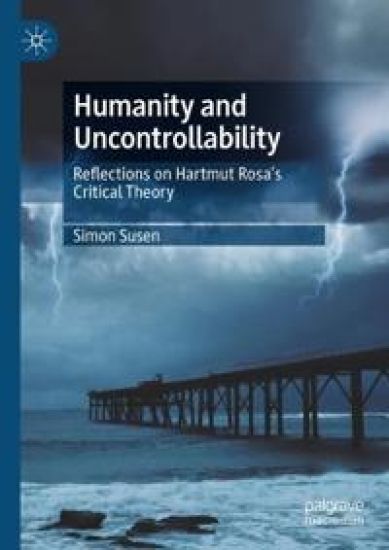
Humanity and Uncontrollability

Humanity and Uncontrollability

Simon Susen

Springer International Publishing AG
2024
sidottu
Focusing on the work of Hartmut Rosa, this book provides an in-depth account of the extent to which we, as humans, are obliged to face up to the uncontrollability of the world. Rosa is widely regarded as one of the most original contemporary European social theorists. Along with the concepts of ‘acceleration’, ‘alienation’, and ‘resonance’, the notion of ‘uncontrollability’ [Unverfügbarkeit] ranks among the most important reference points in Rosa’s critical theory, especially in his recent work. It is no accident, then, that – following his extensive inquiries into ‘acceleration’ and ‘alienation’ and the publication of his magnum opus on ‘resonance’ – Rosa has found it necessary to offer a brief, but powerful, account of the place occupied by the concept of ‘uncontrollability’ in his critical theory. The first half of this book comprises a detailed outline of Rosa’s central arguments on ‘uncontrollability’, before moving, in the second half, to a thorough assessment of the most significant limitations of his approach. This book will appeal to students and scholars of the social sciences and humanities – particularly to those interested in social theory, social philosophy, and the history of ideas.
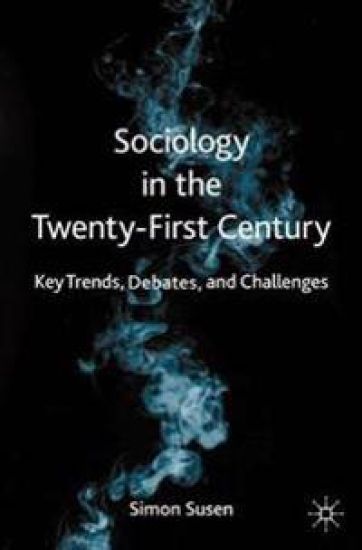
Sociology in the Twenty-First Century

Sociology in the Twenty-First Century

Simon Susen

Springer Nature Switzerland AG
2020
nidottu
This book examines key trends, debates, and challenges in twenty-first-century sociology. To this end, it focuses on significant issues surrounding the nature of sociology (‘What is sociology?’), the history of sociology (‘How has sociology evolved?’), and the study of sociology (‘How can or should we make sense of sociology?’). These issues have been, and will continue to be, essential to the creation of conceptually informed, methodologically rigorous, and empirically substantiated research programmes in the discipline. Over the past years, however, there have been numerous disputes and controversies concerning the future of sociology. Particularly important in this respect are recent and ongoing discussions on the possibilities of developing new – and, arguably, post-classical – forms of sociology. The central assumption underlying most of these projects is the contention that a comprehensive analysis of the principal challenges faced by global society requires the construction of a sociology capable of accounting for the interconnectedness of social actors and social structures across time and space. This book provides a cutting-edge overview of crucial past, present, and possible future trends, debates, and challenges shaping the pursuit of sociological inquiry.‘Simon Susen – one of the most knowledgeable scholars in the contemporary social sciences – examines the key challenges with which sociology is confronted today. This book is a must-read for professional sociologists as well as for those studying the subject.’ – Luc Boltanski, École des Hautes Études en Sciences Sociales, Paris, France‘Simon Susen provides a balanced update on sociology’s theoretical, methodological, and institutional resources as well as challenges in today’s complicated local and global social worlds. Fortunately, he has innovative and practical recommendations for ensuring the cutting-edge relevance of sociological thinking. This book is an excellent choice for undergraduate and postgraduate students as well as for the general reader.’ – Sandra Harding, University of California, Los Angeles, USA ‘A comprehensive and judicious account of the intellectual and material state of sociology, based on omnivorous reading and incisive analysis. The writing is beautifully clear, and the bookis a major contribution to the self-understanding of the discipline.’ – William Outhwaite, Newcastle University, UK
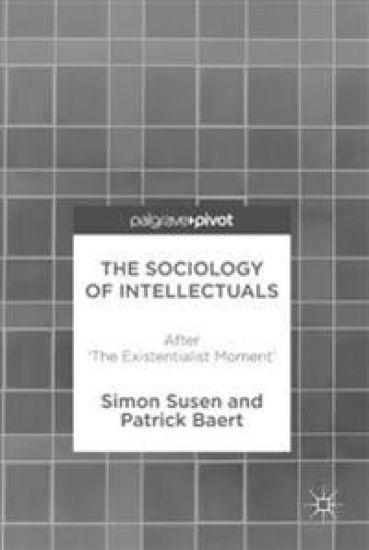
The Sociology of Intellectuals

The Sociology of Intellectuals

Simon Susen; Patrick Baert

Springer International Publishing AG
2018
nidottu
This volume offers an unprecedented account of recent and future developments in the sociology of intellectuals. It presents a critical exchange between two leading contemporary social theorists, Patrick Baert and Simon Susen, advancing debates at the cutting edge of scholarship on the changing role of intellectuals in the increasingly interconnected societies of the twenty-first century. The discussion centres on Baert’s most recent contribution to this field of inquiry, The Existentialist Moment: The Rise of Sartre as a Public Intellectual (2015), demonstrating that it has opened up hitherto barely explored avenues for the sociological study of intellectuals. In addition, the authors provide an overview of various alternative approaches that are available for understanding the sociology of intellectuals – such as those of Pierre Bourdieu, Randall Collins, and Neil Gross. In doing so, they grapple with the question of the extent to which intellectuals canplay a constructive role in influencing social and political developments in the modern era. This insightful volume will appeal to students and scholars of the humanities and social sciences, particularly to those interested in social theory and the history of intellectual thought.
The Sociology of Intellectuals

The Sociology of Intellectuals

Simon Susen; Patrick Baert

Springer International Publishing AG
2017
sidottu
This volume offers an unprecedented account of recent and future developments in the sociology of intellectuals. It presents a critical exchange between two leading contemporary social theorists, Patrick Baert and Simon Susen, advancing debates at the cutting edge of scholarship on the changing role of intellectuals in the increasingly interconnected societies of the twenty-first century. The discussion centres on Baert’s most recent contribution to this field of inquiry, The Existentialist Moment: The Rise of Sartre as a Public Intellectual (2015), demonstrating that it has opened up hitherto barely explored avenues for the sociological study of intellectuals. In addition, the authors provide an overview of various alternative approaches that are available for understanding the sociology of intellectuals – such as those of Pierre Bourdieu, Randall Collins, and Neil Gross. In doing so, they grapple with the question of the extent to which intellectuals canplay a constructive role in influencing social and political developments in the modern era. This insightful volume will appeal to students and scholars of the humanities and social sciences, particularly to those interested in social theory and the history of intellectual thought.
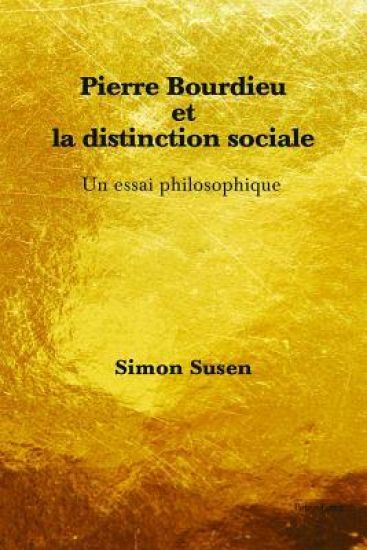
Pierre Bourdieu et la distinction sociale

Pierre Bourdieu et la distinction sociale

Simon Susen

Peter Lang AG, Internationaler Verlag der Wissenschaften
2016
nidottu
L'objet principal de cette reflexion est d'examiner de maniere approfondie la conception bourdieusienne de la " distinction sociale ". A partir d'une analyse detaillee de La distinction. Critique sociale du jugement (1979), cet essai passe au crible les forces et les faiblesses des explications elaborees par Pierre Bourdieu a propos des processus de differenciation symbolique et materielle. L'analyse montre que La distinction contient dix tensions epistemiques significatives, dont l'etude critique permet de comprendre les contradictions fondamentales qui se trouvent au coeur de la conception bourdieusienne de la " distinction sociale ".
The ‘Postmodern Turn’ in the Social Sciences
Simon Susen examines the impact of the 'postmodern turn' on the contemporary social sciences. On the basis of an innovative five-dimensional approach, this study provides a systematic, comprehensive, and critical account of the legacy of the 'postmodern turn', notably in terms of its continuing relevance in the twenty-first century.