Kirjojen hintavertailu – 12 859 819 kirjaa ja 27 kauppaa

Kirjailija

Simon Swain

Kirjat ja teokset yhdessä paikassa: 8 kirjaa, julkaisuja vuosilta 2002–2023, suosituimpiin kuuluu Themistius and Valens. Vertaile teosten hintoja ja tarkista saatavuus suomalaisista kirjakaupoista.

8 kirjaa

Kirjojen julkaisuvuodet: 2002–2023.

Themistius and Valens

Themistius and Valens

Simon Swain

LIVERPOOL UNIVERSITY PRESS
2023
nidottu
Themistius and Valens offers the first complete English translation and analysis of Themistius’ speeches for or on behalf of the emperor Valens (r. 364-378). As a westerner and a Latin speaker, Valens had a tough job to convince the aristocracies of Constantinople and the East that he shared their expectations and knew how to preserve their wealth and security. By 364 Themistius already enjoyed huge influence. He was famous as a philosopher who was ‘an exceptional citizen’, and his leadership of the dramatic expansion of the senate in 359 gave him the best address book in town. His ambition and political sense made him a perfect ally for communicating imperial policy and action. These speeches present the major issues Valens faced: his right to rule alongside the western emperor, his brother Valentinian, his handling of the revolt of Procopius, his ability to manage the empire’s economy and borders, his wars against the Goths and the Persians, his controversial religious and judicial policies, and the clever diplomatic work Themistius undertook for him in the lead up to his death in battle in 378.
Themistius and Valens

Themistius and Valens

Simon Swain

LIVERPOOL UNIVERSITY PRESS
2021
sidottu
Themistius and Valens offers the first complete English translation and analysis of Themistius’ speeches for or on behalf of the emperor Valens (r. 364-378). As a westerner and a Latin speaker, Valens had a tough job to convince the aristocracies of Constantinople and the East that he shared their expectations and knew how to preserve their wealth and security. By 364 Themistius already enjoyed huge influence. He was famous as a philosopher who was ‘an exceptional citizen’, and his leadership of the dramatic expansion of the senate in 359 gave him the best address book in town. His ambition and political sense made him a perfect ally for communicating imperial policy and action. These speeches present the major issues Valens faced: his right to rule alongside the western emperor, his brother Valentinian, his handling of the revolt of Procopius, his ability to manage the empire’s economy and borders, his wars against the Goths and the Persians, his controversial religious and judicial policies, and the clever diplomatic work Themistius undertook for him in the lead up to his death in battle in 378.
Themistius, Julian, and Greek Political Theory under Rome
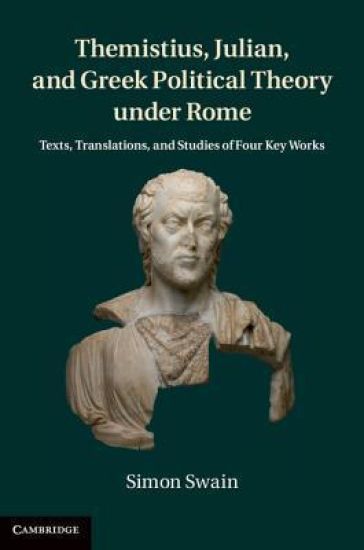
Themistius' close relationship with Christian emperors from Constantius to Theodosius makes him one of the most important political thinkers and politicians of the later fourth century, and his dealings with Julian the Apostate have recently attracted much speculation. This volume presents a new critical edition, translation and analysis of Themistius' letter to Julian about kingship and government, which survives mainly in Arabic, together with texts, translations and analyses of Julian's Letter to Themistius and Sopater's Letter to Himerius. The volume is completed with a text, translation and analysis of the other genuine work of Greek political theory to survive in Arabic, the Letter of Aristotle to Alexander, which dates from an earlier period and throws into relief the particular concerns of Themistius, Julian, and the rulers of the fourth-century Roman world.
Economy, Family, and Society from Rome to Islam

Economy, Family, and Society from Rome to Islam

Simon Swain

Cambridge University Press
2016
pokkari
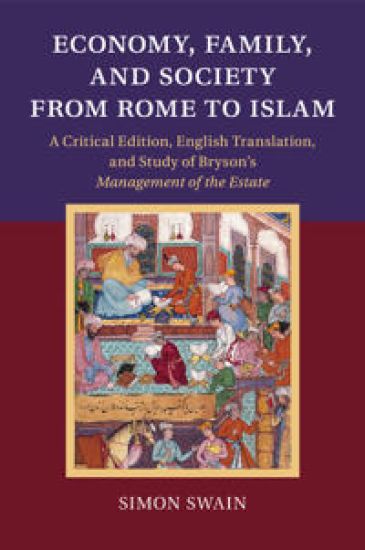
Bryson's Management of the Estate (Oikonomikos Logos) offers advice on the key private concerns of the Roman elite: getting rich, managing slaves, love and marriage, and bringing up children. This estate owner is a farmer and a merchant, making his money through good and effective business. His wife is co-owner of the estate and their love promotes material prosperity. Their child needs twenty-four hour supervision in 'all his affairs'. Bryson's book was almost certainly written in the mid-first century AD, but survives mainly in Arabic. It had a profound effect on Islamic thinking on the economy and on marriage, but is virtually unknown to classicists. This new edition of the text together with the first English translation will appeal to Roman social and economic historians, students of imperial Greek literature and all those interested in the development of Greco-Roman thought in the Islamic empire of the Middle Ages.
Themistius, Julian, and Greek Political Theory under Rome
Themistius' close relationship with Christian emperors from Constantius to Theodosius makes him one of the most important political thinkers and politicians of the later fourth century, and his dealings with Julian the Apostate have recently attracted much speculation. This volume presents a new critical edition, translation and analysis of Themistius' Letter to Julian about kingship and government, which survives mainly in Arabic, together with texts, translations and analyses of Julian's Letter to Themistius and Sopater's Letter to Himerius. The volume is completed with a text, translation and analysis of the other genuine work of Greek political theory to survive in Arabic, the Letter of Aristotle to Alexander, which dates from an earlier period and throws into relief the particular concerns of Themistius, Julian, and the rulers of the fourth-century Roman world.
Economy, Family, and Society from Rome to Islam

Economy, Family, and Society from Rome to Islam

Simon Swain

Cambridge University Press
2013
sidottu
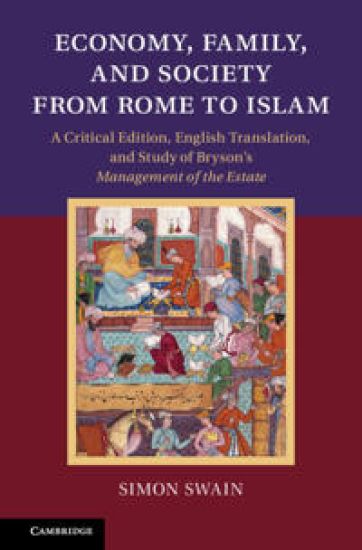
Bryson's Management of the Estate (Oikonomikos Logos) offers advice on the key private concerns of the Roman elite: getting rich, managing slaves, love and marriage, and bringing up children. This estate owner is a farmer and a merchant, making his money through good and effective business. His wife is co-owner of the estate and their love promotes material prosperity. Their child needs twenty-four hour supervision in 'all his affairs'. Bryson's book was almost certainly written in the mid-first century AD, but survives mainly in Arabic. It had a profound effect on Islamic thinking on the economy and on marriage, but is virtually unknown to classicists. This new edition of the text together with the first English translation will appeal to Roman social and economic historians, students of imperial Greek literature and all those interested in the development of Greco-Roman thought in the Islamic empire of the Middle Ages.
Seeing the Face, Seeing the Soul

Seeing the Face, Seeing the Soul

George Boys-Stones; Jas Elsner; Antonella Ghersetti; Robert Hoyland; Ian Repath; Simon Swain

Oxford University Press
2007
sidottu
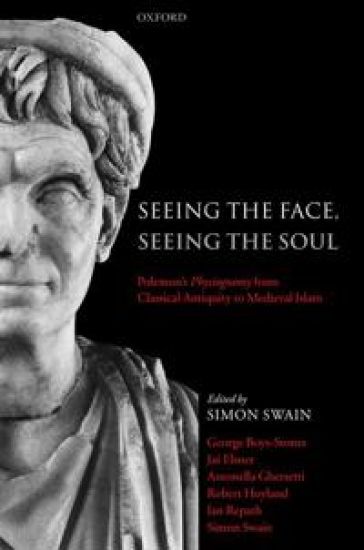
Polemon of Laodicea (near modern Denizli, south-west Turkey) was a wealthy Greek aristocrat and a key member of the intellectual movement known as the Second Sophistic. Among his works was the Physiognomy, a manual on how to tell character from appearance, thus enabling its readers to choose friends and avoid enemies on sight. Its formula of detailed instruction and personal reminiscence proved so successful that the book was re-edited in the fourth century by Adamantius in Greek, translated and adapted by an unknown Latin author of the same era, and translated in the early Middle Ages into Syriac and Arabic. The surviving versions of Adamantius, Anonymus Latinus, and the Leiden Arabic more than make up for the loss of the original. The present volume is the work of a team of leading Classicists and Arabists. The main surviving versions in Greek and Latin are translated into English for the first time. The Leiden Arabic translation is authoritatively re-edited and translated, as is a sample of the alternative Arabic Polemon. The texts and translations are introduced by a series of masterly studies that tell the story of the origins, function, and legacy of Polemon's work, a legacy especially rich in Islam. The story of the Physiognomy is the story of how one man's obsession with identifying enemies came to be taken up in the fascinating transmission of Greek thought into Arabic.
Dio Chrysostom

Dio Chrysostom

Simon Swain

Oxford University Press
2002
nidottu
Dio Chrysostom (c. AD 45-115) is one of the most important writers, thinkers, and politicians from the flourishing world of the Greeks under Rome. His many surviving essays and speeches offer historians, philosophers, and students of literature an impressive range of high-quality writing, original reflection on ethics and social affairs, and intelligent, complex appraisal of the Roman Empire at the height of its power. This volume contains eleven new assessments of the key areas of Dio's life and works by an international team of experts. For the first time studies of Dio's thoughts on civic and imperial life are placed alongside studies both of the sophisticated techniques which he used to expound his political and social message and of the sources that gave him the moral authority to do so. A common theme throughout is the interrelation of writing and power against the background of Dio's firm commitment to Hellenism in the changed circumstances of Roman rule.