Kirjojen hintavertailu – 12 859 829 kirjaa ja 27 kauppaa

Kirjailija

Simone Abram

Kirjat ja teokset yhdessä paikassa: 5 kirjaa, julkaisuja vuosilta 2002–2019, suosituimpiin kuuluu Hytta; fire vegger rundt en drøm. Vertaile teosten hintoja ja tarkista saatavuus suomalaisista kirjakaupoista.

5 kirjaa

Kirjojen julkaisuvuodet: 2002–2019.

Hytta; fire vegger rundt en drøm

Hytta; fire vegger rundt en drøm

Marianne E. Lien; Simone Abram

Kagge
2019
sidottu
Hytter er som en nøkkel inn til nordmenns sjel. Få ting rommer så mange drømmer og så mange skuffelser som hytta. Forfatterne av denne boka er to sosialantropologer som har besøkt hytter over hele landet på jakt etter livet som utspiller seg der. I boka forteller folk om alle sider ved hyttelivet, hvordan familien deler på å bruke hytta, alle de uskrevne reglene hver familie har for bruken av hytta, hvordan arveoppgjør organiseres og mye mer. Den handler om det som driver folk til å tilbringe uendelig mange timer på å ta vare på et sted de sjelden får brukt. Den handler om sjokket når en søster plutselig vil selge seg ut, og takserer farfars livsverk i kroner og øre. Den handler om den vanskelige arveprosessen, og de gamles håp om at barna skal komme til enighet. Og om sprinkelsengene som fraktes langt opp i fjellheimen i håp om at barnebarnet kanskje kommer på besøk. Når vi snakker om hytta formidler vi både kjærligheten og tvilen i de næreste relasjonene våre. Boka er rikt illustrert av fotograf Haakon Harris, som har vært med forfatterne rundt på hyttebesøk. Fotografiene blir vist på en utstilling om norsk hytteliv på Norsk Folkemuseum april-oktober 2019.
Rationalities of Planning

Rationalities of Planning

Jonathan Murdoch; Simone Abram

Routledge
2017
nidottu
What are the key rationalities that underpin planning policy discourses and how do they 'frame' seemingly irreconcilable conflicts around development and environmental protection? Providing a thorough assessment of these important questions, this stimulating book reviews planning policy in the UK and the rationality of 'sustainable development'. Supported by a wealth of empirical material collected over the past ten years, the study examines the national, regional and local tiers of planning for housing. It analyzes whether the rationality of planning for 'sustainable development' allows a new spatial sensibility to inform planning policy, and whether it still responds to the social demands that were previously incorporated within the developmental method. The overriding concern, which the authors respond to and expand upon, is whether planning for sustainable development can provide a satisfactory basis upon which to re-establish contemporary planning.
Culture and Planning

Culture and Planning

Simone Abram

Routledge
2016
nidottu
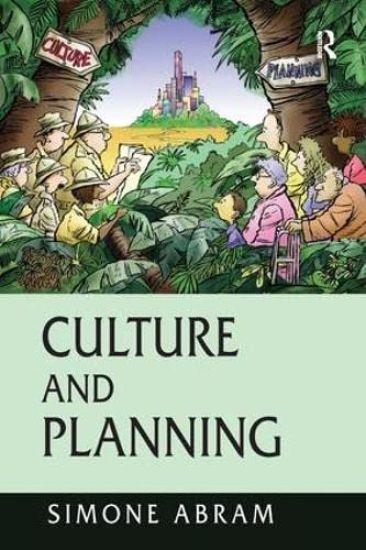
In planning debates, culture is often treated as a fixed element, either as a quasi-economic resource or as a category of behaviour. Yet a wealth of research and analysis is available that moves the spotlight from the question of what culture is, towards understanding what we are doing when we talk about culture. This book brings that focus to planning research, examining culture as a socio-historical concept, and introducing a line of scholarship, both established and recent, to show what 'culture' does and why. Illustrated by case studies from planning contexts, it addresses the materialisation of abstract concepts, performance and embodiment, and social categorisation. In doing so, it shows how a deeper understanding of culture can offer new insights into the challenges that planners and planning theorists face. While Culture and Planning is aimed primarily at planning theorists, professionals and students, it has equal relevance for students of human geography or sociology and is accessible to a wider readership. In effect, it opens up the field of planning to a new realm of research, enabling readers to think beyond the bounds of what they know about planning, and to think about what they may, or may not, know about culture.
Culture and Planning

Culture and Planning

Simone Abram

Ashgate Publishing Limited
2011
sidottu
In planning debates, culture is often treated as a fixed element, either as a quasi-economic resource or as a category of behaviour. Yet a wealth of research and analysis is available that moves the spotlight from the question of what culture is, towards understanding what we are doing when we talk about culture. This book brings that focus to planning research, examining culture as a socio-historical concept, and introducing a line of scholarship, both established and recent, to show what 'culture' does and why. Illustrated by case studies from planning contexts, it addresses the materialisation of abstract concepts, performance and embodiment, and social categorisation. In doing so, it shows how a deeper understanding of culture can offer new insights into the challenges that planners and planning theorists face. While Culture and Planning is aimed primarily at planning theorists, professionals and students, it has equal relevance for students of human geography or sociology and is accessible to a wider readership. In effect, it opens up the field of planning to a new realm of research, enabling readers to think beyond the bounds of what they know about planning, and to think about what they may, or may not, know about culture.
Rationalities of Planning

Rationalities of Planning

Jonathan Murdoch; Simone Abram

Ashgate Publishing Limited
2002
sidottu
What are the key rationalities that underpin planning policy discourses and how do they 'frame' seemingly irreconcilable conflicts around development and environmental protection? Providing a thorough assessment of these important questions, this stimulating book reviews planning policy in the UK and the rationality of 'sustainable development'. Supported by a wealth of empirical material collected over the past ten years, the study examines the national, regional and local tiers of planning for housing. It analyzes whether the rationality of planning for 'sustainable development' allows a new spatial sensibility to inform planning policy, and whether it still responds to the social demands that were previously incorporated within the developmental method. The overriding concern, which the authors respond to and expand upon, is whether planning for sustainable development can provide a satisfactory basis upon which to re-establish contemporary planning.