

Kirjailija
Sinclair Lewis
Kirjat ja teokset yhdessä paikassa: 346 kirjaa, julkaisuja vuosilta 1905–2026, suosituimpiin kuuluu Main Street. Vertaile teosten hintoja ja tarkista saatavuus suomalaisista kirjakaupoista.
346 kirjaa
Kirjojen julkaisuvuodet: 1905–2026.


Sinclair Lewis, the celebrated author of "Main Street" and "Babbitt," turns his keen eye to the world of women and work in "The Job: An American Novel." This compelling story explores the challenges and triumphs of women navigating the white-collar workforce and striving for social mobility in a rapidly changing America. Published during a pivotal era, "The Job" offers a fascinating glimpse into the lives of women pursuing careers and grappling with issues of feminism and independence. Lewis masterfully portrays the obstacles they faced, both personal and professional, as they sought to define their own paths. This meticulously prepared edition invites readers to rediscover a powerful narrative that continues to resonate today. Explore themes of ambition, perseverance, and the pursuit of a meaningful life in this thought-provoking literary work. "The Job" is a timeless exploration of the complexities of career, identity, and the enduring quest for equality. This work has been selected by scholars as being culturally important, and is part of the knowledge base of civilization as we know it. This work is in the public domain in the United States of America, and possibly other nations. Within the United States, you may freely copy and distribute this work, as no entity (individual or corporate) has a copyright on the body of the work. Scholars believe, and we concur, that this work is important enough to be preserved, reproduced, and made generally available to the public. We appreciate your support of the preservation process, and thank you for being an important part of keeping this knowledge alive and relevant.
M. Wrenn, comptable, de nature timide et effac e, r ve de voyage. Il vient d'avoir une rentr e d'argent, suite la vente d'une propri t h rit e de son p re. Son r ve va enfin se r aliser. Il s'endurcit, mais reste euphorique dans sa d marche du voyage Libre Libre Et il d couvre l'amiti , deux personnalit s se dessinent en lui: d'un c t Notre sieur Wrenn et de l'autre Bill Wrenn. On nage dans la cocasserie et dans l'absurde mais notre h ros va acqu rir une certaine philosophie de la vie, et monter de degr s en degr s dans sa vie sociale.
Dans la ville de Zenith, au travers du portrait de George F Babbitt, habile agent immobilier, l'auteur d crit avec pr cision, la soci t bourgeoise, capitaliste au temps de la Prohibition aux tats-Unis. Son h ros, mari , p re de trois enfants, chr tien et anti-socialiste se d livre un certificat d'auto-satisfaction, puis tombe dans l'amertume d'une vie inutile, pour revenir finalement dans le giron de tous ses concitoyens, arrivistes comme lui.
d'un amoureux dans le style pince sans rire de l'auteur. Son p re ayant grand besoin de vacances, Claire Boltwood part avec lui en voyage travers l'Am rique. Claire d cide de se dispenser de chauffeur, et commencent alors les p rip ties de ce voyage au cours duquel, au premier incident, elle obtient du secours de Milt Daggett, un jeune homme qui s' prend d'elle, et les suit, pour se trouver toujours l au bon moment. Bien que d'une famille ais , il n'est pas du m me milieu que Claire, et il entreprend son ducation pour tre digne d'elle...
Ann Vickers proclame: Je veux tre quelque chose qui agisse sur les hommes... je ne sais pas encore quoi. Lewis aborde, tout au long du parcours de vie d'Ann, les buts de l'existence et les id es de l' poque sur la place de la femme dans la soci t travail, famille, contr le des naissances, etc. Ann se consacrera plus sp cialement la vie des prisonni res dans les prisons am ricaines. Apr s maintes p rip ties, trouvera-t-elle enfin la s r nit aupr s de l'homme qu'elle aime ?
George F. Babbitt is described as a middle-aged man and successful realtor, who sells houses at rates that exceed what people are actually able to pay for them. Lewis explains Babbitt's morning routine with meticulous detail, down to his high-tech alarm clock, which he views as a marker of social status. He is proud of his house in Floral Heights, as it is standardized from the architecture to the atmosphere, which appeals greatly to Babbitt. The first seven chapters of the book follow Babbitt over the course of a single day, examining how he dresses with each article of clothing perfectly curated. At work, he spends most of his time and energy on activities with the goal of climbing the social ladder. He closes a deal by forcing a poor businessman to buy a piece of property at more than twice its value. This gives him a sense of pride, as he pockets his earnings, feeling that he has done a good job. He picks up the phone to call his best friend, Paul Riesling, to ask him to lunch. Paul is a talented musician and should have been a violinist but has gone into the tar-roofing business in order to provide for his wife, Zilla. She is always stirring up trouble, antagonizing men she believes to be below her social status, and then enlisting Paul to come to her rescue to fight them like a man. At home, she demeans him, accusing him of being a coward and a weakling. Babbitt is saddened observing the relationship between his friend and his wife, so much so that he suggests the two of them take a vacation to Maine, away from their wives. Paul is skeptical, but Babbitt uses his powers of persuasion, assuring Paul that he will arrange the whole thing. Back at the office, Babbitt refuses a raise to one of his employees. He then goes home to his wife, and the two decide to throw a flamboyant dinner party, which is a resounding success. All of Babbitt's friends are just like him, and together they stuff themselves on rich food and get drunk on Prohibition-era gin, before going home to nurse their hangovers. Babbitt and his wife stop by to visit Paul and Zilla, who immediately starts berating her husband. This leads Babbitt to tell her that she is a nagging and terrible wife to Paul, and he insists that she allow him to go to Maine. Zilla consents. Myra, Babbitt's wife, accuses him of bullying Zilla, and he tells her to mind her own business. Paul and Babbitt head off on their journey to Maine by train, where they are surrounded by other like-minded businessmen who express their concerns about the price of motorcars and oil and the growing threat of communism. After returning to Zenith, Babbitt is invited to speak at a real estate conference in the neighboring town of Monarch. In the speech, he proclaims that real estate agents should be looked upon as professionals and referred to as realtors. He also states that Zenith is the best place in the world, quoting various statistics to back up this claim. His speech is a resounding success and he is immediately recognized as an orator. He later takes a business trip to Chicago, where he sees Paul having dinner with a beautiful middle-aged woman. He later confronts his friend about what he has seen, and Paul confesses that he can no longer stand to live with Zilla. Babbitt promises to keep his friend's secret; he is secretly envious of his newfound independence. One day, he is at the office when he receives a call from his wife telling him that Paul has shot his wife and that Zilla is in the hospital and Paul is in prison. Babbitt feels that his world is collapsing around him, triggering him to go off the rails, adopting a more bohemian and free-spirited way of living. His faith in the almighty dollar has been demolished, and in its place, he has a newfound respect for the importance of living a life of freedom and integrity.

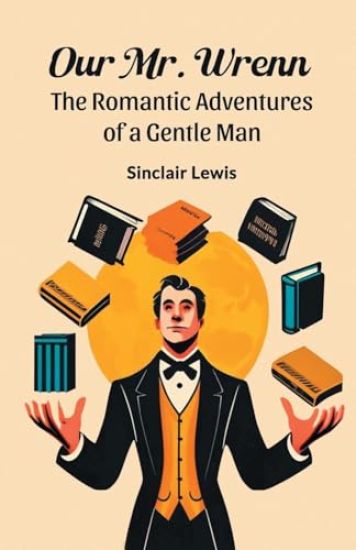
Our Mr. WrennThe Romantic Adventures of a Gentle Man (Edition2024)
Sinclair Lewis
Double 9 Books LLP
2024
nidottu
"Our Mr. Wrenn: The Romantic Adventures of a Gentle Man" by Sinclair Lewis follows the life of Mr. Wrenn, a mild-mannered and unassuming gentleman who embarks on a series of romantic adventures that lead to significant personal growth and self-discovery. The novel serves as a character study that delves into Mr. Wrenn's journey from a simple, conformist life to one filled with romanticism and individualism. Set against the backdrop of urban life and American society, the story provides a sharp social satire of the societal expectations and norms of the early 20th century. Through Mr. Wrenn's experiences, Lewis offers a social critique that explores the tension between personal desires and societal pressures. The narrative is infused with humor and romantic adventures, portraying Mr. Wrenn's search for love and meaningful relationships. As he navigates various challenges and experiences, the novel highlights his internal identity crisis and the broader implications of social expectations on personal fulfillment. Overall, "Our Mr. Wrenn" presents a thought-provoking and entertaining exploration of how a gentleman's quest for romance and self-realization intersects with the complexities of modern life and societal norms.
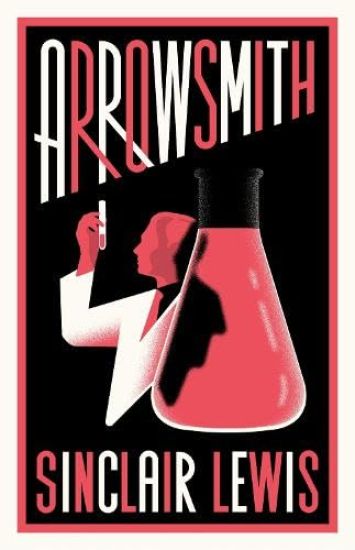
Martin Arrowsmith, a young medical student at the University of Winnemac, is driven by a sincere passion and a desire to make a positive contribution to the world. But events get in the way, and a series of personal vicissitudes, love interests and societal pressures threaten to lead him away from the path of pure science - until he is forced, in the face of a humanitarian crisis, to decide between scientific rigour and compassion, between maintaining his medical principles and saving lives. First published in 1925 to great critical acclaim, Arrowsmith is the third major novel by Sinclair Lewis, author of Main Street and Babbitt, and arguably his most ambitious work. Awarded the Pulitzer Prize for Fiction in 1926 - which the author famously declined - it contributed to Lewis's growing reputation as a master storyteller, social commentator and the unsurpassed satirist of his time.