Kirjojen hintavertailu – 12 903 725 kirjaa ja 27 kauppaa

Kirjailija

Sindiso Mnisi Weeks

Kirjat ja teokset yhdessä paikassa: 3 kirjaa, julkaisuja vuosilta 2017–2023, suosituimpiin kuuluu The Rule of Law in South Africa. Vertaile teosten hintoja ja tarkista saatavuus suomalaisista kirjakaupoista.

3 kirjaa

Kirjojen julkaisuvuodet: 2017–2023.

The Rule of Law in South Africa

The Rule of Law in South Africa

Heinz Klug; Sanele Sibanda; Sindiso Mnisi Weeks

BLOOMSBURY PUBLISHING PLC
2023
sidottu
This book explores and relates the contentious history of law in the geographic and socio-political space that becomes South Africa, with the contested conceptions of the rule of law reflected in the practice and academic analysis of law in South Africa in the past and present. The rule of law and its relationship to the legacies of colonial-apartheid is central to the continuing political and social conflict in post-apartheid South Africa. This is a history of contestation over the idea and use of law by official institutions and the multitude of social movements, political organisations, and communities who have turned to law to defend against abuse of power or to challenge authority and assert claims. These claims have been based in both official and unofficial law and have been asserted in the name of tradition, human rights, and/or international law. The book addresses the rule of law under colonialism and apartheid, during the democratic transition, and under South Africa’s existing constitutional order. It also considers extra-legal influences on the rule of law, such as the political economy of the country, and delves into the lived experience of the rule of law in a society where legal pluralism shapes the lives of large portions of the population.
Access to Justice and Human Security

Access to Justice and Human Security

Sindiso Mnisi Weeks

Routledge
2019
nidottu
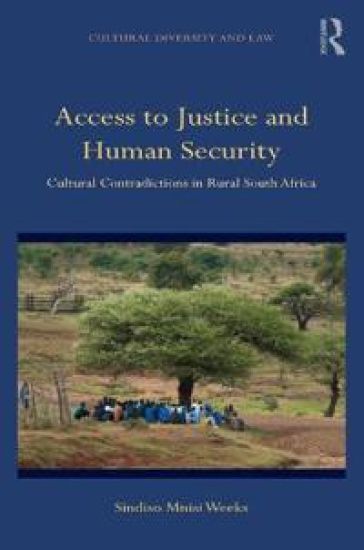
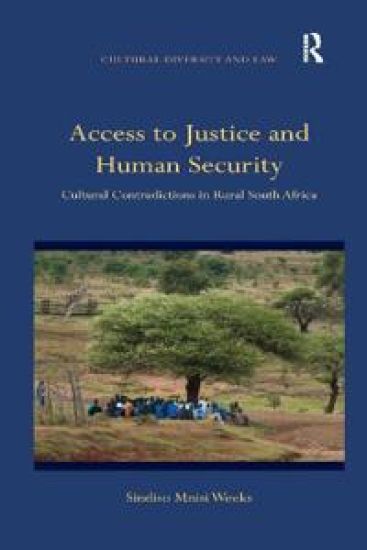
For most people in rural South Africa, traditional justice mechanisms provide the only feasible means of accessing any form of justice. These mechanisms are popularly associated with restorative justice, reconciliation and harmony in rural communities. Yet, this ethnographic study grounded in the political economy of rural South Africa reveals how historical conditions and contemporary pressures have strained these mechanisms’ ability to deliver the high normative ideals with which they are notionally linked. In places such as Msinga access to justice is made especially precarious by the reality that human insecurity – a composite of physical, social and material insecurity – is high for both ordinary people and the authorities who staff local justice forums; cooperation is low between traditional justice mechanisms and the criminal and social justice mechanisms the state is meant to provide; and competition from purportedly more effective ‘twilight institutions’, like vigilante associations, is rife. Further contradictions are presented by profoundly gendered social relations premised on delicate social trust that is closely monitored by one’s community and enforced through self-help measures like witchcraft accusations in a context in which violence is, culturally and practically, a highly plausible strategy for dispute management. These contextual considerations compel us to ask what justice we can reasonably speak of access to in such an insecure context and what solutions are viable under such volatile human conditions? The book concludes with a vision for access to justice in rural South Africa that takes seriously ordinary people’s circumstances and traditional authorities’ lived experiences as documented in this detailed study. The author proposes a cooperative governance model that would maximise the resources and capacity of both traditional and state justice apparatus for delivering the legal and social justice – namely, peace and protect
Access to Justice and Human Security

Access to Justice and Human Security

Sindiso Mnisi Weeks

Routledge
2017
sidottu
For most people in rural South Africa, traditional justice mechanisms provide the only feasible means of accessing any form of justice. These mechanisms are popularly associated with restorative justice, reconciliation and harmony in rural communities. Yet, this ethnographic study grounded in the political economy of rural South Africa reveals how historical conditions and contemporary pressures have strained these mechanisms’ ability to deliver the high normative ideals with which they are notionally linked. In places such as Msinga access to justice is made especially precarious by the reality that human insecurity – a composite of physical, social and material insecurity – is high for both ordinary people and the authorities who staff local justice forums; cooperation is low between traditional justice mechanisms and the criminal and social justice mechanisms the state is meant to provide; and competition from purportedly more effective ‘twilight institutions’, like vigilante associations, is rife. Further contradictions are presented by profoundly gendered social relations premised on delicate social trust that is closely monitored by one’s community and enforced through self-help measures like witchcraft accusations in a context in which violence is, culturally and practically, a highly plausible strategy for dispute management. These contextual considerations compel us to ask what justice we can reasonably speak of access to in such an insecure context and what solutions are viable under such volatile human conditions? The book concludes with a vision for access to justice in rural South Africa that takes seriously ordinary people’s circumstances and traditional authorities’ lived experiences as documented in this detailed study. The author proposes a cooperative governance model that would maximise the resources and capacity of both traditional and state justice apparatus for delivering the legal and social justice – namely, peace and protection from violence as well as mitigation of poverty and destitution – that rural people genuinely need.