
Kirjojen hintavertailu – 12 903 725 kirjaa ja 27 kauppaa

Kirjailija

Sirkku Juhola

Kirjat ja teokset yhdessä paikassa: 3 kirjaa, julkaisuja vuosilta 2021–2025, suosituimpiin kuuluu Justice for Resilient Development in Climate-Stressed Cities. Vertaile teosten hintoja ja tarkista saatavuus suomalaisista kirjakaupoista.

3 kirjaa

Kirjojen julkaisuvuodet: 2021–2025.

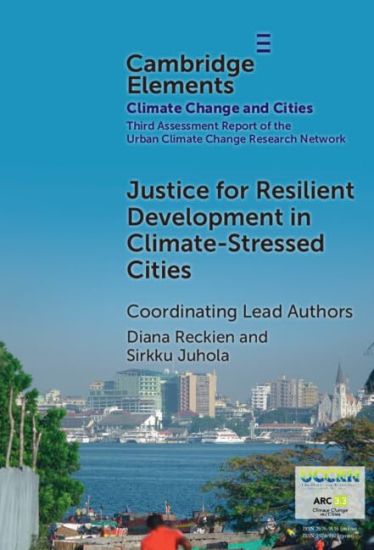
Justice for Resilient Development in Climate-Stressed Cities

Justice for Resilient Development in Climate-Stressed Cities

Diana Reckien; Sirkku Juhola; Anika Nasra Haque; Heba Allah Khalil; Maria Fernanda Lemos; Shuaib Lwasa; Leila Niamir; Juan Camilo Osorio; Cristina Visconti

Cambridge University Press
2025
sidottu
Climate impacts and risk, within and across cities, are distributed highly unequally. Cities located in low latitudes are more vulnerable to climate risk and impacts than in high latitudes, due to the large proportion of informal settlements relative to the housing stock and more frequent extremes. According to EM-DAT, about 60% of environmental disasters in cities relate to riverine floods. Riverine floods and heatwaves cause about 33% of deaths in cities. However, cold-waves and droughts impact most people in cities (42% and 39% of all people, respectively). Human vulnerability intersects with hazardous, underserved communities. Frequently affected groups include women, single parents, and low-income elderly. Responses to climatic events are conditioned by the informality of social fabric and institutions, and by inequitable distribution of impacts, decision-making, and outcomes. To ensure climate-resilient development, adaptation and mitigation actions must include the broader urban context of informality and equity and justice principles. This title is also available as open access on Cambridge Core.
Justice for Resilient Development in Climate-Stressed Cities

Justice for Resilient Development in Climate-Stressed Cities

Diana Reckien; Sirkku Juhola; Anika Nasra Haque; Heba Allah Khalil; Maria Fernanda Lemos; Shuaib Lwasa; Leila Niamir; Juan Camilo Osorio; Cristina Visconti

Cambridge University Press
2025
pokkari
Climate impacts and risk, within and across cities, are distributed highly unequally. Cities located in low latitudes are more vulnerable to climate risk and impacts than in high latitudes, due to the large proportion of informal settlements relative to the housing stock and more frequent extremes. According to EM-DAT, about 60% of environmental disasters in cities relate to riverine floods. Riverine floods and heatwaves cause about 33% of deaths in cities. However, cold-waves and droughts impact most people in cities (42% and 39% of all people, respectively). Human vulnerability intersects with hazardous, underserved communities. Frequently affected groups include women, single parents, and low-income elderly. Responses to climatic events are conditioned by the informality of social fabric and institutions, and by inequitable distribution of impacts, decision-making, and outcomes. To ensure climate-resilient development, adaptation and mitigation actions must include the broader urban context of informality and equity and justice principles. This title is also available as open access on Cambridge Core.
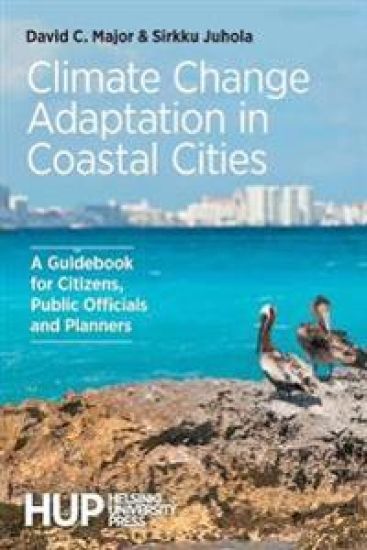
Climate Change Adaptation in Coastal Cities

Climate Change Adaptation in Coastal Cities

David C Major; Sirkku Juhola

Helsinki University Press
2021
pokkari
This guidebook presents a framework for climate adaptation planning for coastal cities, large and small, focused on the central roles of citizens, public officials, and planners. The book is designed to help all stakeholders in coastal cities understand and develop effective adaptation measures in a sustainable way. Within a framework of eight key planning steps, guidance is provided for stakeholders in the adaptation process from initial assessments of climate impacts to final planning. The work sets out general principles and methods of adaptation to climate change for many types of coastal communities. Adaptation is seen throughout the work as a process that should take into account all coastal assets, including economic, environmental, social, cultural and historical assets, with due attention to disadvantaged communities. Among the adaptation elements covered in the book are: a review of the current climate situation; climate impacts and vulnerabilities; climate models and future scenarios; physical, economic, social and other characteristics of coastal cities and towns; the range of available adaptations, including management, infrastructure, and policy adaptations; evaluation of projects and programs; and working together to develop and finance adaptations. Numerous tables are presented to help organize information and guide planning, and examples of adaptation challenges and opportunities are provided from both developed and developing coastal cities and towns. The volume is copiously illustrated, with extensive up-to-date references to provide the reader with additional sources of information.