Kirjojen hintavertailu – 12 859 826 kirjaa ja 27 kauppaa

Kirjailija

Siwage Dharma Negara

Kirjat ja teokset yhdessä paikassa: 6 kirjaa, julkaisuja vuosilta 2018–2025, suosituimpiin kuuluu Batam After Covid. Vertaile teosten hintoja ja tarkista saatavuus suomalaisista kirjakaupoista.

6 kirjaa

Kirjojen julkaisuvuodet: 2018–2025.

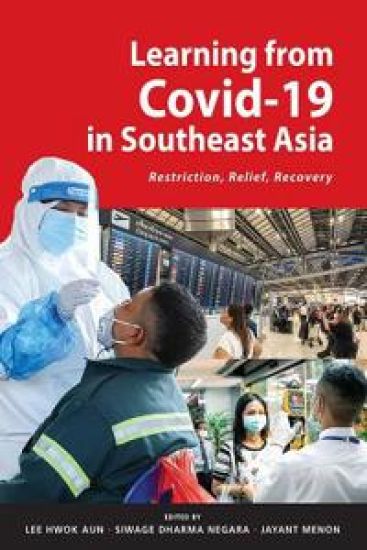
Learning from Covid-19 in Southeast Asia: Restriction, Relief, Recovery

Learning from Covid-19 in Southeast Asia: Restriction, Relief, Recovery

Lee Hwok Aun; Siwage Dharma Negara; Jayant Menon

ISEAS
2025
nidottu
The Covid-19 pandemic was unprecedented in its impact and repercussions which are still being felt today. The Southeast Asian region is no exception with the loss of hundreds of thousands of lives, economic contraction, and increased poverty. The impact varied across the region. Some countries were more effective than others at implementing lockdowns and delivering public health interventions. Pandemic responses were also differentiated by the efficacy of communication, policy coordination, and leadership. Policy evaluations have highlighted the need to improve institutional capacity as well as global and regional cooperation to respond to future public health crises. This timely and crucial volume, authored by leading regional scholars, thoroughly explores these issues and more. It is indispensable reading for anyone interested in Southeast Asia and broader international development challenges.
Financial Technology Adoption in Greater Jakarta

Financial Technology Adoption in Greater Jakarta

Astrid Meilasari-Sugiana; Siwage Dharma Negara; Hui Yew-Foong

ISEAS
2023
nidottu
This article reports the findings of an online survey conducted in November–December 2021 on Indonesians' experience and perception of fintech tools, focusing on fintech adoption in the Greater Jakarta region, which besides Jakarta, includes Bogor, Depok, Tangerang and Bekasi. One key finding is that, in the Greater Jakarta region, socio-economic status as measured by income is not a key determinant of fintech adoption. This is likely due to the more developed and mature ICT infrastructure in the Greater Jakarta region, which makes fintech tools readily accessible. However, the kinds of fintech tools that are more likely to be used—M-banking, E-wallet, Online Lending, Investment, Donations, and so on—are influenced by factors such as income, education, gender, age and occupation, suggesting that different fintech tools appeal to different groups in society according to their needs and resources. Psychological factors that are important in the adoption of fintech include having many choices in the needed financial services and feeling in control. While fintech users are concerned about data leaks and fraud, this does not deter them from using fintech. It may be anticipated that with the deepening of ICT infrastructure and public education on the safe use of fintech, fintech usage in Indonesia will continue to spread throughout the country.

The Indonesia National Survey Project 2022

The Indonesia National Survey Project 2022

Burhanuddin Muhtadi; Hui Yew-Foong; Siwage Dharma Negara

ISEAS
2023
nidottu
ISEAS – Yusof Ishak Institute has commissioned a second nationwide survey in Indonesia as a follow-up to the first similar project in 2017 called the Indonesia National Survey Project (INSP). Its broad aim is to enhance understanding of political, economic, and social developments in Indonesia. Its key findings are as follows:The approval rating of President Joko Widodo hovers around 71.8 per cent, at least before the September 2022 announcement on the fuel subsidy cut. His major infrastructure push as his flagship development programme still garners the most positive assessment. However, poverty, unemployment and cost of living remain key flashpoints that the government should be concerned with.
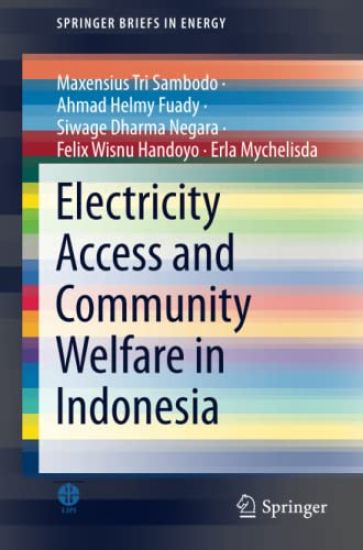
Electricity Access and Community Welfare in Indonesia

Electricity Access and Community Welfare in Indonesia

Maxensius Tri Sambodo; Ahmad Helmy Fuady; Siwage Dharma Negara; Felix Wisnu Handoyo; Erla Mychelisda

SPRINGER VERLAG, SINGAPORE
2021
nidottu
This book represents a synthesis of research findings on energy in remote rural areas in East Nusa Tenggara in Indonesia, demarcating a localised understanding of electricity issues that are relevant to similar community profiles in other developing countries, which are facing similar challenges. The authors discuss several key issues relating to electricity access in the Indonesian context, such as government energy expenditure and policies for geothermal development. The book also presents empirical estimates of the social effects of electricity access. In focusing on an underdeveloped area in eastern Indonesia affected by innumerable problems relating to poverty, the book contributes to related discussions on the first Sustainable Development Goal in proposing possibilities for poverty reduction vis-à-vis improved energy infrastructure. It demonstrates the impact of electricity access on people's welfare. Co-published with the Indonesia Institute of Science (LIPI), this updated edition is a valuable reference for policymakers and scholars interested in the electricity sector in Indonesia and rural areas in developing countries elsewhere. It appeals to specialists researching and working in the energy sector and is also interested in scholars and practitioners focused on sustainable development and Indonesian policymaking more broadly.
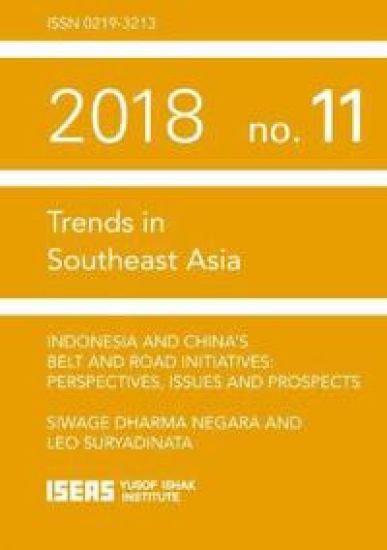
Indonesia and China’s Belt and Road Initiatives

Indonesia and China’s Belt and Road Initiatives

Siwage Dharma Negara; Leo Suryadinata

ISEAS
2018
nidottu
For Indonesia, which is keen to accelerate its infrastructure development, Belt and Road Initiative (BRI) is seen as an opportunity to tap into China’s huge financial resources and technological capability. There has however been no concrete BRI project agreed to between China and Indonesia so far. While China considers all projects, including infrastructure projects and economic interactions as part of BRI, Indonesia only considers those infrastructure projects initiated during the Xi Jinping period as BRI projects. Indonesia has offered several broad areas for cooperation under the BRI framework and carefully selected project locations to minimize political risk for the Joko Widodo government. But no agreements have been signed yet as China requires detailed project proposals from Indonesia, which it has apparently not received. What appears to hamper progress are four key issues: the perception of China’s economic domination, the ethnic Chinese issue, the Natuna issue, and the mainland Chinese workers issue.