Kirjojen hintavertailu – 12 859 818 kirjaa ja 27 kauppaa

Kirjailija

Slavko Splichal

Kirjat ja teokset yhdessä paikassa: 11 kirjaa, julkaisuja vuosilta 1994–2025, suosituimpiin kuuluu Principles of Publicity and Press Freedom. Vertaile teosten hintoja ja tarkista saatavuus suomalaisista kirjakaupoista.

11 kirjaa

Kirjojen julkaisuvuodet: 1994–2025.

The Gig Public

The Gig Public

Slavko Splichal

ANTHEM PRESS
2025
nidottu

Halvin toimitettuna 38,60 €

This monograph explores the evolving nature of publicness in the era of digital communication and social media saturation, arguing that the rise of the “gig public” represents a new paradigm that challenges the traditional conceptualization of the public in shaping social and political change. The gig public departs from traditional notions of publicness and the public, characterized by individuals’ spontaneous and less-structured engagement in public discourse. This engagement is often hampered by challenges in fostering sustained interaction and depth of discussion, due to the ephemeral nature of online interactions. In particular, this monograph highlights the importance of customs, negotiations, and contracts that complement the normatively privileged public reasoning in public domains. It examines the transformations in the multifaceted nature of the public and its interrelationship with other social structures amid the shifting boundaries between public and private domains. In addition, it explores the evolution of conceptualizations of publicness and related concepts within critical theory, illustrating how contemporary shifts are redefining civic engagement and the essence of public life in a rapidly changing world. From these perspectives, the study is structured around three primary focal points: First, it analyzes how new information technologies and AI have altered human interactions within the public sphere. Second, it examines the impact of capitalist economic dynamics and governmentality strategies on reshaping the public realm, fundamentally altering the essence of the public and its democratic potential. Third, it explores how habitual and routine practices traditionally associated with the private sphere are now influencing the ongoing evolution of publicness. The monograph aims to provide a comprehensive analysis of the challenges posed by the fragmentation of contemporary public discourse and the emergence of gig publics. It also considers strategies to invigorate publicness through AI technology that enables users to transform plain language into automated actions on their computers, potentially reshaping civic engagement in the digital age.

The Gig Public

The Gig Public

Slavko Splichal

ANTHEM PRESS
2025
sidottu
This monograph explores the evolving nature of publicness in the era of digital communication and social media saturation, arguing that the rise of the “gig public” represents a new paradigm that challenges the traditional conceptualization of the public in shaping social and political change. The gig public departs from traditional notions of publicness and the public, characterized by individuals’ spontaneous and less-structured engagement in public discourse. This engagement is often hampered by challenges in fostering sustained interaction and depth of discussion, due to the ephemeral nature of online interactions. In particular, this monograph highlights the importance of customs, negotiations, and contracts that complement the normatively privileged public reasoning in public domains. It examines the transformations in the multifaceted nature of the public and its interrelationship with other social structures amid the shifting boundaries between public and private domains. In addition, it explores the evolution of conceptualizations of publicness and related concepts within critical theory, illustrating how contemporary shifts are redefining civic engagement and the essence of public life in a rapidly changing world. From these perspectives, the study is structured around three primary focal points: First, it analyzes how new information technologies and AI have altered human interactions within the public sphere. Second, it examines the impact of capitalist economic dynamics and governmentality strategies on reshaping the public realm, fundamentally altering the essence of the public and its democratic potential. Third, it explores how habitual and routine practices traditionally associated with the private sphere are now influencing the ongoing evolution of publicness. The monograph aims to provide a comprehensive analysis of the challenges posed by the fragmentation of contemporary public discourse and the emergence of gig publics. It also considers strategies to invigorate publicness through AI technology that enables users to transform plain language into automated actions on their computers, potentially reshaping civic engagement in the digital age.

Datafication of Public Opinion and the Public Sphere
The book, anchored in stimulating debates about the Enlightenment ideas of publicness, analyses historical changes in the core phenomena of publicness: possibilities, conditions and obstacles to developing a public sphere in which the public reflexively creates, articulates and expresses public opinion. It is focused on the historical transformation from “public use of reason” through the identification of “public opinion” in opinion polls to contemporary opinion mining, in which the Enlightenment idea of public expression of opinion has been displaced by the technology of extracting opinions. It heralds a new critical impetus in theory and research of publicness at a time when critical social thought is sharply criticising and even abandoning the notion of the public sphere, much like the notion of public opinion decades ago, due to its predominantly administrative use.
Media Beyond Socialism

Media Beyond Socialism

Slavko Splichal

Routledge
2020
nidottu
Media Beyond Socialism treats the changing relationships among media, state, economy, and civil society in the current period of transition in East Europe from socialism to the establishment of Western-type democracies. Analyzing the relevance of mass communication and particularly of the media in the democratization process, the book addresses suc
Media Beyond Socialism

Media Beyond Socialism

Slavko Splichal

Routledge
2018
sidottu
Media Beyond Socialism treats the changing relationships among media, state, economy, and civil society in the current period of transition in East Europe from socialism to the establishment of Western-type democracies. Analyzing the relevance of mass communication and particularly of the media in the democratization process, the book addresses such issues as the problems of civil society, the principles of power and profit maximization in the communication sphere, the role the media have played in the "velvet revolution," and concerns surrounding East Europe's new "information age." First offering a fundamental theoretical discussion, Splichal goes on to share empirical data documenting the changes in the East-Central European print and broadcast media in terms of ownership, political control, the role of the media, and journalism practices as well as paradoxes stemming from the economic and political restructuring of the former socialist societies. He closely examines the claim that the media have taken a radical departure from their previous activities in East-Central Europe and challenges the notion that authoritarian control of the media has been buried in the transition to democracy. Indeed, Splichal asserts that the media are in the process of mimicking the Western design and are often placed under the control of paternalism, commercialism, and nationalism.
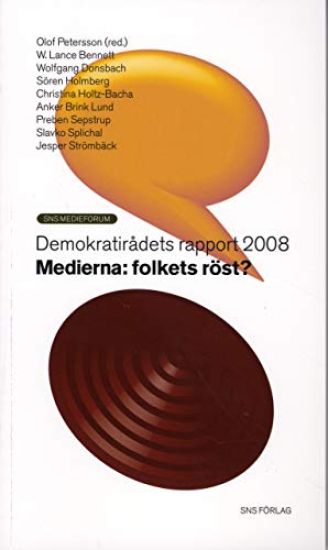
Medierna : folkets röst?

Medierna : folkets röst?

Lance Bennett.W; Anker Lund Brink; Wolfgang Donsbach; Sören Holmberg; Christina Holtz-Bacha; Preben Sepstrup; Slavko Splichal; Jesper Strömbäck; Olof Petersson

SNS Förlag
2008
nidottu
Årets rapport från SNS Demokratiråd analyserar hur dagens medier använder valprognoser och andra typer av opinionsundersökningar. Frågan är om medierna har blivit folkets främsta företrädare. Boken diskuterar opinionsmätningarnas betydelse och tar upp frågan om det behövs något slags reglering. I boken medverkar svenska och internationella forskare inom statskunskap och kommunikationsforskning: Lance Bennett, Anker Brink Lund, Preben Sepstrup, Wolfgang Donsbach, Sören Holmberg, Christina Holtz-Bacha, Slavko Splichal, Jesper Strömbäck och Olof Petersson (redaktör).
Principles of Publicity and Press Freedom

Principles of Publicity and Press Freedom

Slavko Splichal

Rowman Littlefield Publishers
2002
sidottu
This insightful book examines freedom of the press, the social functions of the press, and how the original concept of publicity—as the 'public use of reason,' or citizens' freedom to express and publish opinions—has been reduced to mean the right of media to access and print information. This, the author argues, unfairly gives media more freedom than individuals have and reduces the accountability and service of the press to the public. Splichal's thoughtful work includes discussions of the media-relevant theories and works of Jeremy Bentham, Immanuel Kant, Karl Marx, and John Stuart Mill, among many others.
Principles of Publicity and Press Freedom

Principles of Publicity and Press Freedom

Slavko Splichal

Rowman Littlefield Publishers
2002
nidottu
This insightful book examines freedom of the press, the social functions of the press, and how the original concept of publicity—as the 'public use of reason,' or citizens' freedom to express and publish opinions—has been reduced to mean the right of media to access and print information. This, the author argues, unfairly gives media more freedom than individuals have and reduces the accountability and service of the press to the public. Splichal's thoughtful work includes discussions of the media-relevant theories and works of Jeremy Bentham, Immanuel Kant, Karl Marx, and John Stuart Mill, among many others.
Public Opinion

Public Opinion

Slavko Splichal

Rowman Littlefield
1999
nidottu
This major work surveys the historical roots, theoretical foundations, and normative claims of 20th-century conceptualizations of public opinion. It reanalyzes leading traditions, such as those of Lippmann, Dewey, and Noelle-Neumann, and reinvents some unjustly ignored ones, such as Toennies, Harrisson, and Wilson. The book critically examines popular modern research strategies such as polling and the Ospiral of silenceO model and looks at the role of mass media in the formation and expression of public opinion. This comprehensive and original treatment is a must for all serious students and scholars of public opinion.
Journalists for the 21st Century

Journalists for the 21st Century

Slavko Splichal; Colin Sparks

Praeger Publishers Inc
1994
nidottu
This book reports the results of a comparative survey of journalism students in university-level institutions in 22 countries of the major world regions. The survey and analysis are guided by a critical discussion of concepts of journalistic professionalism and the role played by education and training in developing such ideas. The book explores the origins and motivations of students, and the ambitions they have as future journalists. The students had three different concepts of the role of the press: the enlightenment model in which the prime functions is to educate and inform; the power model, ensuring the views of socially powerful groups are publicized; and the entertainment model, which provides the audience with distractions. With a strong desire for professional status, they believe that the form of media ownership dominant in their own society is a major threat to press freedom.
Journalists for the 21st Century

Journalists for the 21st Century

Slavko Splichal; Colin Sparks

Praeger Publishers Inc
1994
sidottu
This book reports the results of a comparative survey of journalism students in university-level institutions in 22 countries of the major world regions. The survey and analysis are guided by a critical discussion of concepts of journalistic professionalism and the role played by education and training in developing such ideas. The book explores the origins and motivations of students, and the ambitions they have as future journalists. The students had three different concepts of the role of the press: the enlightenment model in which the prime functions is to educate and inform; the power model, ensuring the views of socially powerful groups are publicized; and the entertainment model, which provides the audience with distractions. With a strong desire for professional status, they believe that the form of media ownership dominant in their own society is a major threat to press freedom.