Kirjojen hintavertailu – 12 859 818 kirjaa ja 27 kauppaa

Kirjailija

Slavomír Michálek

Kirjat ja teokset yhdessä paikassa: 7 kirjaa, julkaisuja vuosilta 2019–2025, suosituimpiin kuuluu Nazi Germany and the Role of the US in the Fate of Czechoslovak Monetary Gold. Vertaile teosten hintoja ja tarkista saatavuus suomalaisista kirjakaupoista.

Nimi esiintyy myös muodoissa: Slavomir Michalek

7 kirjaa

Kirjojen julkaisuvuodet: 2019–2025.

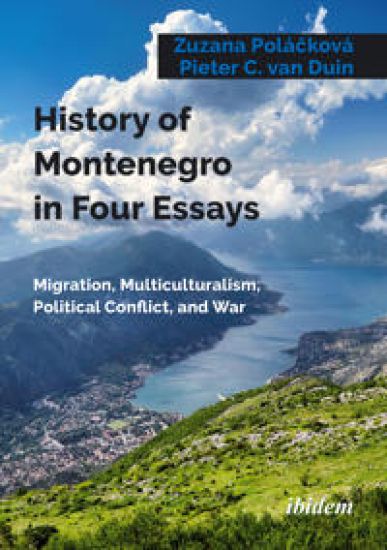
History of Montenegro in Four Essays

History of Montenegro in Four Essays

Zuzana Polácková; Pieter Duin; Slavomir Michalek

ibidem-Verlag, Jessica Haunschild u Christian Schon
2025
nidottu
This scholarly work on Montenegro’s history and its social, political, and cultural traditions eschews a conventional chronological framework, where each chapter might delineate a distinct historical era. Instead, the authors adopt a thematic lens, delving into four pivotal themes that span an extended timeline. Montenegro’s political and cultural development was intricately tied to migration flows and the emergence of broader multicultural dynamics across the western Balkans. Orthodox, Catholic, and Islamic communities, though often in contention, coexisted as integral groups within the region. Consequently, political and military strife, multicultural intricacies, and migration patterns emerged as the primary forces shaping the histories of both the western Balkans and Montenegro itself. Over the eighteenth, nineteenth, and twentieth centuries, the prospect of harmonious interreligious and interethnic coexistence steadily eroded, with Muslim Slavs and Albanians frequently targeted by the dominant Montenegrin faction. Montenegro charted its own distinct course toward modernity, unfolding at its own deliberate pace. Yet, with the restoration of independence in the early twenty-first century, the nation seized an opportunity to evolve its earlier, incomplete modernity into a more liberal form, paving the way for integration into the European fold.
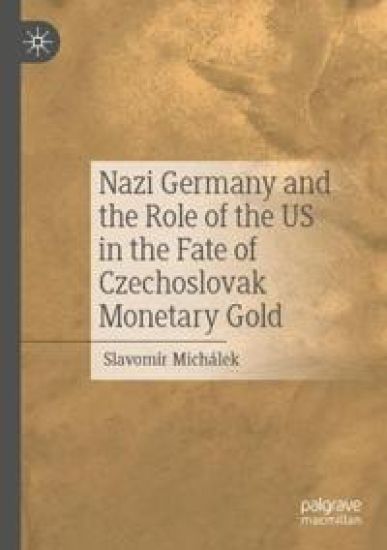
Nazi Germany and the Role of the US in the Fate of Czechoslovak Monetary Gold

Nazi Germany and the Role of the US in the Fate of Czechoslovak Monetary Gold

Slavomír Michálek

Springer International Publishing AG
2024
nidottu
This book provides a detailed account of the Czechoslovak-American dispute that arose over monetary gold which was forcibly seized by Nazi Germany in the 1930s. After the Second World War, the Czechoslovak gold was found by the American armed forces in the salt mines in Merkers, Germany. Over the next 37 years, it became a part of complicated Czechoslovak-American relations, international economic trade, and political-ideological disputes and conflicts. Only in February 1982, after extensive diplomatic discussions, was a sufficient portion of the gold returned to the Czechoslovak State Bank in Prague. This book maps the story of this gold, how it was seized, blocked and finally, returned. Tracing the path of the monetary gold from its seizure by Nazi Germany in the 1930s to the last decade of the Cold War, the author outlines the main diplomatic steps taken to resolve the dispute, which framed the shape of bilateral relations between Communist Czechoslovakia and the USA. Offering a new contribution to the hisThis book provides a detailed account of the Czechoslovak-American dispute that arose over monetary gold which was forcibly seized by Nazi Germany in the 1930s. After the Second World War, the Czechoslovak gold was found by the American armed forces in the salt mines in Merkers, Germany. Over the next 37 years, it became a part of complicated Czechoslovak-American relations, international economic trade, and political-ideological disputes and conflicts. Only in February 1982, after extensive diplomatic discussions, was a sufficient portion of the gold returned to the Czechoslovak State Bank in Prague. This book maps the story of this gold, how it was seized, blocked and finally, returned. Tracing the path of the monetary gold from its seizure by Nazi Germany in the 1930s to the last decade of the Cold War, the author outlines the main diplomatic steps taken to resolve the dispute, which framed the shape of bilateral relations between Communist Czechoslovakia and the USA. Offering a new contribution to the history of the Second World War and shedding light on East-West relations during the Cold War period, this book will provide useful reading for those researching modern European history, the Cold War, and international history.
Nazi Germany and the Role of the US in the Fate of Czechoslovak Monetary Gold

Nazi Germany and the Role of the US in the Fate of Czechoslovak Monetary Gold

Slavomír Michálek

Springer International Publishing AG
2023
sidottu
This book provides a detailed account of the Czechoslovak-American dispute that arose over monetary gold which was forcibly seized by Nazi Germany in the 1930s. After the Second World War, the Czechoslovak gold was found by the American armed forces in the salt mines in Merkers, Germany. Over the next 37 years, it became a part of complicated Czechoslovak-American relations, international economic trade, and political-ideological disputes and conflicts. Only in February 1982, after extensive diplomatic discussions, was a sufficient portion of the gold returned to the Czechoslovak State Bank in Prague. This book maps the story of this gold, how it was seized, blocked and finally, returned. Tracing the path of the monetary gold from its seizure by Nazi Germany in the 1930s to the last decade of the Cold War, the author outlines the main diplomatic steps taken to resolve the dispute, which framed the shape of bilateral relations between Communist Czechoslovakia and the USA. Offering a new contribution to the hisThis book provides a detailed account of the Czechoslovak-American dispute that arose over monetary gold which was forcibly seized by Nazi Germany in the 1930s. After the Second World War, the Czechoslovak gold was found by the American armed forces in the salt mines in Merkers, Germany. Over the next 37 years, it became a part of complicated Czechoslovak-American relations, international economic trade, and political-ideological disputes and conflicts. Only in February 1982, after extensive diplomatic discussions, was a sufficient portion of the gold returned to the Czechoslovak State Bank in Prague. This book maps the story of this gold, how it was seized, blocked and finally, returned. Tracing the path of the monetary gold from its seizure by Nazi Germany in the 1930s to the last decade of the Cold War, the author outlines the main diplomatic steps taken to resolve the dispute, which framed the shape of bilateral relations between Communist Czechoslovakia and the USA. Offering a new contribution to the history of the Second World War and shedding light on East-West relations during the Cold War period, this book will provide useful reading for those researching modern European history, the Cold War, and international history.
Milan Rastislav Štefánik and Those Who Followed Him
This book presents seven diplomats, seven Slovaks. Milan Rastislav Štefánik, Štefan Osuský, Vladimír S. Hurban, Vladimír M. Palic, Juraj Slávik, Ivan Krno and Ján Papánek. They were also authors, poets, soldiers, politicians, and international lawyers. They represent a selective and subjective sample of Czecho-Slovak diplomats in the fi rst half of the 20th century. The book is focused not only on them as men, but on their stories as well. Their chronicles provide insight into the era, relationships and situations which shaped their actions. These seven lives were linked by common characteristics such as strong national awareness, the fi ght for democracy and Czecho- Slovak statehood, as well as disgust with Nazi and Communist totalitarianism, and firm Lutheran roots. Modern Slovak history, whether viewed internally or in a Central-European or pan-European contexts, underwent dynamic transformation at the beginning of the 20th century. The entire world began to change and Slovaks were no exception. It is only natural for every nation or state to seek the roots of its national identity. As this identity is embodied by the people and personalities who created it, we perceive the past through their lives. It is a privilege that as a small European nation, Slovaks can say that their dignitaries have succeeded worldwide. It is a great honor that their work can be seen in the Treaty of Trianon, the Declaration of the United Nations, the UN Charter, and everywhere where the voice of freedom and democracy was rising.
Die Slowakei Und Die Europaeische Integration

Die Slowakei Und Die Europaeische Integration

Miroslav Londák; Slavomír Michálek; Peter Weiss

Peter Lang AG
2019
sidottu
Das Buch bringt dem Leser den komplexen und schwierigen Prozess der Ausformung der modernen slowakischen Nation naher, zuerst innerhalb des Ungarischen Koenigreichs und seit 1918 in der Tschechoslowakei. Der Prozess mundete schliesslich in die staatliche Unabhangigkeit der Slowakei am 1.1.1993. Die Autoren legen die AEhnlichkeiten und Unterschiede im Empfinden der gemeinsamen Geschichte der Tschechen und Slowaken dar, einschliesslich der 44 Jahre nach dem Zweiten Weltkrieg, als die Tschechoslowakische Republik infolge des Munchner Abkommens und der spaten Eroeffnung der zweiten Front in die Sphare des Einflusses der von Stalin beherrschten Sowjetunion geriet.
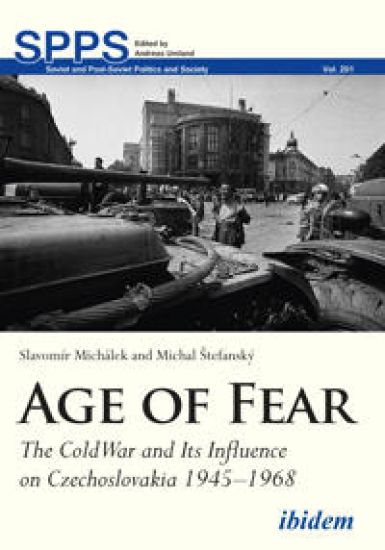
Age of Fear

Age of Fear

Slavomir Michalek; Michal Stefansky

ibidem-Verlag, Jessica Haunschild u Christian Schon
2019
nidottu
Czechoslovakia played an important role within the Soviet bloc, yet its history remains under-researched. This monograph blends historical analysis of the superpowers foreign policies with an assessment of their impact on Czechoslovakia and its position within the Soviet bloc. The book thereby places Czechoslovakia on the map of Cold War history, i.e. the era of mutually assured destruction that lasted almost half a century. It provides a lucid introduction to some milestones in international Cold War history in their relation to Czecho-Slovak history. The books novel contribution is to explain Czechoslovakias domestic situation during the Cold War from the outside. Drawing on extensive source materials of Slovak, Czech, American, and Russian provenance, it provides a more comprehensive understanding of post-war Czecho-Slovak history while also contributing to general knowledge about the nature and impact of the Cold War.