
Kirjojen hintavertailu – 12 859 829 kirjaa ja 27 kauppaa

Kirjailija

Smail Tedjini

Kirjat ja teokset yhdessä paikassa: 2 kirjaa, julkaisuja vuosilta 2016–2018, suosituimpiin kuuluu Chipless RFID based on RF Encoding Particle. Vertaile teosten hintoja ja tarkista saatavuus suomalaisista kirjakaupoista.

2 kirjaa

Kirjojen julkaisuvuodet: 2016–2018.

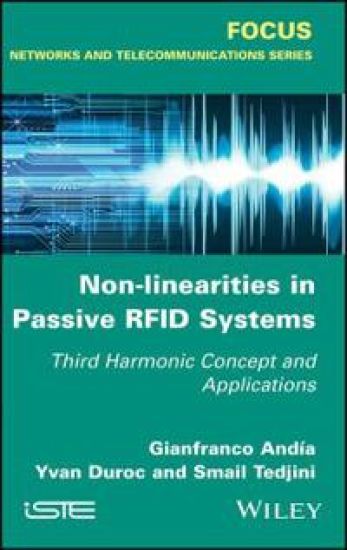
Non-Linearities in Passive RFID Systems

Non-Linearities in Passive RFID Systems

Gianfranco Andia; Yvan Duroc; Smail Tedjini

ISTE Ltd
2018
sidottu
This book concerns a new paradigm in the field of UHF RFID systems: the positive exploitation of nonlinear signals generated by the chips integrated into the RFID tags. After having recalled the main principles in RFID technology and its current challenges notably with the emergence of Internet of Things or the smart connected environments, the purpose is to focus on the presence of nonlinearities produced by the nonlinear circuits of RFID chips: effects, nuisances and solutions but also and especially use of the phenomena. The presentation covers all aspects from the characterization of the nonlinear behavior of RFID tags and the associated platforms (distinguishing conducted and radiated measurement) to the design of new types of tags where nonlinearities are exploited in order to offer new capabilities or enhanced performance.
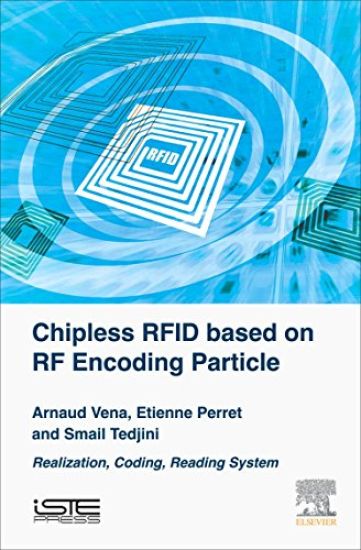
Chipless RFID based on RF Encoding Particle

Chipless RFID based on RF Encoding Particle

Arnaud Vena; Etienne Perret; Smail Tedjini

ISTE Press Ltd - Elsevier Inc
2016
sidottu
Chipless RFID based on RF Encoding Particle: Realization, Coding and Reading System explores the field of chipless identification based on the RF Encoding Particle (REP). The book covers the possibility of collecting information remotely with RF waves (RFID) with totally passive tags without wire, batteries, and chips, and even printed on paper. Despite the many benefits of RFID, deployment is still hindered by several economic and technological factors. Among these barriers are the high cost of tags, lack of reliability and security in the information contained in the RFID chip, and how tags are 'recycled.' This book focuses on the development of chipless RFID tags, representing a new family of low cost tags. With this technology information is extracted from the electromagnetic response of the tag, which depends only on its geometry. Various solutions have been developed by the authors to increase the amount of information, reduce the surface of the tag, or improve the robustness of detection. Considerations such as realization using paper substrate, the development of a low cost detection system, and measurements in a real environment have been addressed for practical implementation.