Kirjailija
Snorri Sturluson
Kirjat ja teokset yhdessä paikassa: 101 kirjaa, julkaisuja vuosilta 1964–2026, suosituimpiin kuuluu Saga Six Pack 4. Vertaile teosten hintoja ja tarkista saatavuus suomalaisista kirjakaupoista.
101 kirjaa
Kirjojen julkaisuvuodet: 1964–2026.
The Sagas of Olaf Tryggvason and of Harald the Tyrant
Snorri Sturluson
Createspace Independent Publishing Platform
2015
nidottu
The Elder Eddas of Saemund Sigfusson
Snorri Sturluson
Createspace Independent Publishing Platform
2015
nidottu
The Younger Edda: Also Called Snorres Edda, or the Prose Edda (1879)
Snorri Sturluson; Rasmus Bjorn Anderson
Literary Licensing, LLC
2014
nidottu
The second part of Snorri Sturluson's Heimskringla, history of the kings of Norway, dealing with the life of King Olafr Haraldsson (St Olaf), and culminating in his death at the battle of Stiklastadir in 1030.
The Younger Edda, also known as Snorre's Edda, or the Prose Edda, is a collection of Old Norse poems preserved by Snorri Sturluson (1179-1241). The Prose Edda forms the basis of what the world knows as Norse mythology, and contains legends of the creation of the cosmos and the best-known stories of Odin, Thor, and the other gods. The Prose Edda was originally referred to as simply the Edda, but was later called the Prose Edda to distinguish it from the Poetic Edda, a collection of anonymous poetry from earlier traditional sources compiled around the same time. This version contains an English version of the Foreword; the Fooling of Gylfe, the Afterword; Brage's talk, the Afterword to Brage's Talk, and the Important Passages in the Poetical Diction (Sk ldskaparm l). It also includes an introduction, a full set of explanatory notes, a vocabulary list, and an index. The Prologue is a euhemerized Christian account of the origins of Nordic mythology: the Nordic gods are described as human Trojan warriors who left Troy after the fall of that city and who settled in northern Europe, where they were accepted as divine kings because of their superior culture and technology. The Fooling of Gylfe tells of the creation and destruction of the Nordic gods' world, and deals with many other aspects of Norse mythology. The Sk ldskaparm l consists of a dialogue between gir, a god associated with the sea, and Bragi, a skaldic god, in which both Nordic mythology and discourse on the nature of poetry are intertwined.
Snorris Edda er uden tvivl et af de kendteste værker fra den nordiske middelalder. Det er forfattet i 1200-tallet af den islandske stormand Snorri Sturluson, der ville indsamle og gengive myterne i den nordiske mytologi, som på det tidspunkt var trængt bagud af kristendommen. Det er først og fremmest fra Snorris Edda, at danskerne kender disse myter: Historien om Balders død, Thors fisketur efter Midgårdsormen blandt mange, mange andre, Vølvens Spådom samt ikke mindst de nordiske skabelsesberetninger. Disse dele af Eddaen har tidligere været oversat og gendigtet flere gange, senest af Thøger Larsen i 1928. Velkendt er også Villy Sørensens gendigtning "Ragnarok" fra 1982. Men Eddaen indeholder mere. Snorri ville også - måske især - fortælle om den rige verstradition, disse historier var blevet overleveret i. Derfor tilegnede Snorri en stor del af Eddaen en gennemgang af de utrolig mangfoldige og intrikate former, den oldislandske poesi kunne antage. Snorris gennemgang giver et enestående indblik i en ældgammel, men yderst sofistikeret fortællekultur, som ikke lader Homer noget efter. Ikke desto mindre har denne del af Eddaen aldrig været oversat til dansk før. Det er derfor intet mindre end en begivenhed, at det nu sker.
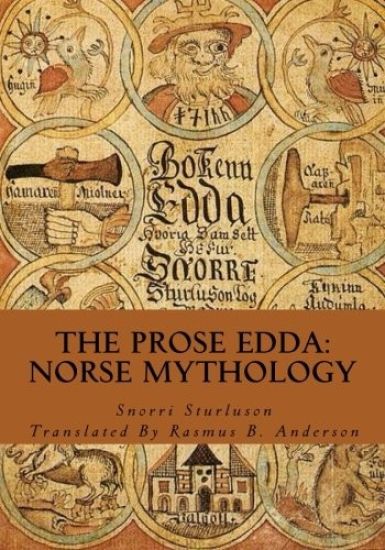
The Prose Edda: Norse MythologyBy Snorri Sturluson, Rasmus B. Anderson (Translated by)
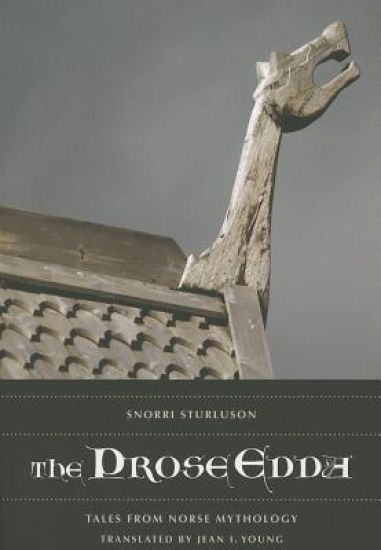
"Prose Edda" is a work without predecessor or parallel. It was designed as a handbook for poets to compose in the style of the skalds of the Viking ages. It is an exposition of the rule of poetic diction with many examples, applications, and retellings of myths and legends. Snorri Sturluson feared that the traditional techniques of Norse poetics, the pagan kennings, and the allusions to mythology would be forgotten with the introduction of new verse forms from Europe. The present selection includes the whole of Gylfaginning ("The deluding of Gylfi") - a guide to mythology that forms one of the great storybooks of the Middle Ages - and the longer heroic tales and legends of "Skaldskaparmal" (Poetic diction). Snorri Sturluson was a master storyteller, and this translation in modern idiom of the inimitable tales of the gods and heroes of the Scandinavian peoples brings them to life again.
The Sagas of Olaf Tryggvason and of Harald the Tyrant (Harald Haardraade)
Snorri Sturluson
Tredition Classics
2012
pokkari
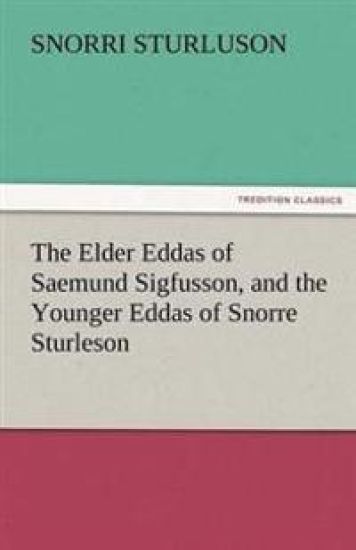
The Elder Eddas of Saemund Sigfusson, and the Younger Eddas of Snorre Sturleson
Snorri Sturluson
Tredition Classics
2011
pokkari
Snorris Konigsbuch (Heimskringla). Ubertragen Von Felix Niedner
Felix Niedner; Snorri Sturluson
Nabu Press
2011
pokkari
Snorris Konigsbuch (Heimskringla). Ubertragen Von Felix Niedner
Felix Niedner; Snorri Sturluson
Nabu Press
2011
pokkari