Kirjojen hintavertailu – 12 859 818 kirjaa ja 27 kauppaa

Kirjailija

Soeren Keil

Kirjat ja teokset yhdessä paikassa: 6 kirjaa, julkaisuja vuosilta 2013–2017, suosituimpiin kuuluu Understanding Federalism and Federation. Vertaile teosten hintoja ja tarkista saatavuus suomalaisista kirjakaupoista.

6 kirjaa

Kirjojen julkaisuvuodet: 2013–2017.

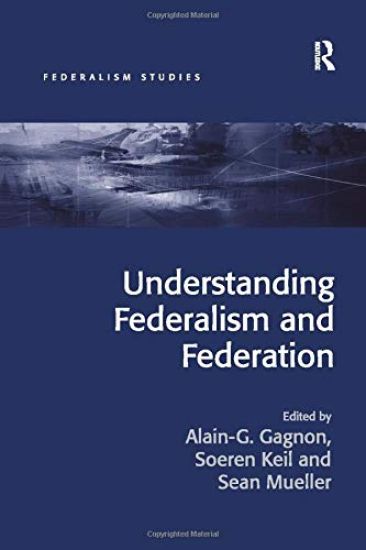
Understanding Federalism and Federation

Understanding Federalism and Federation

Alain-G. Gagnon; Soeren Keil

Routledge
2017
nidottu
Based on a variety of contemporary debates on federal theory Understanding Federalism and Federation honours Michael Burgess’ contribution to the study of these topics through a selection of approaches, theories, debates and interpretations. Gathering contributors from diverse subfields to synthesize current debates it offers a snapshot of the immense range of current research on federalism and federation. Leading authors debate key issues such as American federalism, Canada and the role of Quebec, the latest insights into comparative federalism and federation, the European Union as a federal project and the analysis of constitutional courts in federal systems. Different theoretical and empirical fields and perspectives are brought together, synthesizing major findings and addressing emerging issues and these topics are analysed through multiple lenses to provide new insights, original approaches and much-needed theoretical and empirical data on federalism and federation.

State-Building and Democratization in Bosnia and Herzegovina
State Building and Democratization in Bosnia and Herzegovina details the post-Dayton evolution of the country over the last two decades. Carefully evaluating the successes and failures the book explores the slow progress of the democratization process and how key elites initially took hold of the state and its institutions and have successfully retained their grip on power, despite heavy international presence and reform attempts to counter-balance this trend. Bosnia and Herzegovina offers a useful lens through which to view international state-building and democratization efforts. International engagement here incorporated significant civilian and military investment and has been ongoing for many years. In each chapter international scholars and field-based practitioners examine the link between post-war events and a structure that effectively embeds ethno-national politics and tensions into the fabric of the country. These contributors offer lessons to be learned, and practices to be avoided whilst considering whether, as state-building and democratization efforts have struggled in this relatively advanced European country, they can succeed in other fragile states.
Multinational Federalism in Bosnia and Herzegovina
In 1995 none of the political parties representing the peoples of Bosnia preferred a federal option. Yet, Bosnia became a federal state, highly decentralised and with a complex institutional architecture. This solution was imposed on them by international actors as a result of peace negotiations following the Yugoslav wars. Political parties in post-war Bosnia were not willing to identify with or accept the federation. The international community intervened taking over key decisions and so Bosnia and Herzegovina became the first state to experience a new model of federalism, namely ’imposed federalism’ and a new model of a federal state, that of the ’internationally administered federation’. By combining comparative politics, conflict analysis and international relations theory Soeren Keil offers a unique analysis of federalism in post-Dayton Bosnia and Herzegovina. By exploring this model of ’imposed federalism’ not only does this study greatly contribute to the literature on developments in Bosnia and Herzegovina it also re-evaluates comparative federalism in theory and practice. This study also offers important conclusions for similar cases, both in the Western Balkans region and the wider world, where international involvement and federalism as a method of conflict resolution in diverse societies becomes ever more prevalent and important.
Understanding Federalism and Federation

Understanding Federalism and Federation

Alain-G. Gagnon; Soeren Keil

Routledge
2015
sidottu
Based on a variety of contemporary debates on federal theory Understanding Federalism and Federation honours Michael Burgess’ contribution to the study of these topics through a selection of approaches, theories, debates and interpretations. Gathering contributors from diverse subfields to synthesize current debates it offers a snapshot of the immense range of current research on federalism and federation. Leading authors debate key issues such as American federalism, Canada and the role of Quebec, the latest insights into comparative federalism and federation, the European Union as a federal project and the analysis of constitutional courts in federal systems. Different theoretical and empirical fields and perspectives are brought together, synthesizing major findings and addressing emerging issues and these topics are analysed through multiple lenses to provide new insights, original approaches and much-needed theoretical and empirical data on federalism and federation.

State-Building and Democratization in Bosnia and Herzegovina
State Building and Democratization in Bosnia and Herzegovina details the post-Dayton evolution of the country over the last two decades. Carefully evaluating the successes and failures the book explores the slow progress of the democratization process and how key elites initially took hold of the state and its institutions and have successfully retained their grip on power, despite heavy international presence and reform attempts to counter-balance this trend. Bosnia and Herzegovina offers a useful lens through which to view international state-building and democratization efforts. International engagement here incorporated significant civilian and military investment and has been ongoing for many years. In each chapter international scholars and field-based practitioners examine the link between post-war events and a structure that effectively embeds ethno-national politics and tensions into the fabric of the country. These contributors offer lessons to be learned, and practices to be avoided whilst considering whether, as state-building and democratization efforts have struggled in this relatively advanced European country, they can succeed in other fragile states.
Multinational Federalism in Bosnia and Herzegovina

Multinational Federalism in Bosnia and Herzegovina

Soeren Keil

Ashgate Publishing Limited
2013
sidottu
In 1995 none of the political parties representing the peoples of Bosnia preferred a federal option. Yet, Bosnia became a federal state, highly decentralised and with a complex institutional architecture. This solution was imposed on them by international actors as a result of peace negotiations following the Yugoslav wars. Political parties in post-war Bosnia were not willing to identify with or accept the federation. The international community intervened taking over key decisions and so Bosnia and Herzegovina became the first state to experience a new model of federalism, namely ’imposed federalism’ and a new model of a federal state, that of the ’internationally administered federation’. By combining comparative politics, conflict analysis and international relations theory Soeren Keil offers a unique analysis of federalism in post-Dayton Bosnia and Herzegovina. By exploring this model of ’imposed federalism’ not only does this study greatly contribute to the literature on developments in Bosnia and Herzegovina it also re-evaluates comparative federalism in theory and practice. This study also offers important conclusions for similar cases, both in the Western Balkans region and the wider world, where international involvement and federalism as a method of conflict resolution in diverse societies becomes ever more prevalent and important.