
Kirjojen hintavertailu – 12 903 725 kirjaa ja 27 kauppaa

Kirjailija

Solomon Amadasun

Kirjat ja teokset yhdessä paikassa: 3 kirjaa, julkaisuja vuosilta 2019–2024, suosituimpiin kuuluu Social Work, Social Welfare, and Social Development in Nigeria. Vertaile teosten hintoja ja tarkista saatavuus suomalaisista kirjakaupoista.

3 kirjaa

Kirjojen julkaisuvuodet: 2019–2024.

Social Work, Social Welfare, and Social Development in Nigeria

Social Work, Social Welfare, and Social Development in Nigeria

Mel Gray; Solomon Amadasun

TAYLOR FRANCIS LTD
2024
nidottu
This groundbreaking book provides a comprehensive account of social work, social welfare, and social development in Nigeria from a postcolonial perspective. It examines the historical development of social work and social welfare and the colonial legacies affecting contemporary social welfare provision, development planning, social work practice, and social work education. Against this historical backdrop, it seeks to understand the position of social work within Nigeria’s minimalist structure of welfare provision and the reasons why social work struggles for legitimacy and recognition today. It covers contexts of social work practice, including child welfare, juvenile justice, disabilities, mental health, and ageing, as well as areas of development-related problems and humanitarian assistance as new areas of practice for social workers, including internally displaced and trafficked people, and their impact on women and children. It seeks to understand Nigeria’s ethnoreligious diversity and indigenous cultural heritage to inform culturally appropriate social work practice. This book offers a global audience insight into Nigeria’s developmental issues and problems and a local audience – social science and human service researchers, educators, practitioners, students, and policymakers - a glimpse of what’s possible when people work together toward a common goal. It will be of interest to all scholars and students of social work, development studies and social policy.
Social Work, Social Welfare, and Social Development in Nigeria

Social Work, Social Welfare, and Social Development in Nigeria

Mel Gray; Solomon Amadasun

TAYLOR FRANCIS LTD
2023
sidottu
This groundbreaking book provides a comprehensive account of social work, social welfare, and social development in Nigeria from a postcolonial perspective. It examines the historical development of social work and social welfare and the colonial legacies affecting contemporary social welfare provision, development planning, social work practice, and social work education. Against this historical backdrop, it seeks to understand the position of social work within Nigeria’s minimalist structure of welfare provision and the reasons why social work struggles for legitimacy and recognition today. It covers contexts of social work practice, including child welfare, juvenile justice, disabilities, mental health, and ageing, as well as areas of development-related problems and humanitarian assistance as new areas of practice for social workers, including internally displaced and trafficked people, and their impact on women and children. It seeks to understand Nigeria’s ethnoreligious diversity and indigenous cultural heritage to inform culturally appropriate social work practice. This book offers a global audience insight into Nigeria’s developmental issues and problems and a local audience – social science and human service researchers, educators, practitioners, students, and policymakers - a glimpse of what’s possible when people work together toward a common goal. It will be of interest to all scholars and students of social work, development studies and social policy.
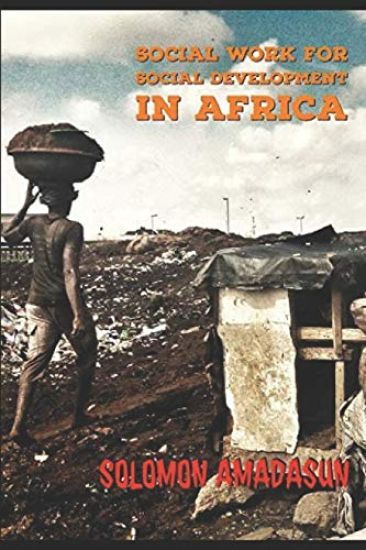
Social Work for Social Development in Africa

Social Work for Social Development in Africa

Solomon Amadasun

Independently Published
2019
nidottu
Most schools of social work in Africa are yet to adopt and entrench a developmental approach to their professional education and training- a situation which has invariably snowballed into the non-utilization of a development-oriented practice among many existing practitioners. This scenario poses a legitimate challenge and concern to a profession whose historical commitments to social development reflects in both assertions and actions. The text: Social Work for Social Development in Africa; amplifies the inadequacy of existing social work practice models in contemporary Africa and advocates for a return to the developmental paradigm as was the case in pre-colonial Africa- away from the apron string of remedial stranglehold or more aptly 'professional imperialism'). Such act is integral as it would not only reinforce the underlying substance of social work, but will equally assure the effectivity of practitioners in displaying profound understanding of, appreciation for, and sensitivity to the perennial developmental conundrum bedeviling the region. Convincingly, drawing on a somewhat discursive radar, the author, brilliantly weaved age-old discordant tunes to match current intermittent but vehement debates in push for post-modernist professional relevance in the context of an emerging continent like Africa. Succinctly, the text typifies a clear-cut masterclass from an apparent authority in the field, and commands a trenchant readership imperative to social work professionals (researchers, educators, practitioners, and students) within the African region and beyond.