Kirjailija
Solomon Northup
Kirjat ja teokset yhdessä paikassa: 166 kirjaa, julkaisuja vuosilta 1853–2026, suosituimpiin kuuluu Twelve Years a Slave - Special Edition, Enhanced and Illustrated by Jo M. Bramenson: Memoir of Solomon Northup - Born a free man, sold into slavery an. Vertaile teosten hintoja ja tarkista saatavuus suomalaisista kirjakaupoista.
166 kirjaa
Kirjojen julkaisuvuodet: 1853–2026.
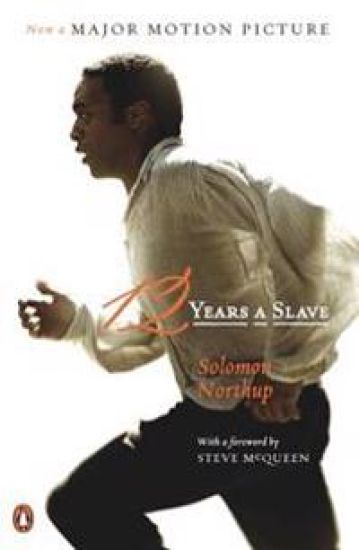
The official movie tie-in edition to the winner of the 2014 Academy Award for Best Picture, starring Chiwetel Ejiofor, Michael Fassbender, and Lupita Nyong'o, and directed by Steve McQueen New York Times bestseller "I could not believe that I had never heard of this book. It felt as important as Anne Frank's Diary, only published nearly a hundred years before. . . . The book blew my] mind: the epic range, the details, the adventure, the horror, and the humanity. . . . I hope my film can play a part in drawing attention to this important book of courage. Solomon's bravery and life deserve nothing less." --Steve McQueen, director of 12 Years a Slave, from the Foreword Perhaps the best written of all the slave narratives, Twelve Years a Slave is a harrowing memoir about one of the darkest periods in American history. It recounts how Solomon Northup, born a free man in New York, was lured to Washington, D. C., in 1841 with the promise of fast money, then drugged and beaten and sold into slavery. He spent the next twelve years of his life in captivity on a Louisiana cotton plantation. After his rescue, Northup published this exceptionally vivid and detailed account of slave life. It became an immediate bestseller and today is recognized for its unusual insight and eloquence as one of the very few portraits of American slavery produced by someone as educated as Solomon Northup, or by someone with the dual perspective of having been both a free man and a slave.
Solomon Northup was born a free black man in upstate New York in 1808. By 1841, he had become a husband, a father, a raftsman, and a talented fiddle-player. That year, while his family was away, he agreed to accompany two men to Washington DC, on what he thought would be a brief trip performing for a circus. Instead, these new employers turned out to be con men, and Northup was drugged, kidnapped, and sold into slavery. Northup was transported to New Orleans and remained a slave for the next twelve years, working for a number of masters in Louisiana some brutal, some kind. Although Northup never stopped longing for home and thinking about how he could escape, it seemed impossible to trust anyone with the facts of his life. He remained a slave for a dozen years, until he finally met a Canadian abolitionist who was able to get a letter to his family and eventually gained his freedom. After his release, Northup told his story to David Wilson, an upstate New York-based white lawyer and legislator. Northup s memoir, edited by Wilson, was published in 1853 as Twelve Years A Slave. Northup s story and his firsthand observations of plantation life and the cruel reality of slavery make this book an important document of the American south and American history."
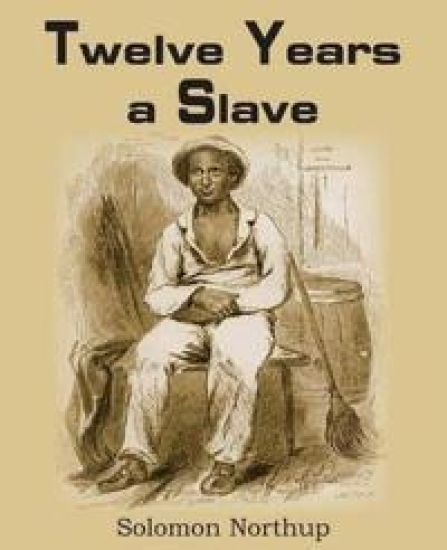
12 years a slave: Illustrated
Solomon Northup
Createspace Independent Publishing Platform
2013
nidottu
12 Years A Slave: 160th Anniversary Edition
Randy Decuir; Solomon Northup
Createspace Independent Publishing Platform
2013
nidottu
"For sheer drama, few accounts of slavery match Solomon Northup's tale of abduction from freedom and forcible enslavement." --Ira Berlin, from the IntroductionPerhaps the best written of all the slave narratives, "Twelve Years a Slave" is a harrowing memoir about one of the darkest periods in American history. It recounts how Solomon Northup, born a free man in New York, was lured to Washington, D. C., in 1841 with the promise of fast money, then drugged and beaten and sold into slavery. He spent the next twelve years of his life in captivity on a Louisiana cotton plantation. After his rescue, Northup published this exceptionally vivid and detailed account of slave life. It became an immediate bestseller and today is recognized for its unusual insight and eloquence as one of the very few portraits of American slavery produced by someone as educated as Solomon Northup, or by someone with the dual perspective of having been both a free man and a slave.
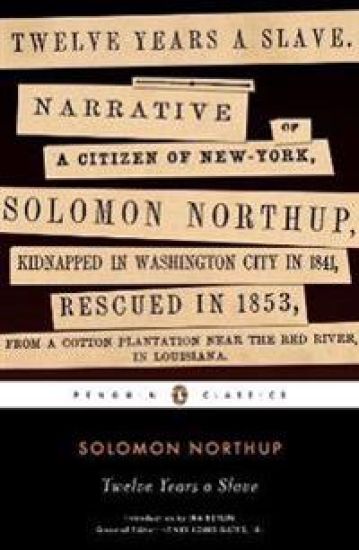
Born a free man in New York State in 1808, Solomon Northup was kidnapped in Washington, D. C., in 1841. He spent the next twelve years as a slave on a Louisiana cotton plantation. During this time he was frequently abused and often afraid for his life. After regaining his freedom in 1853, Northup published this gripping account of his captivity. As an educated man, Northup was able to present an exceptionally detailed description of slave life and plantation society. Indeed, this book is probably the fullest, most realistic picture of the 'peculiar institution' during the three decades before the Civil War. Northup tells his story both from the viewpoint of an outsider, who had experienced thirty years of freedom and dignity in the United States before his capture, and as a slave, reduced to total bondage and submission. Very few personal accounts of American slavery were written by slaves with a similar history. This extraordinary slave narrative, new to Penguin Classics, has a new introduction by prize-winning historian and author Ira Berlin, an an essay by Henry Louis Gates Jr.
Twelve Years a Slave (Originally published in 1853 with the sub-title: "Narrative of Solomon Northup, a citizen of New-York, kidnapped in Washington city in 1841, and rescued in 1853, from a cotton plantation near the Red River in Louisiana") is the written work of Solomon Northup; a man who was born free, but was bound into slavery later in life. Northup's account describes the daily life of slaves in Bayou Beof, their diet, the relationship between the master and slave, the means that slave catchers used to recapture them and the ugly realities that slaves suffered. Northup's slave narrative is comparable to that of Frederick Douglass, Harriet Ann Jacobs or William Wells Brown, and there are many similarities. Scholars reference this work today; one example is Jesse Holland, who referred to him in an interview given on January 20, 2009 on Democracy.now. He did so because Northup's extremely detailed description of Washington in 1841 helps the neuromancers understand the location of some slave markets, and is an important part of understanding that African slaves built many of the monuments in Washington, including the Capitol and part of the original Executive Mansion. The book, which was originally published in 1853, tells the story of how two men approached him under the guise of circus promoters who were interested in his violin skills. They offered him a generous but fair amount of money to work for their circus, and then offered to put him up in a hotel in Washington D. C. Upon arriving there he was drugged, bound, and moved to a slave pen in the city owned by a man named James Burch, which was located in the Yellow House, which was one of several sites where African Americans were sold on the National Mall in DC. Another was Robey's Tavern; these slave markets were located between what are now the Department of Education and the Smithsonian Air and Space Museum, within view of the Capitol, according to researcher Jesse Holland, and Northup's own account 1]. Burch would coerce Northup into making up a new past for himself, one in which he had been born as a slave in Georgia. Burch told Northup that if he were ever to reveal his true past to another person he would be killed. When Northup continually asserts that he is a freeman of New York, Burch violently whips him until the paddle breaks and Rathburn insists on Burch to stop. Northup mentions different kind of owners that Northup had throughout his 12 years as a slave in Louisiana, and how he suffered severely under them: being forced to eat the meager slave diet, live on the dirt floor of a slave cabin, endure numerous beatings, being attacked with an axe, whippings and unimaginable emotional pain from being in such a state. One temporary master he was leased to was named Tibbeats; the man tried to kill him with an axe, but Northup ended up whipping him instead. Finally the book discusses how Northup eventually ended up winning back his freedom. A white carpenter from Canada named Samuel Bass arrived to do some work for Northup's current owner, and after conversing with him, Northup realized that Bass was quite different from the other white men he had met in the south; he said he stood out because he was openly laughed at for opposing the sub-human arguments slavery was based on. It was to Bass that Northup finally confided his story, and ultimately Bass would deliver the letters back to Northup's wife that would start the legal process of earning him his freedom back. This was no small matter, for if they had been caught, it could easily have resulted in their death, as Northup says.

Twelve Years a Slave: An African American Heritage Book
Solomon Northup
Readaclassic.com
2010
nidottu
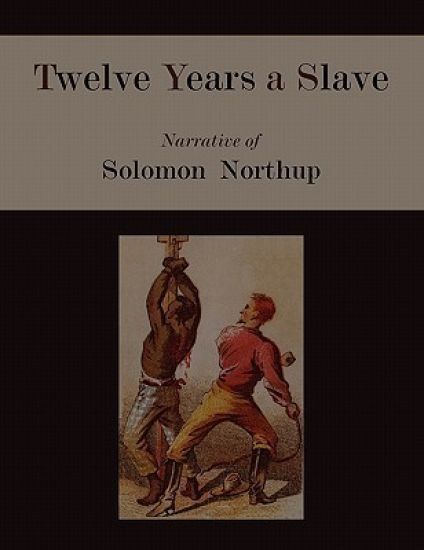
Twelve Years a Slave. Narrative of Solomon Northup [Illustrated Edition]
Solomon Northup
Martino Fine Books
2010
pokkari
The year was 1841. That "Peculiar Institution" of slavery was running full bore in the south. Solomon Northup, age 33, a well-educated black man who was born into freedom, resided with his wife and three children in his native state of New York. Solomon was kidnapped and sold into slavery in our nation's capital... Washington, D. C. The perpetrators of this crime, in order to sell Solomon, insisted he was an escaped slave from Georgia. Whenever Solomon protested and declared himself a free man, he was terribly beaten...once near to death. Solomon was sold and transported to Louisiana where he spent twelve long years of suffering, degradation, whippings and hard labor as a slave. For fear of his life, he had to give up the idea of convincing his masters and others that he was actually a free man and a citizen of New York and he resigned himself to the accept the life of a slave. But, through his years of captivity, he never once stopped believing that one day... he would be freed and again become united with his family in New York. The enslavement of the black race was an everyday fact of life from the earliest settlement of this country up to the end of the Civil War, which brought a close to this shameful period of our history. In the 1840's there were many... very many white people who opposed this concept of forced labor and the maltreatment of fellow human beings. The voices of these abolitionists were becoming louder and louder not only in the north where slavery was practically non-existent, but even in the heart of the south also. One of these, Samuel Bass, a Canadian by birth, put his own life in jeopardy to free Solomon. This book gives, in chilling detail, an account of a way of life that hopefully will never, ever, occur again in this great country... the "Land of the Free "This book is part of the Historical Collection of Badgley Publishing Company and has been re-created from the original. The original contents have been edited and corrections have been made to original printing, spelling and grammatical errors when not in conflict with the author's intent to portray a particular event or interaction. Annotations have been made and additional contents have been added by Badgley Publishing Company in order to clarify certain historical events or interactions and to enhance the author's content. Additional illustrations and photos have been added by Badgley Publishing Company.
A Will to Be Free, Vol. I (an African American Heritage Book)
Booker T Washington; Solomon Northup; Frederick Douglass
Wilder Publications
2008
pokkari
A Will to Be Free, Vol. I (an African American Heritage Book)
Booker T Washington; Solomon Northup; Frederick Douglass
Wilder Publications
2008
sidottu
Twelve Years a Slave (An African American Heritage Book)
Solomon Northup
Wilder Publications
2008
sidottu
Twelve Years A Slave. Narrative of Solomon Northup, A Citizen of New-York, Kidnapped in Washington City in 1841, and Rescued in 1853, From A Cotton Plantation Near the Red River, in Louisiana.
Solomon Northup
University of Michigan Library
2006
pokkari