Kirjojen hintavertailu – 12 859 828 kirjaa ja 27 kauppaa

Kirjailija

Solomon Pelumi Akinbogun

Kirjat ja teokset yhdessä paikassa: 3 kirjaa, julkaisuja vuosilta 2020–2024, suosituimpiin kuuluu Modelling the Socio-Economic Implications of Sustainability Issues in the Housing Market. Vertaile teosten hintoja ja tarkista saatavuus suomalaisista kirjakaupoista.

3 kirjaa

Kirjojen julkaisuvuodet: 2020–2024.

Achieving the Sustainable Development Goal Against Poverty in Developing Nations

Achieving the Sustainable Development Goal Against Poverty in Developing Nations

Victor Olutope Ige; Solomon Pelumi Akinbogun; Colin Anthony Jones

Springer International Publishing AG
2024
sidottu
This book investigates the role of land titling in delivering sustainable means of poverty alleviation in developing countries. Despite the huge amount spent on various anti-poverty programs annually, poverty remains a major problem. This persistent challenge necessitates a paradigm shift in which urban poverty could be alleviated in developing countries by leveraging the potential of land titling. Titling could provide the urban poor with the opportunity to use their property titles as collateral for loans, allowing individuals to invest in businesses, upgrade their homes, and lift themselves out of poverty. As a result, job creation and income generation may increase. Land titling is a simple, inexpensive, and effective means of supporting the urban poor, particularly those with small- and medium-sized enterprise (SME) initiatives. Similarly, land titling is an antidote to the limited success of property taxation in developing countries, as it provides mapped and transaction-based records. This book will help stakeholders, policymakers, and policy implementers understand and utilize the capacity of titling as a veritable means of poverty alleviation and SME development in developing nations.
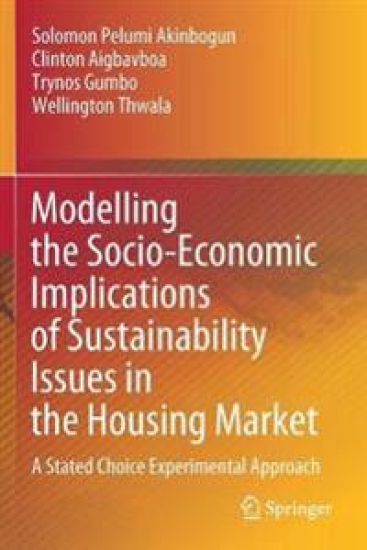
Modelling the Socio-Economic Implications of Sustainability Issues in the Housing Market

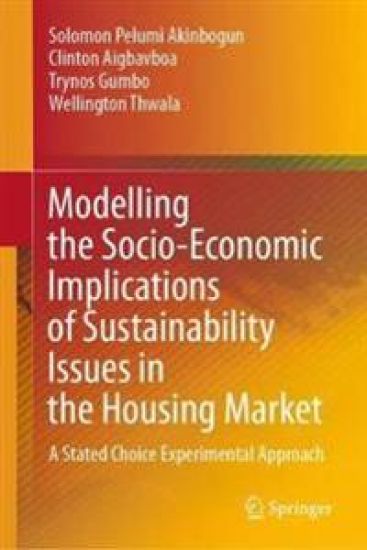
Modelling the Socio-Economic Implications of Sustainability Issues in the Housing Market

Solomon Pelumi Akinbogun; Clinton Aigbavboa; Trynos Gumbo; Wellington Thwala

Springer Nature Switzerland AG
2021
nidottu
This book discusses sustainable housing issues in urban areas throughout the Global South, revealing their complexity in terms of urban dynamics, housing markets and human interactions with the environment. Its main focus is on the location of graves within private residences, cemeteries in the immediate vicinity of private residences, and the implications of these factors for renters’ choices and rents. The book addresses the economics of land use for graves in connection with housing choices and the implications for the rented sector of the property market. By means of several model-based simulations, it demonstrates that the neoclassical economics remedy to the negative externality of graves in or near private residences remains generally unacceptable. Providing readers with a clear understanding of tenants’ priorities in their choice of housing, as well as a new approach to the negative externality of graves in the rented sector, the book will be of interest to policymakers, urban planners, investors in residential housing and land economists alike.
Modelling the Socio-Economic Implications of Sustainability Issues in the Housing Market

Modelling the Socio-Economic Implications of Sustainability Issues in the Housing Market

Solomon Pelumi Akinbogun; Clinton Aigbavboa; Trynos Gumbo; Wellington Thwala

Springer Nature Switzerland AG
2020
sidottu
This book discusses sustainable housing issues in urban areas throughout the Global South, revealing their complexity in terms of urban dynamics, housing markets and human interactions with the environment. Its main focus is on the location of graves within private residences, cemeteries in the immediate vicinity of private residences, and the implications of these factors for renters’ choices and rents. The book addresses the economics of land use for graves in connection with housing choices and the implications for the rented sector of the property market. By means of several model-based simulations, it demonstrates that the neoclassical economics remedy to the negative externality of graves in or near private residences remains generally unacceptable. Providing readers with a clear understanding of tenants’ priorities in their choice of housing, as well as a new approach to the negative externality of graves in the rented sector, the book will be of interest to policymakers, urban planners, investors in residential housing and land economists alike.