Kirjojen hintavertailu – 12 859 829 kirjaa ja 27 kauppaa

Kirjailija

Song Zhang

Kirjat ja teokset yhdessä paikassa: 6 kirjaa, julkaisuja vuosilta 2014–2026, suosituimpiin kuuluu High-Speed 3D Imaging with Digital Fringe Projection Techniques. Vertaile teosten hintoja ja tarkista saatavuus suomalaisista kirjakaupoista.

6 kirjaa

Kirjojen julkaisuvuodet: 2014–2026.

High-Speed 3D Imaging with Digital Fringe Projection Techniques
This comprehensive guide presents the latest advancements in Digital Fringe Projection (DFP) technology for non-contact 3D shape measurement. Building upon the foundational knowledge established in the first edition, this expanded volume incorporates significant technological developments from nearly three decades of the author's research. High-Speed 3D Imaging with Digital Fringe Projection Techniques, Second Edition serves as both a theoretical reference and practical implementation guide, featuring detailed illustrations, mathematical frameworks, and step-by-step procedures for building complete 3D imaging systems from scratch. Readers will gain mastery of cutting-edge DFP techniques through newly introduced topics including advanced phase unwrapping methods, binary pattern optimization, pixel-wise calibration for superior accuracy, and innovative approaches to autofocusing using electrically tunable lenses (ETLs). The second edition also covers practical solutions for auto-exposure control and high dynamic range (HDR) imaging, enabling measurement across challenging surface conditions. Each chapter provides theoretical foundations alongside practical implementation guidance, allowing readers to apply these techniques immediately in their own research or industrial applications. This book is ideal for researchers, engineers, and graduate students working in optical metrology, computer vision, mechanical engineering, and industrial quality control. Professionals seeking to implement high-speed, high-accuracy 3D measurement systems will find particular value in the practical calibration methods and system optimization techniques.
Design and Analysis of Pragmatic Trials

Design and Analysis of Pragmatic Trials

Song Zhang; Chul Ahn; Hong Zhu

TAYLOR FRANCIS LTD
2023
sidottu
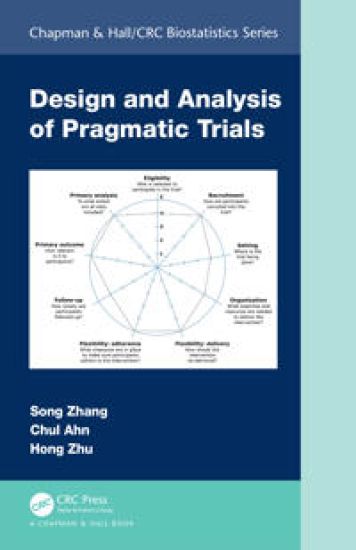
This book begins with an introduction of pragmatic cluster randomized trials (PCTs) and reviews various pragmatic issues that need to be addressed by statisticians at the design stage. It discusses the advantages and disadvantages of each type of PCT, and provides sample size formulas, sensitivity analyses, and examples for sample size calculation. The generalized estimating equation (GEE) method will be employed to derive sample size formulas for various types of outcomes from the exponential family, including continuous, binary, and count variables. Experimental designs that have been frequently employed in PCTs will be discussed, including cluster randomized designs, matched-pair cluster randomized design, stratified cluster randomized design, stepped-wedge cluster randomized design, longitudinal cluster randomized design, and crossover cluster randomized design. It demonstrates that the GEE approach is flexible to accommodate pragmatic issues such as hierarchical correlation structures, different missing data patterns, randomly varying cluster sizes, etc. It has been reported that the GEE approach leads to under-estimated variance with limited numbers of clusters. The remedy for this limitation is investigated for the design of PCTs. This book can assist practitioners in the design of PCTs by providing a description of the advantages and disadvantages of various PCTs and sample size formulas that address various pragmatic issues, facilitating the proper implementation of PCTs to improve health care. It can also serve as a textbook for biostatistics students at the graduate level to enhance their knowledge or skill in clinical trial design. Key Features: Discuss the advantages and disadvantages of each type of PCTs, and provide sample size formulas, sensitivity analyses, and examples. Address an unmet need for guidance books on sample size calculations for PCTs; A wide variety of experimental designs adopted by PCTs are covered; The sample size solutions can be readily implemented due to the accommodation of common pragmatic issues encountered in real-world practice; Useful to both academic and industrial biostatisticians involved in clinical trial design; Can be used as a textbook for graduate students majoring in statistics and biostatistics.
Sample Size Calculations for Clustered and Longitudinal Outcomes in Clinical Research
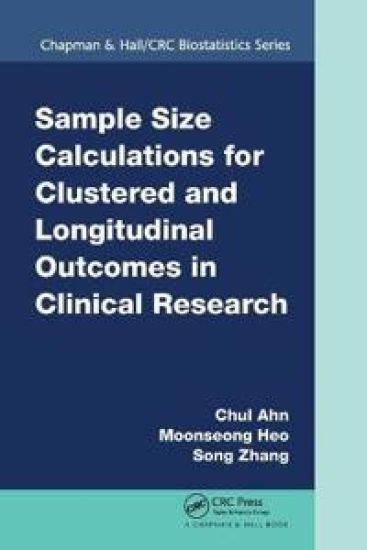
Accurate sample size calculation ensures that clinical studies have adequate power to detect clinically meaningful effects. This results in the efficient use of resources and avoids exposing a disproportionate number of patients to experimental treatments caused by an overpowered study. Sample Size Calculations for Clustered and Longitudinal Outcomes in Clinical Research explains how to determine sample size for studies with correlated outcomes, which are widely implemented in medical, epidemiological, and behavioral studies. The book focuses on issues specific to the two types of correlated outcomes: longitudinal and clustered. For clustered studies, the authors provide sample size formulas that accommodate variable cluster sizes and within-cluster correlation. For longitudinal studies, they present sample size formulas to account for within-subject correlation among repeated measurements and various missing data patterns. For multiple levels of clustering, the level at which to perform randomization actually becomes a design parameter. The authors show how this can greatly impact trial administration, analysis, and sample size requirement. Addressing the overarching theme of sample size determination for correlated outcomes, this book provides a useful resource for biostatisticians, clinical investigators, epidemiologists, and social scientists whose research involves trials with correlated outcomes. Each chapter is self-contained so readers can explore topics relevant to their research projects without having to refer to other chapters.
High-Speed 3D Imaging with Digital Fringe Projection Techniques
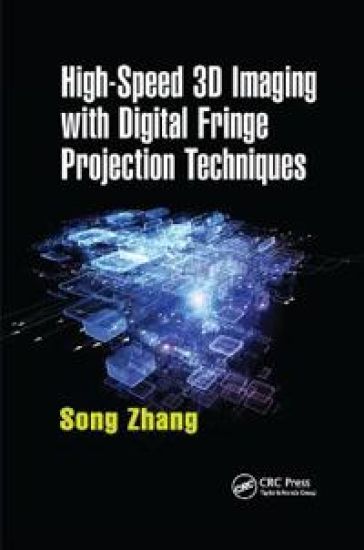
Digital fringe projection (DFP) techniques are used for non-contact shape measurement of 3D images. In the rapidly expanding field of 3D high-speed imaging, the demand for DFP continues to grow due to the technology’s fast speed, flexibility, low cost, and high accuracy. High-Speed 3D Imaging with Digital Fringe Projection Techniques discusses the generation of digital fringe with digital video projection devices, covering a variety of core technical aspects. The book begins by establishing the theoretical foundations of fringe pattern analysis, reviewing various 3D imaging techniques while highlighting the advantages of DFP. The author then:Describes the differences between digital light processing (DLP), liquid crystal display (LCD), and liquid crystal on silicon (LCoS)Explains how to unwrap phase maps temporally and spatiallyShows how to generate fringe patterns with video projectorsDemonstrates how to convert phase to coordinates through system calibrationsProvides a detailed example of a built-from-scratch 3D imaging systemIncorporating valuable insights gained during the author’s 15+ years of 3D imaging research, High-Speed 3D Imaging with Digital Fringe Projection Techniques illuminates the pathway to advancement in high-speed 3D optical imaging using DFP.
Sample Size Calculations for Clustered and Longitudinal Outcomes in Clinical Research
Accurate sample size calculation ensures that clinical studies have adequate power to detect clinically meaningful effects. This results in the efficient use of resources and avoids exposing a disproportionate number of patients to experimental treatments caused by an overpowered study. Sample Size Calculations for Clustered and Longitudinal Outcomes in Clinical Research explains how to determine sample size for studies with correlated outcomes, which are widely implemented in medical, epidemiological, and behavioral studies. The book focuses on issues specific to the two types of correlated outcomes: longitudinal and clustered. For clustered studies, the authors provide sample size formulas that accommodate variable cluster sizes and within-cluster correlation. For longitudinal studies, they present sample size formulas to account for within-subject correlation among repeated measurements and various missing data patterns. For multiple levels of clustering, the level at which to perform randomization actually becomes a design parameter. The authors show how this can greatly impact trial administration, analysis, and sample size requirement. Addressing the overarching theme of sample size determination for correlated outcomes, this book provides a useful resource for biostatisticians, clinical investigators, epidemiologists, and social scientists whose research involves trials with correlated outcomes. Each chapter is self-contained so readers can explore topics relevant to their research projects without having to refer to other chapters.