Kirjojen hintavertailu – 12 903 725 kirjaa ja 27 kauppaa

Kirjailija

Sonu Shamdasani

Kirjat ja teokset yhdessä paikassa: 10 kirjaa, julkaisuja vuosilta 1998–2019, suosituimpiin kuuluu Jung Stripped Bare. Vertaile teosten hintoja ja tarkista saatavuus suomalaisista kirjakaupoista.

10 kirjaa

Kirjojen julkaisuvuodet: 1998–2019.

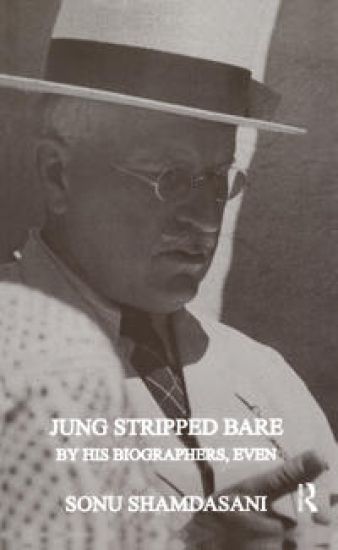
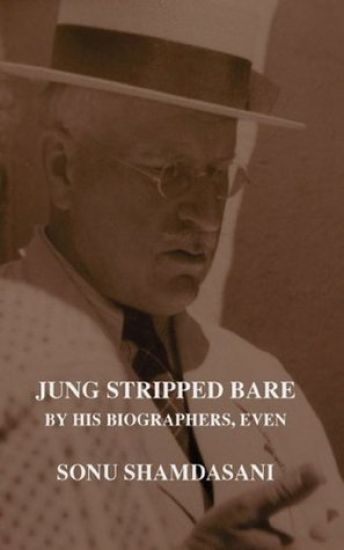
Jung Stripped Bare

Jung Stripped Bare

Sonu Shamdasani

Routledge
2019
sidottu
How many "posthumous" lives does a man have to live? Nearly half a century after his death, C. G. Jung is a subject of continual controversies. Every few years, a new life of Jung appears, each promising to provide the missing master key to the mysteries of his life and work, and to lay bare their secrets. However, with every successive "life",
Lament of the Dead

Lament of the Dead

James Hillman; Sonu Shamdasani

WW Norton Co
2013
sidottu
In this book of dialogues, James Hillman and Sonu Shamdasani reassess psychology, history, and creativity through the lens of Carl Jung’s Red Book. Hillman, the founder of Archetypal Psychology, was one of the most prominent psychologists in America and is widely acknowledged as the most original figure to emerge from Jung’s school. Shamdasani, editor and cotranslator of Jung’s Red Book, is regarded as the leading Jung historian. Hillman and Shamdasani explore a number of the issues in the Red Book—such as our relation with the dead, the figures of our dreams and fantasies, the nature of creative expression, the relation of psychology to art, narrative and storytelling, the significance of depth psychology as a cultural form, the legacy of Christianity, and our relation to the past—and examine the implications these have for our thinking today.

C. G. Jung: A Biography in Books

C. G. Jung: A Biography in Books

Sonu Shamdasani

WW Norton Co
2011
sidottu

Halvin toimitettuna 53,60 €

In 1912, C. G. Jung wrote, “Should it happen that all traditions in the world were cut off with a single blow, the whole mythology and history of religion would start over again with the succeeding generation.” With this, Jung gave new understanding to the concept of world literature: that the history of human thought lay in the soul, passed from generation to generation, always ready to reemerge. This book shows how Jung’s theory evolved through classics of Western literature, annotated books from his library, manuscripts of his Black Books and The Red Book,other major works in which he attempted to translate insights from The Red Book for a scientific public, the Gnostic and alchemical texts he studied and presented as parallels to his psychology of the unconscious, and Eastern texts he presented in collaboration with leading scholars, establishing a cross-cultural psychology of the process of higher development.
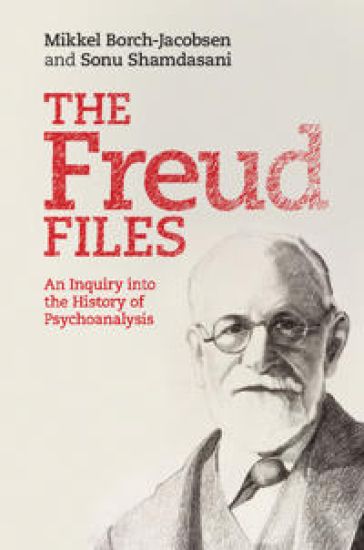
The Freud Files

The Freud Files

Borch-Jacobsen Mikkel; Sonu Shamdasani

Cambridge University Press
2011
sidottu
How did psychoanalysis attain its prominent cultural position? How did it eclipse rival psychologies and psychotherapies, such that it became natural to bracket Freud with Copernicus and Darwin? Why did Freud 'triumph' to such a degree that we hardly remember his rivals? This book reconstructs the early controversies around psychoanalysis and shows that rather than demonstrating its superiority, Freud and his followers rescripted history. This legend-making was not an incidental addition to psychoanalytic theory but formed its core. Letting the primary material speak for itself, this history demonstrates the extraordinary apparatus by which this would-be science of psychoanalysis installed itself in contemporary societies. Beyond psychoanalysis, it opens up the history of the constitution of the modern psychological sciences and psychotherapies, how they furnished the ideas which we have of ourselves and how these became solidified into indisputable 'facts'.
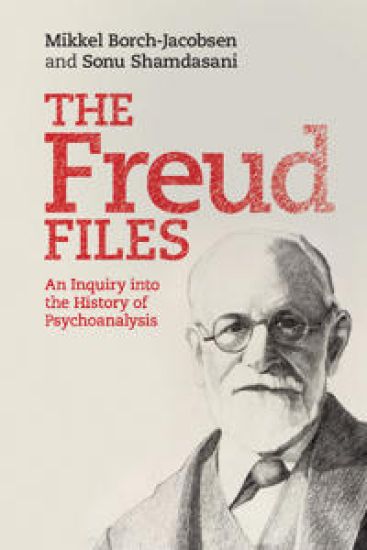
The Freud Files

The Freud Files

Mikkel Borch-Jacobsen; Sonu Shamdasani

Cambridge University Press
2011
pokkari
How did psychoanalysis attain its prominent cultural position? How did it eclipse rival psychologies and psychotherapies, such that it became natural to bracket Freud with Copernicus and Darwin? Why did Freud 'triumph' to such a degree that we hardly remember his rivals? This book reconstructs the early controversies around psychoanalysis and shows that rather than demonstrating its superiority, Freud and his followers rescripted history. This legend-making was not an incidental addition to psychoanalytic theory but formed its core. Letting the primary material speak for itself, this history demonstrates the extraordinary apparatus by which this would-be science of psychoanalysis installed itself in contemporary societies. Beyond psychoanalysis, it opens up the history of the constitution of the modern psychological sciences and psychotherapies, how they furnished the ideas which we have of ourselves and how these became solidified into indisputable 'facts'.
Jung Stripped Bare

Jung Stripped Bare

Sonu Shamdasani

Karnac Books
2004
nidottu
How many "posthumous" lives does a man have to live? Nearly half a century after his death, C. G. Jung is a subject of continual controversies. Every few years, a new life of Jung appears, each promising to provide the missing master key to the mysteries of his life and work, and to lay bare their secrets. However, with every successive "life", Jung becomes shrouded in an ever-increasing web of rumour, gossip, innuendo and fantasy. We may ask why Jung biographies are so filled with shortcomings? How did Jung become a fiction? This book addresses these issues. It demonstrates the pitfalls and fallacies of such works, and sets out how his life and work should be approached on a historical basis, drawing on decades of archival investigation and new documentation. It surveys attempts to write Jung's biography from during his own lifetime until the present; shows how Memories, Dreams, Reflections came to be falsely perceived as his autobiography; and why his Collected Works was never completed. Thus this work lays out an agenda for future studies and discussions of Jung, the reception of his work and its impact on contemporary culture.
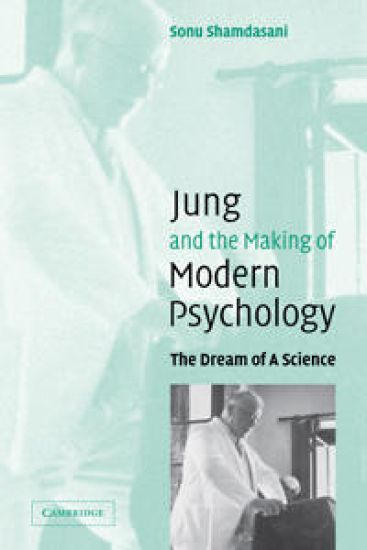
Jung and the Making of Modern Psychology

Jung and the Making of Modern Psychology

Sonu Shamdasani

Cambridge University Press
2003
sidottu
Occultist, Scientist, Prophet, Charlatan - C. G. Jung has been called all these things and after decades of myth making, is one of the most misunderstood figures in Western intellectual history. This book is the first comprehensive study of the origins of his psychology, as well as providing a new account of the rise of modern psychology and psychotherapy. Based on a wealth of hitherto unknown archival materials it reconstructs the reception of Jung's work in the human sciences, and its impact on the social and intellectual history of the twentieth century. The book creates a basis for all future discussion of Jung, and opens new vistas on psychology today.
Jung and the Making of Modern Psychology

Jung and the Making of Modern Psychology

Sonu Shamdasani

Cambridge University Press
2003
pokkari
Occultist, Scientist, Prophet, Charlatan - C. G. Jung has been called all these things and after decades of myth making, is one of the most misunderstood figures in Western intellectual history. This book is the first comprehensive study of the origins of his psychology, as well as providing a new account of the rise of modern psychology and psychotherapy. Based on a wealth of hitherto unknown archival materials it reconstructs the reception of Jung’s work in the human sciences, and its impact on the social and intellectual history of the twentieth century. The book creates a basis for all future discussion of Jung, and opens new vistas on psychology today.
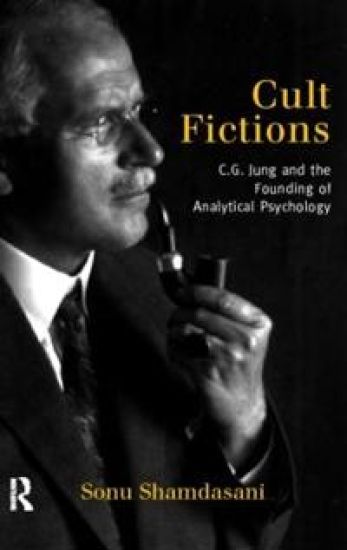
Cult Fictions

Cult Fictions

Sonu Shamdasani

Routledge
1998
nidottu
Controversial claims that C. G. Jung, founder of analytical psychology, was a charlatan and a self-appointed demi-god have recently brought his legacy under renewed scrutiny. The basis of the attack on Jung is a previously unknown text, said to be Jung's inaugural address at the founding of his 'cult', otherwise known as the Psychological Club, in Zurich in 1916. It is claimed that this cult is alive and well in Jungian psychology as it is practised today, in a movement which continues to masquerade as a genuine professional discipline, whilst selling false dreams of spiritual redemption. In Cult Fictions, leading Jung scholar Sonu Shamdasani looks into the evidence for such claims and draws on previously unpublished documents to show that they are fallacious. This accurate and revealing account of the history of the Jungian movement, from the founding of the Psychological Club to the reformulation of Jung's approach by his followers, establishes a fresh agenda for the historical evaluation of analytical psychology today.
Cult Fictions

Cult Fictions

Sonu Shamdasani

Routledge
1998
sidottu
Controversial claims that C. G. Jung, founder of analytical psychology, was a charlatan and a self-appointed demi-god have recently brought his legacy under renewed scrutiny. The basis of the attack on Jung is a previously unknown text, said to be Jung's inaugural address at the founding of his 'cult', otherwise known as the Psychological Club, in Zurich in 1916. It is claimed that this cult is alive and well in Jungian psychology as it is practised today, in a movement which continues to masquerade as a genuine professional discipline, whilst selling false dreams of spiritual redemption. In Cult Fictions, leading Jung scholar Sonu Shamdasani looks into the evidence for such claims and draws on previously unpublished documents to show that they are fallacious. This accurate and revealing account of the history of the Jungian movement, from the founding of the Psychological Club to the reformulation of Jung's approach by his followers, establishes a fresh agenda for the historical evaluation of analytical psychology today.