Kirjojen hintavertailu – 12 903 725 kirjaa ja 27 kauppaa

Kirjailija

Sophie Goldingay

Kirjat ja teokset yhdessä paikassa: 4 kirjaa, julkaisuja vuosilta 2019–2024, suosituimpiin kuuluu Storying Beyond Social Difficulties with Neuro-Diverse Adolescents. Vertaile teosten hintoja ja tarkista saatavuus suomalaisista kirjakaupoista.

4 kirjaa

Kirjojen julkaisuvuodet: 2019–2024.

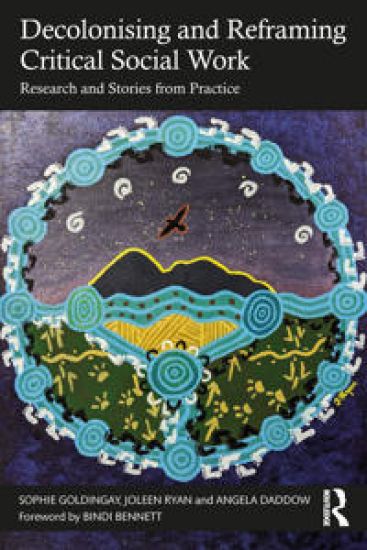
Decolonising and Reframing Critical Social Work

Decolonising and Reframing Critical Social Work

Sophie Goldingay; Joleen Ryan; Angela Daddow

TAYLOR FRANCIS LTD
2024
nidottu
This book problematises and then reshapes critical social work to bring a range of perspectives to what constitutes truly effective and ethical social work practice, moving beyond binary oppositions (where two states or concepts are defined as opposite to each other) to create new words and concepts to be inclusive of a range of identities, practice contexts, and groups or communities of service users. Currently, critical social work, derived from sociological critical theories proliferated in the 1960s, enjoys dominance as the theory that encompasses the ethical principles of social work in Australia. While on the surface critical social work appears to align with the Australian Association of Social Workers’ (AASW) ethical principles of social justice, professional integrity, and respect for persons, practitioners, and students alike find enacting it can be problematic in complex practice situations. Reporting original research of cases from the field, the book focuses on the impact of intersectionality and shows new ways to address the nuance of othering and modern-day colonialism. It will be of interest to researchers, practitioners, and students who are keen to engage with the latest in the field of critical social work and consider implications of this for the development of their own identity.
Decolonising and Reframing Critical Social Work

Decolonising and Reframing Critical Social Work

Sophie Goldingay; Joleen Ryan; Angela Daddow

TAYLOR FRANCIS LTD
2024
sidottu
This book problematises and then reshapes critical social work to bring a range of perspectives to what constitutes truly effective and ethical social work practice, moving beyond binary oppositions (where two states or concepts are defined as opposite to each other) to create new words and concepts to be inclusive of a range of identities, practice contexts, and groups or communities of service users. Currently, critical social work, derived from sociological critical theories proliferated in the 1960s, enjoys dominance as the theory that encompasses the ethical principles of social work in Australia. While on the surface critical social work appears to align with the Australian Association of Social Workers’ (AASW) ethical principles of social justice, professional integrity, and respect for persons, practitioners, and students alike find enacting it can be problematic in complex practice situations. Reporting original research of cases from the field, the book focuses on the impact of intersectionality and shows new ways to address the nuance of othering and modern-day colonialism. It will be of interest to researchers, practitioners, and students who are keen to engage with the latest in the field of critical social work and consider implications of this for the development of their own identity.
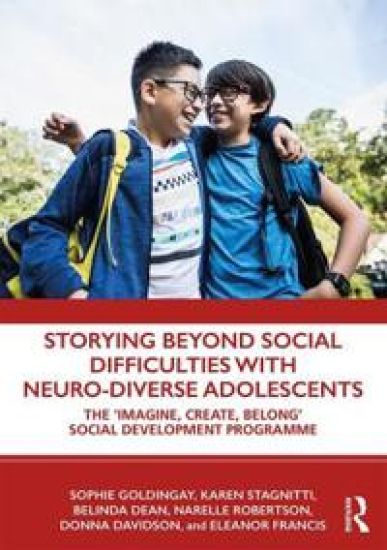
Storying Beyond Social Difficulties with Neuro-Diverse Adolescents

Storying Beyond Social Difficulties with Neuro-Diverse Adolescents

Sophie Goldingay; Karen Stagnitti; Belinda Dean; Narelle Robertson; Donna Davidson; Eleanor Francis

Routledge
2019
nidottu
Traditional approaches to social skill development may often be ineffective for those in most need of them – those who are neuro-diverse (for example, on the Autism Spectrum, with dyspraxia, or with Attention Deficit Hyperactivity Disorder), those who have experienced trauma, those with an intellectual disability, and those who present with Complex Communication Needs. This may be due to difficulties with language, attention, and memory. Storying Beyond Social Difficulties with Neuro-Diverse Adolescents is a manual that outlines an eight-session programme, called "Imagine, Create, Belong", that involves a range of activities designed to develop theory of mind, flexible thinking, empathy, and narrative ability. The sessions can be run across 8 or 16 weeks and contain sections suitable for those in mainstream schools, with adaptations to support adolescents with additional needs (including moderate intellectual disability and Complex Communication Needs). The manual does this via a range of age-appropriate play-based activities within a group setting focused on making a movie. It includes non-verbal and verbal approaches to social development and is an implicit approach to social skills. The programme is suitable for young people aged 11 years to 15 years with social difficulties. It includes content that may suit adolescents from both individualist and collectivist cultures. The manual provides step-by-step guidance for practitioners to run the "Imagine, Create, Belong" social skills programme with participants with a range of intellectual abilities who have been identified by parents, teachers, or other professionals as having social difficulties.
Storying Beyond Social Difficulties with Neuro-Diverse Adolescents

Storying Beyond Social Difficulties with Neuro-Diverse Adolescents

Sophie Goldingay; Karen Stagnitti; Belinda Dean; Narelle Robertson; Donna Davidson; Eleanor Francis

Routledge
2019
sidottu
Traditional approaches to social skill development may often be ineffective for those in most need of them – those who are neuro-diverse (for example, on the Autism Spectrum, with dyspraxia, or with Attention Deficit Hyperactivity Disorder), those who have experienced trauma, those with an intellectual disability, and those who present with Complex Communication Needs. This may be due to difficulties with language, attention, and memory. Storying Beyond Social Difficulties with Neuro-Diverse Adolescents is a manual that outlines an eight-session programme, called "Imagine, Create, Belong", that involves a range of activities designed to develop theory of mind, flexible thinking, empathy, and narrative ability. The sessions can be run across 8 or 16 weeks and contain sections suitable for those in mainstream schools, with adaptations to support adolescents with additional needs (including moderate intellectual disability and Complex Communication Needs). The manual does this via a range of age-appropriate play-based activities within a group setting focused on making a movie. It includes non-verbal and verbal approaches to social development and is an implicit approach to social skills. The programme is suitable for young people aged 11 years to 15 years with social difficulties. It includes content that may suit adolescents from both individualist and collectivist cultures. The manual provides step-by-step guidance for practitioners to run the "Imagine, Create, Belong" social skills programme with participants with a range of intellectual abilities who have been identified by parents, teachers, or other professionals as having social difficulties.