Kirjojen hintavertailu – 12 859 827 kirjaa ja 27 kauppaa

Kirjailija

Sophie Rudolph

Kirjat ja teokset yhdessä paikassa: 4 kirjaa, julkaisuja vuosilta 2018–2022, suosituimpiin kuuluu Learning Whiteness. Vertaile teosten hintoja ja tarkista saatavuus suomalaisista kirjakaupoista.

4 kirjaa

Kirjojen julkaisuvuodet: 2018–2022.

Learning Whiteness

Learning Whiteness

Arathi Sriprakash; Sophie Rudolph; Jessica Gerrard

PLUTO PRESS
2022
sidottu
Whiteness is not innate – it is learned. The systems of white domination that prevail across the world are not pregiven or natural. Rather, they are forged and sustained in social and political life. Learning Whiteness examines the material conditions, knowledge politics and complex feelings that create and relay systems of racial domination. Focusing on Australia, the authors demonstrate how whiteness is fundamentally an educational project – taught within education institutions and through public discourse – in active service of the settler colonial state. To see whiteness as learned is to recognise that it can be confronted. This book invites readers to reckon with past and present politics of education in order to imagine a future thoroughly divested from racism.
Learning Whiteness

Learning Whiteness

Arathi Sriprakash; Sophie Rudolph; Jessica Gerrard

PLUTO PRESS
2022
pokkari
Whiteness is not innate – it is learned. The systems of white domination that prevail across the world are not pregiven or natural. Rather, they are forged and sustained in social and political life. Learning Whiteness examines the material conditions, knowledge politics and complex feelings that create and relay systems of racial domination. Focusing on Australia, the authors demonstrate how whiteness is fundamentally an educational project – taught within education institutions and through public discourse – in active service of the settler colonial state. To see whiteness as learned is to recognise that it can be confronted. This book invites readers to reckon with past and present politics of education in order to imagine a future thoroughly divested from racism.
Unsettling the Gap

Unsettling the Gap

Sophie Rudolph

Peter Lang Publishing Inc
2018
sidottu
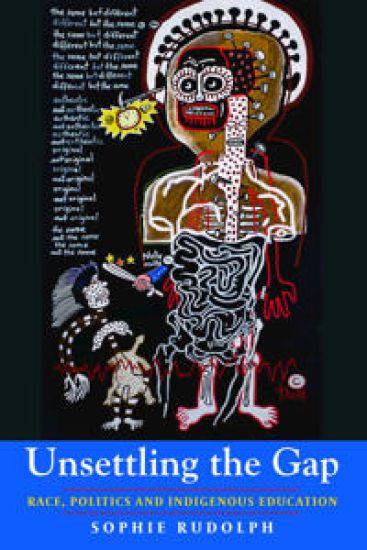
Unsettling the Gap: Race, Politics and Indigenous Education examines pressing issues of inequality in education. The notion of gap—and the need to close it—is used widely in public and policy debates to name the nature and scope of disadvantage. In the competitive world of education, gaps have become associated with students who are seen to be "falling behind," "failing" or "dropping out." A global deficit discourse is, therefore, mobilised and normalised. But this discourse has a history and is deeply political. Unsettling the Gap examines this history and how it is politically activated through an analysis of the "Australian Closing the Gap in Indigenous Disadvantage" policy. In this policy discourse the notion of gap serves as a complex and multiple signifier, attached to individuals, communities and to national history. In unravelling these diverse modalities of gap, the text illuminates the types of ruling binaries that tend to direct dynamics of power and knowledge in a settler colonial context. This reveals not only the features of the crisis of "Indigenous educational disadvantage" that the policy seeks to address, but the undercurrents of a different type of crisis, namely the authority of the settler colonial state. By unsettling the normalised functions of gap discourse the book urges critical reflections on the problem of settler colonial authority and how it constrains the possibilities of Indigenous educational justice.
Unsettling the Gap

Unsettling the Gap

Sophie Rudolph

Peter Lang Publishing Inc
2018
nidottu
Unsettling the Gap: Race, Politics and Indigenous Education examines pressing issues of inequality in education. The notion of gap—and the need to close it—is used widely in public and policy debates to name the nature and scope of disadvantage. In the competitive world of education, gaps have become associated with students who are seen to be "falling behind," "failing" or "dropping out." A global deficit discourse is, therefore, mobilised and normalised. But this discourse has a history and is deeply political. Unsettling the Gap examines this history and how it is politically activated through an analysis of the "Australian Closing the Gap in Indigenous Disadvantage" policy. In this policy discourse the notion of gap serves as a complex and multiple signifier, attached to individuals, communities and to national history. In unravelling these diverse modalities of gap, the text illuminates the types of ruling binaries that tend to direct dynamics of power and knowledge in a settler colonial context. This reveals not only the features of the crisis of "Indigenous educational disadvantage" that the policy seeks to address, but the undercurrents of a different type of crisis, namely the authority of the settler colonial state. By unsettling the normalised functions of gap discourse the book urges critical reflections on the problem of settler colonial authority and how it constrains the possibilities of Indigenous educational justice.