Kirjojen hintavertailu – 12 859 819 kirjaa ja 27 kauppaa

Kirjailija

Sören Carlson

Kirjat ja teokset yhdessä paikassa: 4 kirjaa, julkaisuja vuosilta 2016–2023, suosituimpiin kuuluu Klassenlage und transnationales Humankapital. Vertaile teosten hintoja ja tarkista saatavuus suomalaisista kirjakaupoista.

Nimi esiintyy myös muodoissa: Soren Carlson

4 kirjaa

Kirjojen julkaisuvuodet: 2016–2023.

Europasoziologie

Europasoziologie

Stefanie Borner; Soren Carlson

Nomos Verlagsgesellschaft
2023
nidottu
Wie verandert die europaische Integration die daran beteiligten Gesellschaften? Welche sozialen Probleme entstehen dabei? Kommt es gar zur Herausbildung einer europaischen Gesellschaft? Diese und andere Fragen behandelt die Europasoziologie, die sich seit den 1990er Jahren entwickelte, als deutlich wurde, dass die europaische Integration nicht nur politische, wirtschaftliche und rechtliche, sondern auch gesellschaftliche Folgen fur die Mitgliedstaaten der Europaischen Union hat. Dieses Lehrbuch gibt Studierenden der Soziologie und der European Studies einen Einblick in zentrale Theorieperspektiven und Themen dieses vergleichsweise jungen und sich bestandig weiterentwickelnden Forschungs- und Lehrgebiets und vermittelt ihnen damit zugleich Grundfragen und Schlusselbegriffe der Soziologie.
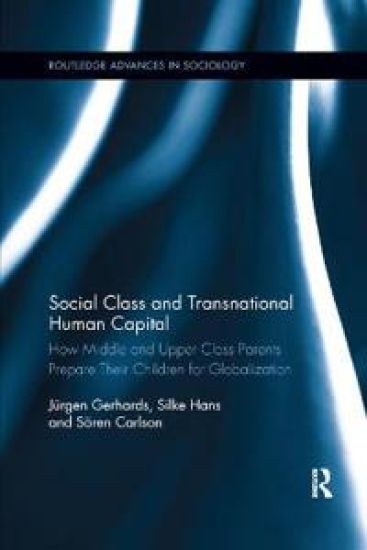
Social Class and Transnational Human Capital

Social Class and Transnational Human Capital

Jürgen Gerhards; Hans Silke; Sören Carlson

Routledge
2019
nidottu
Due to globalization processes, foreign language skills, knowledge about other countries and intercultural competences have increasingly become important for societies and people’s social positions. Previous research on social inequality, however, has dominantly focused on the reproduction of class structures within the boundaries of a particular nation-state without considering the importance of these specific skills and competences. Within Social Class and Transnational Human Capital authors Gerhards, Hans and Carlson refer to these skills as ‘transnational human capital’ and ask to what extent access to this increasingly sought-after resource depends on social class. Based on Pierre Bourdieu’s theory of class, they investigate this question via both quantitative and qualitative empirical analyses. In doing so the authors focus, among other examples, on the so-called school year abroad, i.e. students spending up to a year abroad while attending school – a practice which is rather popular in Germany, but also quite common in many other countries. Thus, this insightful volume explores how inequalities in the acquisition of transnational human capital and new forms of social distinction are produced within families, depending on their class position and the educational strategies parents pursue when trying to prepare their children for a globalizing world. An enlightening title, this book will appeal to undergraduate and postgraduate students, as well as postdoctoral researchers interested in fields such as sociology, social inequality research, globalization studies and educational studies.

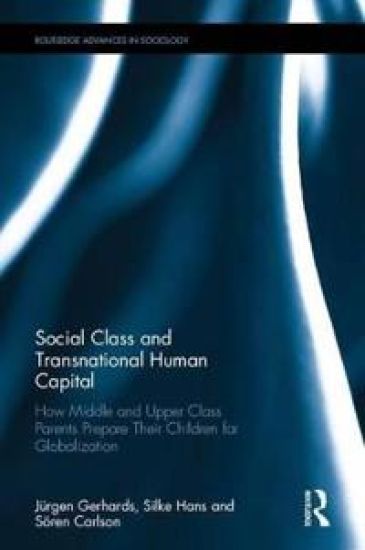
Social Class and Transnational Human Capital

Social Class and Transnational Human Capital

Jürgen Gerhards; Hans Silke; Sören Carlson

Routledge
2017
sidottu
Due to globalization processes, foreign language skills, knowledge about other countries and intercultural competences have increasingly become important for societies and people’s social positions. Previous research on social inequality, however, has dominantly focused on the reproduction of class structures within the boundaries of a particular nation-state without considering the importance of these specific skills and competences. Within Social Class and Transnational Human Capital authors Gerhards, Hans and Carlson refer to these skills as ‘transnational human capital’ and ask to what extent access to this increasingly sought-after resource depends on social class. Based on Pierre Bourdieu’s theory of class, they investigate this question via both quantitative and qualitative empirical analyses. In doing so the authors focus, among other examples, on the so-called school year abroad, i.e. students spending up to a year abroad while attending school – a practice which is rather popular in Germany, but also quite common in many other countries. Thus, this insightful volume explores how inequalities in the acquisition of transnational human capital and new forms of social distinction are produced within families, depending on their class position and the educational strategies parents pursue when trying to prepare their children for a globalizing world. An enlightening title, this book will appeal to undergraduate and postgraduate students, as well as postdoctoral researchers interested in fields such as sociology, social inequality research, globalization studies and educational studies.

Klassenlage und transnationales Humankapital

Klassenlage und transnationales Humankapital

Jürgen Gerhards; Silke Hans; Sören Carlson

Springer vs
2016
sidottu
Fremdsprachenkenntnisse, interkulturelle Kompetenzen und ein kosmopolitischer Habituswerden im Kontext von Globalisierungsprozessen immer bedeutsamer. Die Autoren der Studiezeigen, dass der frühe Erwerb von transnationalem Humankapital durch den Besuch einesbilingualen Kindergartens oder ein Auslandsjahr als Schüler von der sozialen Klassenlage der Eltern abhängig ist. Mit Bezugnahme auf die Arbeiten Pierre Bourdieus und auf der Grundlage von quantitativen Daten einerseits und einer dichten qualitativen Beschreibung andererseits beschreiben sie, wie die Eltern der oberen und mittleren Klassen ihre Kinder systematisch auf eine globalisierte Welt vorbereiten, neue Distinktionsgewinne erzielen und damit neue soziale Ungleichheiten produzieren.